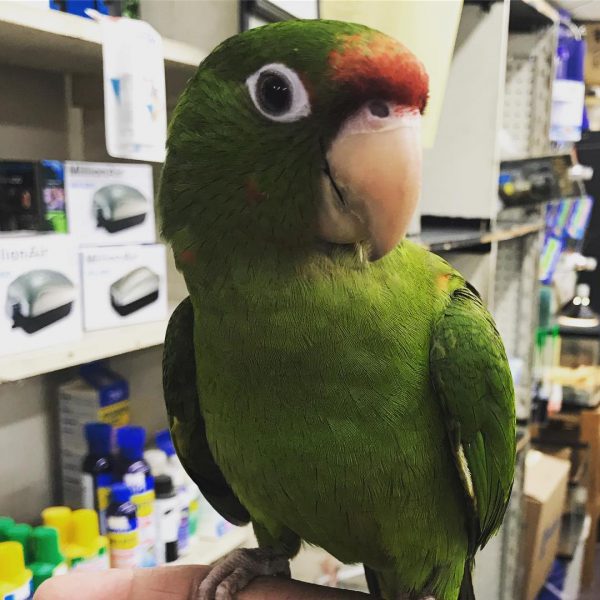
Parrot Amazon Blue Fronted
Parrot Amazon Blue Fronted(Amazona aestiva), commonly known as the Blue-fronted Parrot or Turquoise-fronted Amazon, is a vibrant and charismatic member of the parrot family (Psittacidae). This species is one of the most widespread and recognizable Amazons, prized for its striking appearance and engaging personality. Native to South America, it has been a staple in aviculture for centuries, with records of its importation dating back to the 19th century. In the wild, these Parrot Amazon Blue Fronted play a crucial role in seed dispersal, aiding forest regeneration. However, they face significant threats from habitat destruction, illegal trapping for the pet trade, and climate change, leading to localized declines. Despite this, their Least Concern status on the IUCN Red List reflects their adaptability, though conservation efforts are vital to protect remaining populations. As pets, they are beloved for their intelligence and mimicry skills, often outshining other parrots in learning abilities. Yet, they demand committed owners who can provide lifelong care, as they can live for decades.
Physical Description
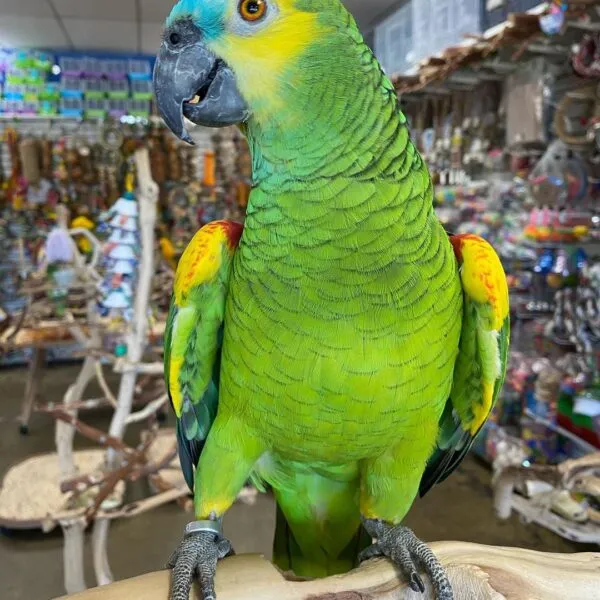
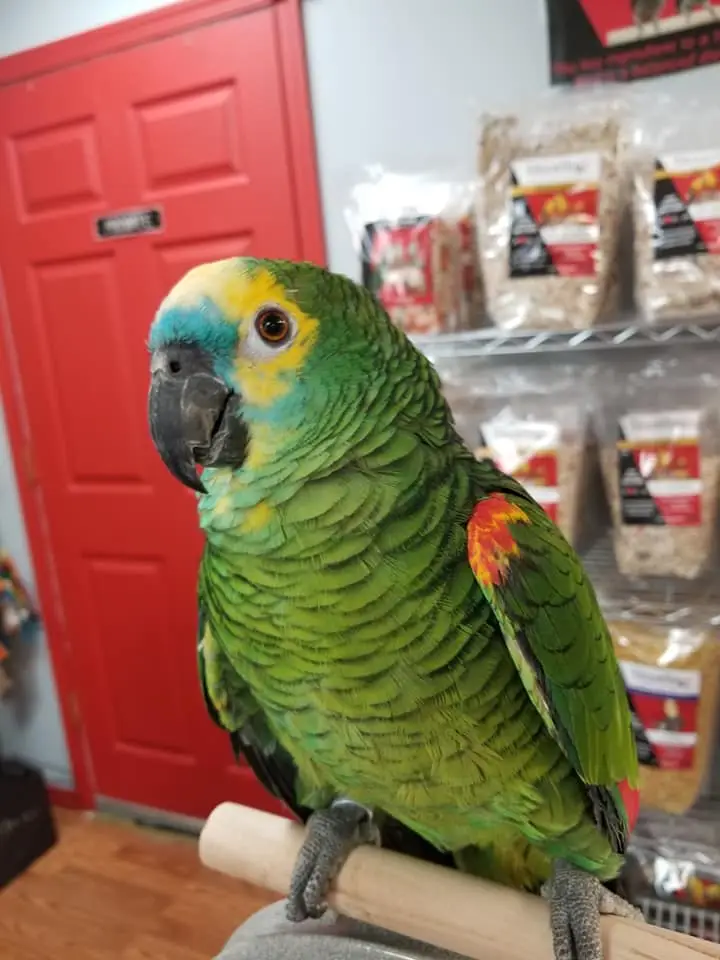
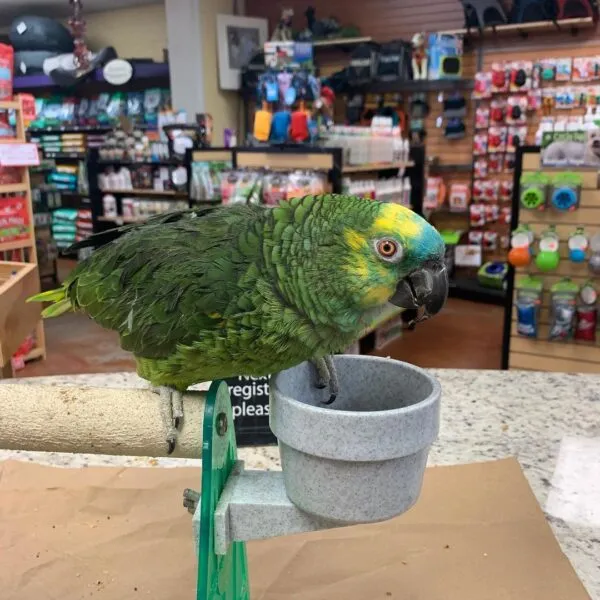
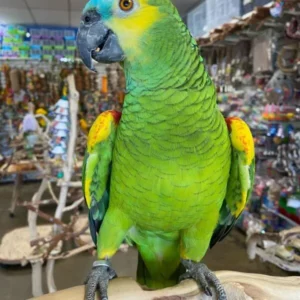
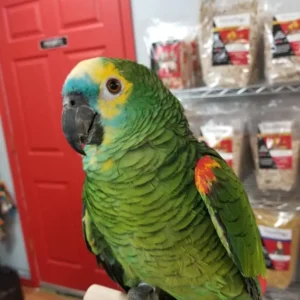
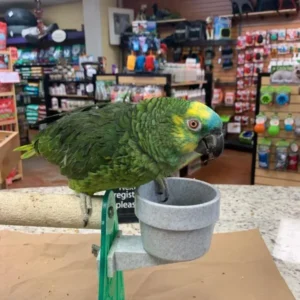
Measuring approximately 35-40 cm (14-16 inches) in length and weighing 300-500 grams (10-18 ounces), the Parrot Amazon Blue Fronted is a medium-sized parrot with a robust build. Its wingspan ranges from 30-35 cm, enabling strong, agile flight. The plumage is predominantly bright green, with a notable blue patch on the forehead and crown that gives the bird its name—this blue hue can vary from turquoise to deep cobalt depending on age and health. The cheeks are adorned with white or pale yellow feathers, creating a striking contrast, while the throat and upper breast may show subtle red or orange tinges in some individuals. The beak is sturdy and horn-colored, ideal for cracking nuts, and the eyes are surrounded by bare skin that turns pale blue in adults. Juveniles have duller colors and less pronounced blue on the forehead, which develops fully by maturity around 2-3 years. Sexual dimorphism is minimal; males are slightly larger with broader heads, but DNA testing or behavior observation is often needed for accurate sexing. Parrot Amazon Blue Fronted feet are zygodactylous (two toes forward, two back), perfect for grasping branches and food. In flight, they display a mix of green and blue flashes, making them easy to spot in flocks.
Habitat and Distribution
Parrot Amazon Blue Fronted inhabits a broad range of tropical and subtropical ecosystems across South America, from eastern Brazil and Paraguay to northern Argentina and Bolivia. They thrive in open woodlands, savannas, palm groves, and riverine forests, often near water sources where they forage for fruits. This adaptability allows them to colonize disturbed areas, including agricultural lands and urban parks, though they prefer native habitats. Parrot Amazon Blue Fronted range spans about 5.5 million square kilometers, with populations concentrated in regions like the Pantanal wetlands and the Cerrado biome. Seasonal migrations occur in some areas, with birds moving to follow food availability during dry seasons. Historically, their distribution was even wider, but deforestation for agriculture and cattle ranching has fragmented habitats, isolating populations. Climate change exacerbates this by altering rainfall patterns, affecting breeding cycles. Conservation initiatives, such as protected areas in Brazil’s national parks, aim to safeguard key sites. In captivity, they adapt well to various climates but require protection from extreme cold or heat.
Behavior And Diet
Highly social and gregarious, Parrot Amazon Blue Fronted form flocks of 10-50 individuals in the wild, engaging in communal roosting and foraging. They are diurnal, most active at dawn and dusk, when they vocalize loudly to maintain group cohesion. Playful by nature, they exhibit behaviors like hanging upside down, swinging on branches, and engaging in mock fights, which help develop social bonds. As monogamous birds, pairs form lifelong partnerships, displaying affection through mutual preening and shared vocalizations. Their intelligence is remarkable; they can solve puzzles, use tools in the wild (like sticks to extract food), and learn complex tasks in captivity. Mimicry is a hallmark trait—they can imitate human speech, household sounds, and even other animals with surprising accuracy, often developing vocabularies of 100+ words.
Dietarily, Parrot Amazon Blue Fronted are omnivorous opportunists. In the wild, their menu includes a variety of fruits (e.g., figs, palm fruits), seeds, nuts, berries, and occasional insects, small lizards, or eggs. This diversity supports their role as seed dispersers, crucial for ecosystem health. Parrot Amazon Blue Fronted forage both on the ground and in trees, using their strong beaks to crack open tough shells. In captivity, a balanced diet is essential to prevent deficiencies: commercial parrot pellets should form the base (about 50-60%), supplemented with fresh vegetables (like carrots, broccoli, and leafy greens), fruits (apples, bananas, in moderation), and nuts (almonds, walnuts, sparingly due to fat content). Calcium-rich foods, such as cuttlebone or mineral blocks, are vital for bone health. Avoid toxic items like avocado, chocolate, or caffeine. Overfeeding can lead to obesity, so portion control and foraging toys are recommended to mimic natural behaviors.
Breeding and Reproduction
Breeding typically occurs during the Southern Hemisphere’s spring and summer, from October to March, coinciding with abundant food resources. Pairs become highly territorial, defending nesting sites aggressively. They nest in natural tree cavities, often in palms or dead trunks, at heights of 5-20 meters. Females lay 3-5 white eggs, incubating them for about 26 days while the male provides food. Chicks hatch altricial (helpless) and are fed regurgitated food by both parents. They fledge after 8-10 weeks but remain dependent for several months, learning foraging and social skills from the flock. In the wild, breeding success rates are around 50-70%, influenced by predation and habitat quality. Captive breeding programs help sustain populations, with hand-rearing techniques used for conservation. However, wild nests are vulnerable to poaching, prompting efforts like nest boxes in protected areas.
Vocalizations and Communication
Parrot Amazon Blue Fronted vocal repertoire is extensive and varied, consisting of squawks, whistles, screeches, and melodic calls. In flocks, they use contact calls to stay connected, while alarm calls warn of predators. As mimics, they excel in human interaction, often learning phrases contextually (e.g., greeting owners with “hello”). This ability stems from a complex syrinx (voice box) and high brain-to-body ratio. However, they can be noisy, especially during dawn choruses, which may disturb neighbors. Training can modulate volume, but their natural expressiveness is a key appeal.
Health and Common Issues
Parrot Amazon Blue Fronted are generally hardy but susceptible to avian-specific ailments. Common health problems include nutritional deficiencies (e.g., vitamin A from poor diets leading to feather issues), psittacosis (a bacterial infection transmittable to humans), and beak malocclusion. Parasites like mites or worms can affect wild and captive birds alike. Behavioral issues, such as feather plucking from stress or boredom, are prevalent in captivity; enrichment like toys, puzzles, and social interaction mitigates this. Lifespan in the wild is 50-60 years, but captivity can extend to 80+ with annual vet check-ups, including blood tests for diseases. Signs of illness include lethargy, abnormal droppings, or changes in plumage—prompt veterinary care is crucial.
As Pets: Care, Training, and Considerations
As pets, Parrot Amazon Blue Fronted are engaging companions, known for their loyalty and humor. They thrive on interaction, requiring 2-4 hours of daily out-of-cage time for exercise and bonding. A spacious cage (minimum 4x4x6 feet) with perches, toys, and foraging opportunities is essential. Training should start early, using positive reinforcement for tricks, speech, or commands—treats like sunflower seeds work well. Socialization prevents aggression, but they can be nippy if territorial. Legally, ownership often requires CITES permits, and adopting from rescues is preferable to wild-caught birds. Costs include initial setup ($500-1,000), ongoing food/vet care ($100-200/month), and potential noise mitigation. They’re not ideal for first-time owners due to their longevity and needs; consider rehoming if circumstances change. For ethical reasons, support conservation by avoiding the illegal trade.
Conservation and Cultural Significance
Listed as Least Concern by the IUCN, the Parrot Amazon Blue Fronted population is estimated at 500,000-1,000,000 individuals, but declines in Brazil and Paraguay are concerning. Threats include logging, agriculture, and capture—up to 10,000 are traded annually. Organizations like the World Parrot Trust and local sanctuaries work on habitat protection and anti-trafficking. Culturally, they’ve appeared in folklore and art across South America, symbolizing freedom and intelligence. In modern times, they’re ambassadors for avian conservation, highlighting the impacts of the pet trade.
2 reviews for Parrot Amazon Blue Fronted
Add a review
Related products

Amazons
Amazons
Amazons
Tyler Kim –
Parrot amazon blue fronted named Sky is incredible. Playful, learns tricks, and bonds strongly. His white crest and bare eyes are regal
Zoe Ramirez –
Parrot amazon blue fronted, Comet, is a joy. Gentle, intelligent, and mimics whistles. Stunning bird with a heart of gold.