Bare Eyed Cockatoo
Bare eyed Cockatoo, scientifically known as the Little Corella (Cacatua sanguinea), is a fascinating and adaptable member of the cockatoo family (Cacatuidae). Native to Australia, this medium-sized parrot is renowned for its sleek white plumage, distinctive bare bluish-gray eye patches, and highly social behavior. Unlike more flamboyant cockatoos like the Sulphur-crested, the Little Corella has a subtle charm, with a small, often hidden crest and a focus on flock dynamics rather than dramatic displays. Bare eyed Cockatoo is one of the most widespread cockatoo species, thriving in both natural and human-altered landscapes, but this adaptability has led to it being labeled as an agricultural pest in some regions. With a global population estimated in the millions, it’s classified as Least Concern by the IUCN Red List, though localized declines occur due to habitat fragmentation and culling programs. In captivity, it’s a beloved pet for its playful, affectionate nature and moderate intelligence, capable of learning tricks and mimicking sounds. However, it demands significant attention to prevent behavioral issues, and responsible ownership means adopting from ethical sources to avoid any strain on wild populations. Conservation efforts emphasize coexistence with humans, as the species plays a role in seed dispersal and ecosystem health.
Physical Description
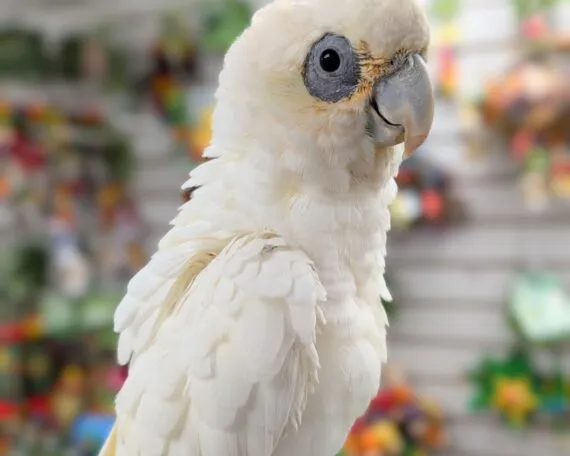
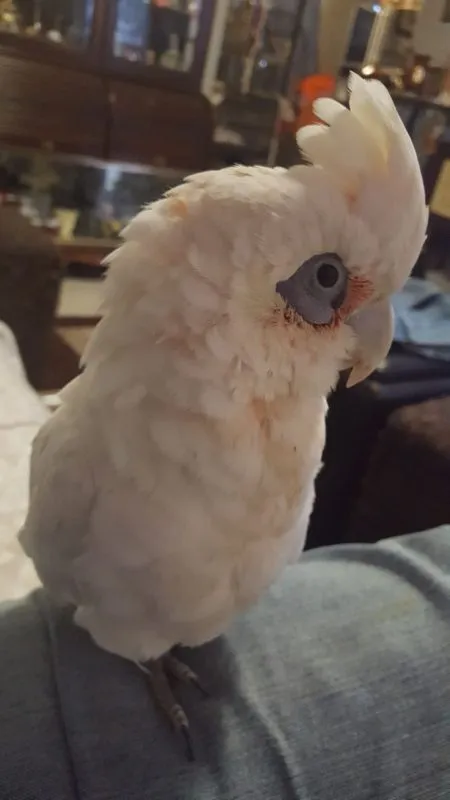
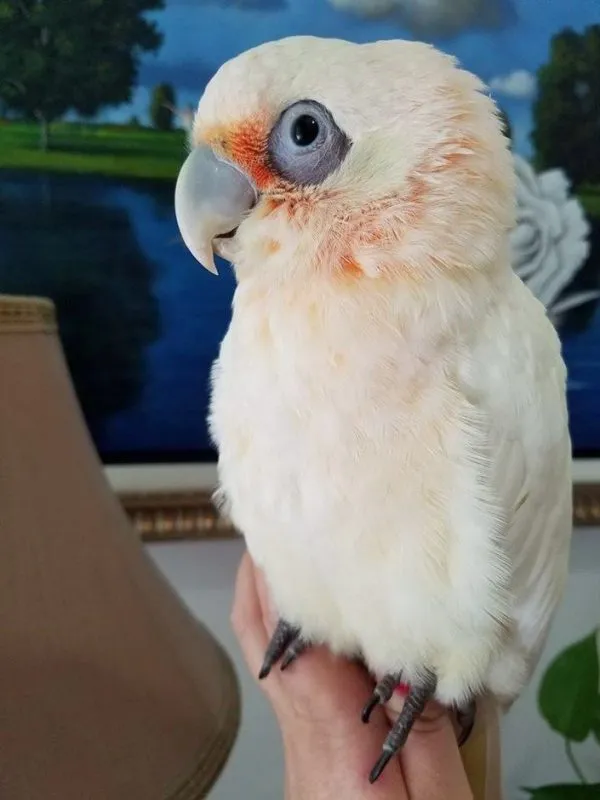
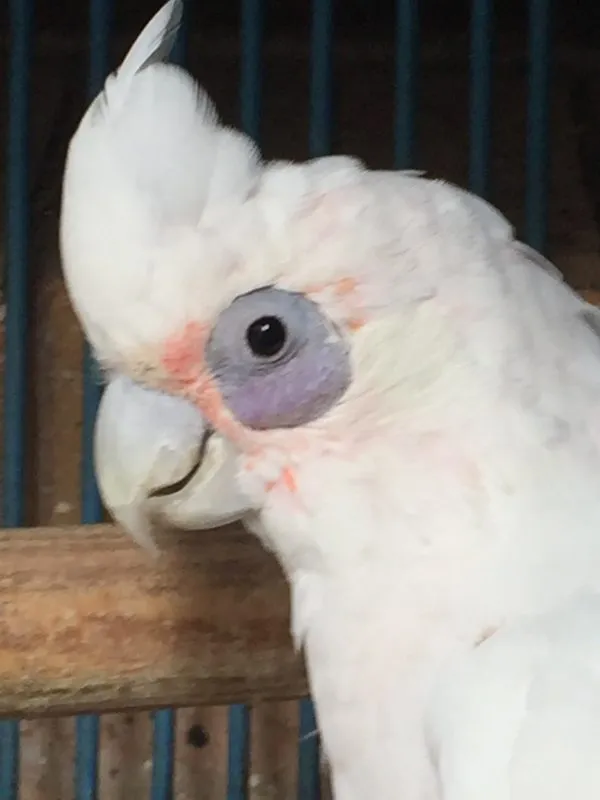
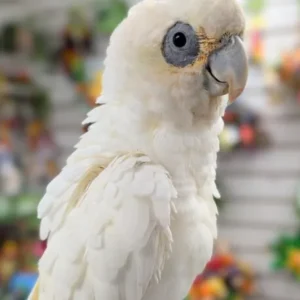
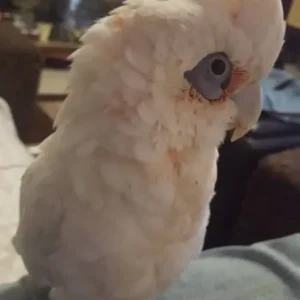
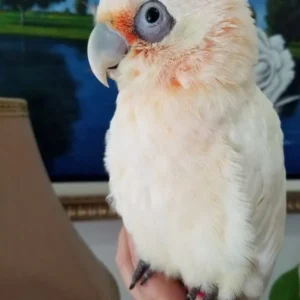
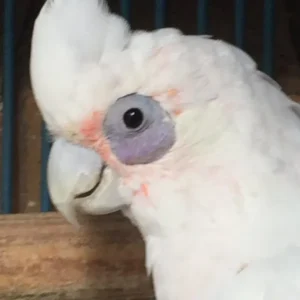
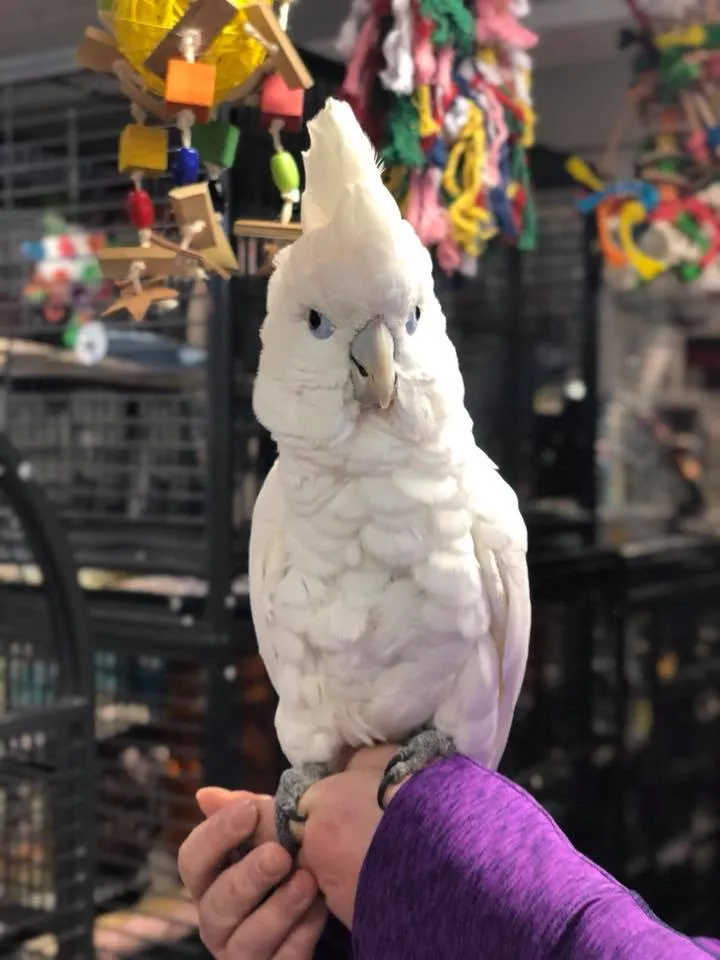
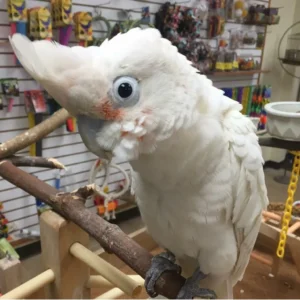
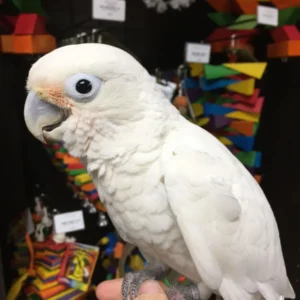
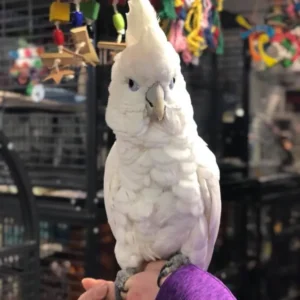
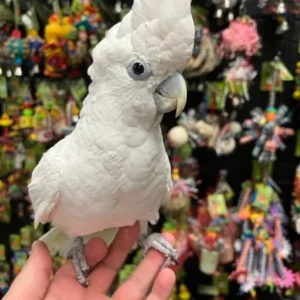
Measuring 35-40 cm (14-16 inches) in length, with a wingspan of 70-80 cm (28-31 inches), and weighing 400-600 grams (14-21 ounces), the Little Corella has a streamlined, elegant build suited for agile flight and ground foraging. Its plumage is predominantly pure white, sometimes with a faint grayish tint on the head, neck, and underbody, especially in older birds or under certain lighting. The most striking feature is the bare, smooth skin encircling the eyes, which is a pale bluish-gray in adults, contrasting sharply with the white feathers. This “bare-eyed” trait is unique among cockatoos and serves as a key identifier, potentially aiding in thermoregulation or social signaling. Unlike many relatives, it lacks a prominent, movable crest; instead, there’s a small, inconspicuous tuft of white feathers on the crown that may slightly erect during excitement. The beak is robust, curved, and horn-colored, ideal for cracking hard seeds and nuts, while the eyes are large and dark brown, framed by the bare patches. Juveniles exhibit less bare skin (appearing more feathered and darker) and duller overall plumage, which gradually whitens and clears over 1-2 years. Sexual dimorphism is minimal—males might have slightly broader heads or larger beaks—but it’s often indistinguishable without close inspection or DNA analysis. Their feet are zygodactylous, with strong claws for gripping perches and digging. In flight, they display a swift, undulating pattern with quick wingbeats, allowing them to cover long distances in flocks.
Habitat and Distribution
The Bare eyed Cockatoo is endemic to Australia, inhabiting a vast range across the continent, from the tropical north (e.g., Queensland and the Northern Territory) to the temperate south (e.g., Victoria and South Australia). Bare eyed Cockatoo prefers open woodlands, savannas, grasslands, and riverine forests, often near water sources for bathing and drinking. Bare eyed Cockatoo species is extraordinarily adaptable, having colonized urban and suburban areas, including parks, gardens, and agricultural lands in cities like Sydney, Melbourne, Brisbane, and Perth. Flocks are commonly seen in golf courses, sports fields, and even rooftops, where they scavenge for food. While this urban success has boosted populations, it has also created conflicts: large flocks can strip crops (e.g., wheat, barley, and fruit orchards), leading to them being declared pests in farming regions. Habitat loss from deforestation, urbanization, and agriculture has fragmented natural ranges, but the bird’s flexibility has mitigated overall declines. Climate change, with increasing droughts in parts of Australia, may affect breeding by reducing food availability. Protected areas like national parks provide refuges, but the species’ resilience means it’s not currently at high risk globally.
Behavior and Diet
Bare eyed Cockatoo are quintessential social birds, forming massive flocks that can number from dozens to thousands, especially during non-breeding seasons. Bare eyed Cockatoo flocks are highly organized, with complex hierarchies and cooperative behaviors like sentinel watching for predators. They are diurnal, active from dawn to dusk, and exhibit a range of playful antics: aerial acrobatics, ground rolling in dust baths, and vocal exchanges. Monogamous pairs bond for life, displaying courtship through head-bobbing, wing-fluttering, and mutual preening, often accompanied by soft calls. Intelligent and inquisitive, they can learn simple tricks (e.g., waving or fetching), mimic whistles or household noises, and even use tools like sticks to probe for food. Their problem-solving skills are notable in the wild, where they adapt to human environments.
Dietarily, they are opportunistic herbivores, with a focus on seeds, grains, grasses, fruits, nuts, and flowers. In natural settings, they forage extensively on the ground, digging up bulbs, tubers, and fallen seeds with their beaks and feet. This ground-foraging habit makes them efficient in open areas but also leads to agricultural damage. Bare eyed Cockatoo supplement with nectar from flowers and occasional insects. In captivity, a nutritionally complete diet is crucial: base it on 50-60% high-quality cockatoo or parrot pellets formulated for white cockatoos, enriched with fresh vegetables (e.g., carrots, corn, broccoli, spinach), fruits (apples, pears, berries, mangoes), and seeds/nuts (sunflower seeds, almonds—in moderation to prevent obesity). Provide foraging opportunities through toys, puzzles, or hidden treats to replicate wild digging behaviors. Calcium-rich items like cuttlebone or mineral blocks are essential for bone health, especially for breeding females. Avoid toxic foods such as avocado, chocolate, caffeine, or high-sugar items. Overfeeding can cause weight issues, so monitor portions and encourage exercise.
Breeding and Reproduction
Breeding is opportunistic and can occur year-round in favorable conditions, but it peaks during Australia’s wet seasons—typically October to March in northern regions and spring (September to November) in the south, aligning with abundant food. Pairs establish territories within flocks and nest in natural tree hollows, often in eucalyptus, acacia, or other native trees, at heights of 5-20 meters. Bare eyed Cockatoo nest is lined with wood chips or feathers for insulation. Females lay 2-4 oval, white eggs, which both parents incubate for 23-25 days, with the male taking night shifts. Chicks hatch altricial (helpless) and are fed a regurgitated mixture of partially digested food by both adults. Bare eyed Cockatoo develop quickly, fledging after 8-10 weeks, but remain with the flock for months to learn foraging and social skills. In the wild, nesting success is high (70-90%) in undisturbed areas, but predation by snakes, birds of prey, or introduced mammals (e.g., cats) can reduce it. Urban nesting sometimes occurs in buildings or palm trees. Captive breeding is straightforward, with pairs producing multiple clutches annually, though hand-rearing may be needed for pet-quality birds.
Vocalizations and Communication
Bare eyed Cockatoo are vocal communicators, using a repertoire of loud, raucous calls to maintain flock cohesion, warn of dangers, and coordinate movements. Their primary calls include high-pitched screeches, whistles, and chatter, often heard in unison during flights or gatherings. While not as proficient as larger cockatoos, they can mimic simple sounds, such as doorbells, phone rings, or human whistles, with decent accuracy. Vocalizations vary by context: softer calls for pair bonding, louder ones for alarm. In captivity, Bare eyed Cockatoo may learn phrases if trained, but their natural volume can be a drawback in quiet settings. Training can help modulate noise through positive reinforcement.
Health and Common Issues
As a hardy species, Bare eyed Cockatoo are generally robust, but they can suffer from avian-specific ailments. Common issues include nutritional deficiencies (e.g., hypocalcemia from low-calcium diets, leading to egg-binding or weak bones), infectious diseases like psittacosis or avian influenza, and parasitic infestations (e.g., mites). Behavioral problems are prevalent in captivity, such as excessive screaming, feather plucking, or destructive chewing, often due to boredom, lack of social interaction, or stress. Lifespan in the wild is 40-50 years, but in captivity, with optimal care, they can reach 50-60 years or more. Preventive health measures include annual veterinary check-ups with avian specialists, bloodwork for diseases, and quarantine for new birds. Signs of illness include lethargy, abnormal droppings (e.g., watery or discolored), ruffled feathers, or weight loss—seek immediate care, as parrots can hide symptoms until severe. Obesity is a risk from sedentary lifestyles, so ensure ample exercise.
As Pets: Care, Training, and Considerations
Bare eyed Cockatoo excel as pets for those who appreciate their social, playful energy. Bare eyed Cockatoo form deep, affectionate bonds with owners, often becoming “lap birds” and demanding cuddles. Ideal for experienced bird keepers, they require a large enclosure (at least 4x4x6 feet for a single bird, larger for pairs) with multiple perches, swings, and toys to prevent boredom. Daily out-of-cage time (3-5 hours) is essential for physical and mental health, including supervised play and interaction. Training focuses on positive reinforcement—use treats to teach tricks like stepping up, waving, or simple commands. They’re generally gentle but can nip if startled or territorial, so early socialization is key. Vocal mimicry can be encouraged with repetition, though they’re not as talkative as some parrots. Not suitable for first-time owners due to their noise (loud flocks can disturb neighbors), potential for mess, and longevity. Legally, ownership is unregulated in most places, but CITES may apply for international trade. Adopt from rescues or sanctuaries to promote welfare—wild-caught birds are uncommon but ethically questionable. If considering one, assess your lifestyle: they thrive with consistent routines and family involvement.
Conservation and Cultural Significance
While Least Concern overall, Bare eyed Cockatoo face regional threats like habitat loss, agricultural conflicts (leading to culling), and climate impacts. In some Australian states, they’re managed as pests, with programs to reduce numbers in farming areas. Conservation strategies include habitat restoration, public education on coexistence, and monitoring urban populations. Culturally, in Indigenous Australian traditions, cockatoos symbolize communication, community, and the spirit of the land, often appearing in Dreamtime stories, art, and ceremonies. Protecting them underscores the importance of balancing human needs with biodiversity. Organizations like BirdLife Australia advocate for sustainable management.
6 reviews for Bare Eyed Cockatoo
Add a review
Related products
Cockatoo Parrot
Cockatoo Parrot
Cockatoo Parrot
Cockatoo Parrot
Sophia Choi –
Bare Eyed Cockatoo. Love it
Carlos Ruiz –
My Bare-eyed Cockatoo, Kiwi, is the sweetest! His playful antics and soft calls make every morning fun. Easy to train and loves cuddles—perfect for our busy household.
Isabella Garcia –
Bare eyed Cockatoo are underrated gems. Luna mimics my laughter perfectly and is so affectionate. Her white plumage is stunning, and she’s great with kids.
Carlos Lopez –
Bare-eyed Cockatoos are amazing. My guy, Blizzard, is gentle, learns tricks, and has a sweet temperament. Highly recommend!
Mia Chen –
My Bare-eyed Cockatoo, Halo, is incredible. Playful, smart, and loves games. Beautiful white look and bare eyes.
Alex R –
Loving my Bare-eyed Cockatoo, Aurora. She’s affectionate, intelligent, and has gorgeous plumage. Her bare eyes add so much character!