Goffin Cockatoo
Goffin Cockatoo (Cacatua goffiniana), also known as the Tanimbar Corella or Goffin’s Corella, is a small to medium-sized cockatoo species native to the Tanimbar Islands in Indonesia. It’s a member of the Cacatuidae family and is celebrated for its intelligence, playful personality, and remarkable problem-solving abilities, often compared to African Greys in cognitive prowess. This species has gained popularity in aviculture due to its affectionate nature, vocal mimicry, and adaptability to captivity, but it remains relatively rare in the wild, where it’s threatened by habitat loss and the illegal pet trade. Classified as Near Threatened by the IUCN Red List, with an estimated population of fewer than 50,000 individuals, conservation efforts focus on protecting its island habitats. In the wild, Goffin Cockatoo play a role in seed dispersal, contributing to ecosystem health. As pets, they form strong bonds with owners and require mental stimulation to thrive, but their longevity (up to 40-50 years) and potential for behavioral issues make them unsuitable for inexperienced keepers. Ethical ownership emphasizes adopting from reputable sources to avoid exacerbating wild declines. This bird’s charm lies in its curiosity and sociability, making it a fascinating companion for those prepared for the commitment.
Physical Description
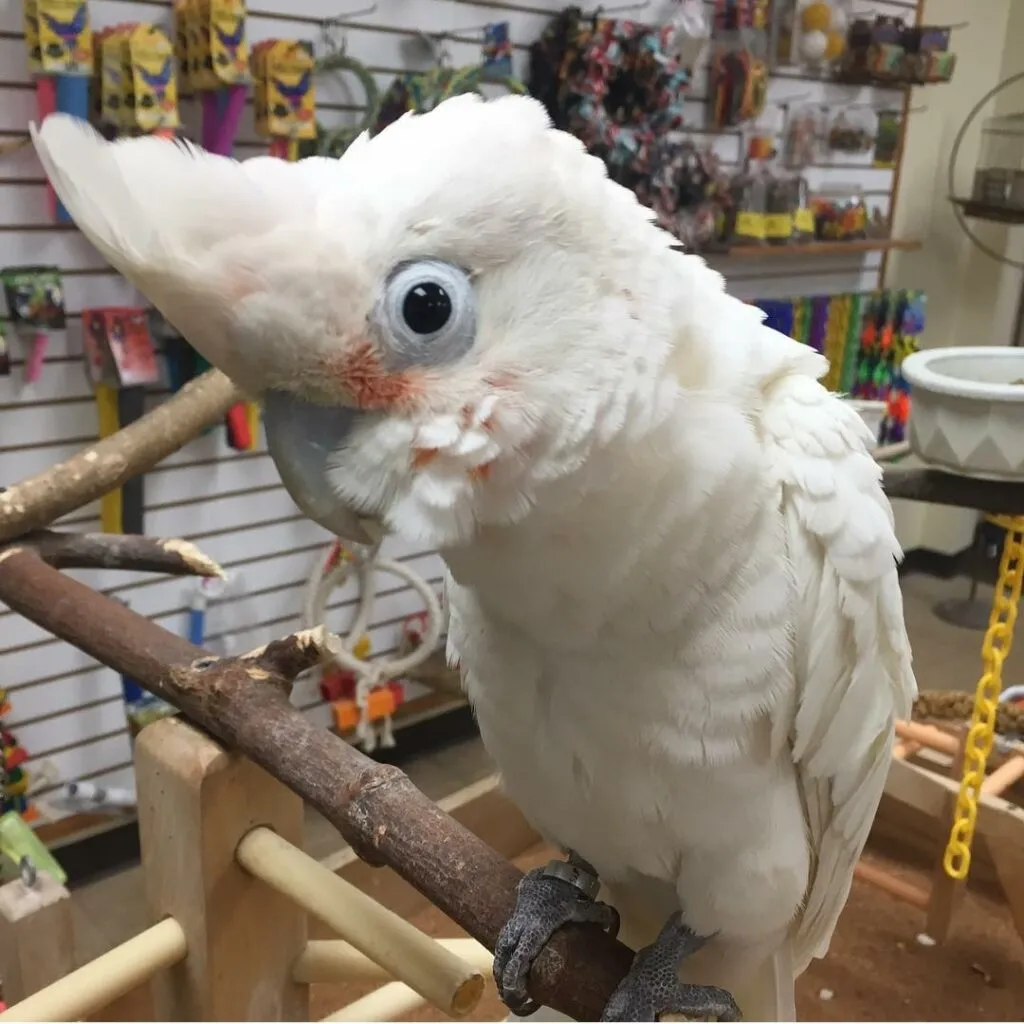
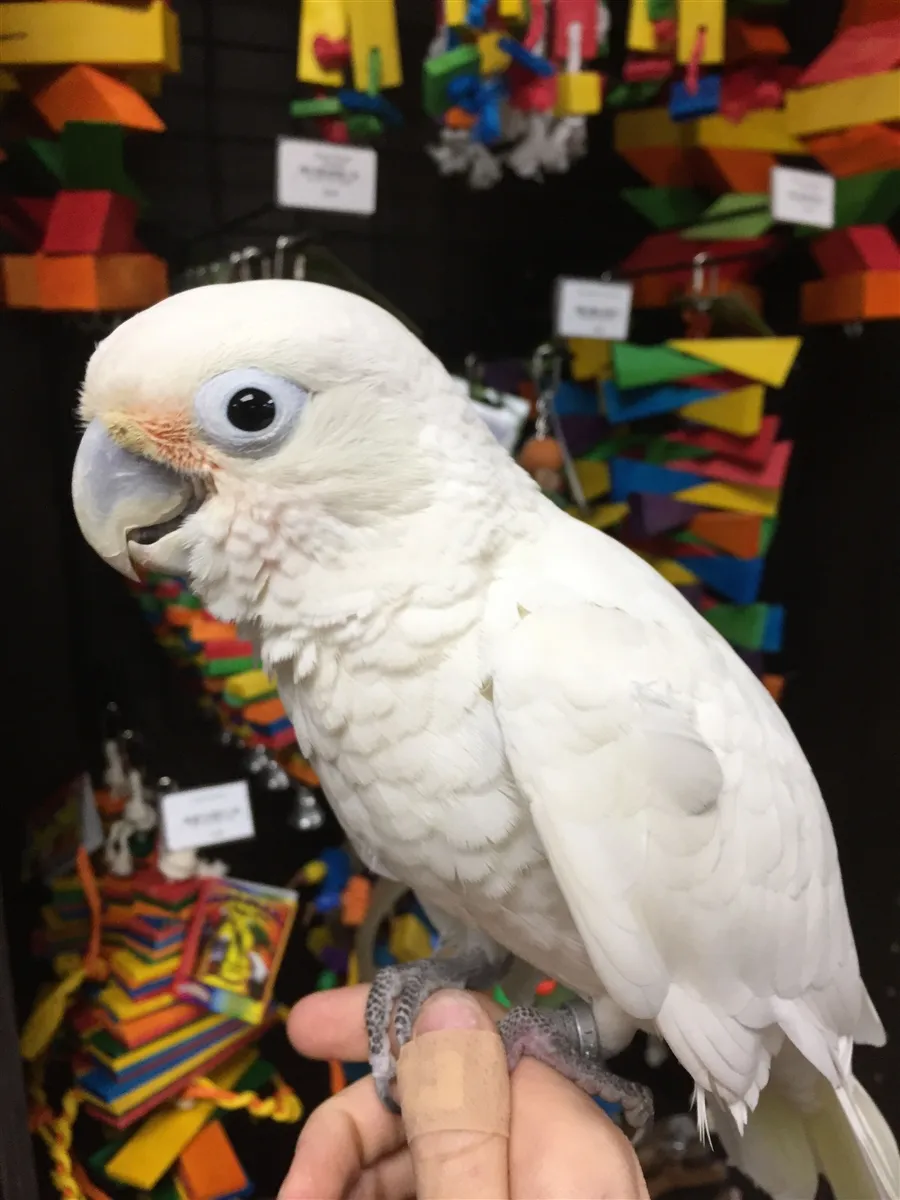
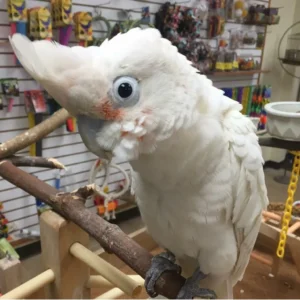
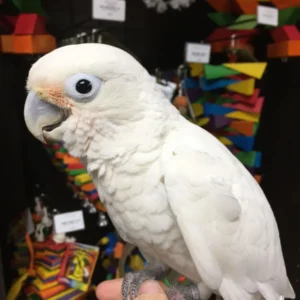
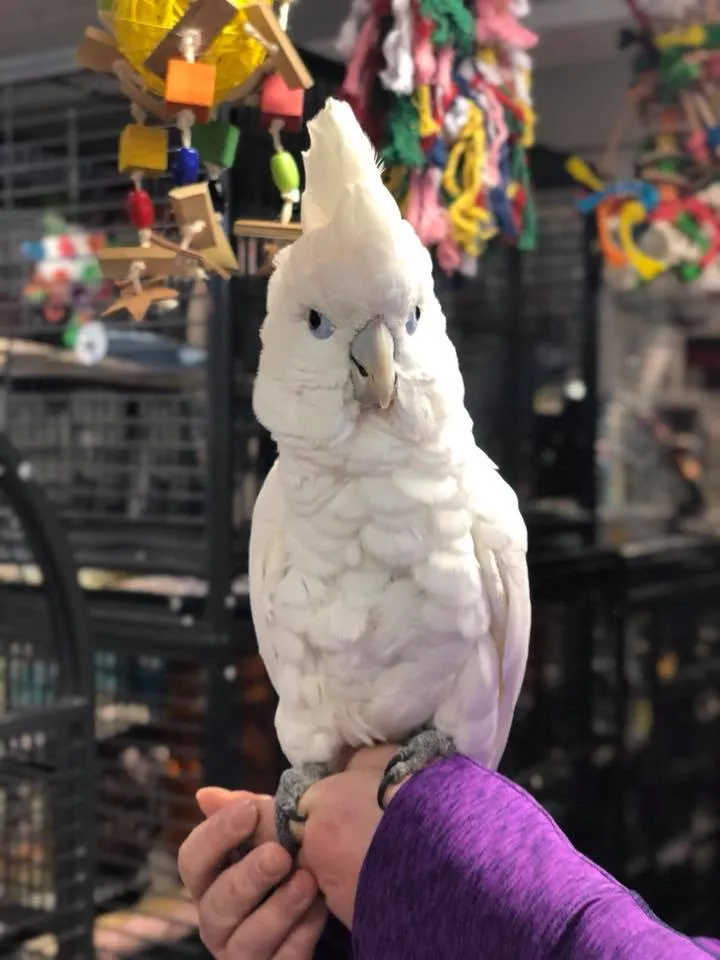
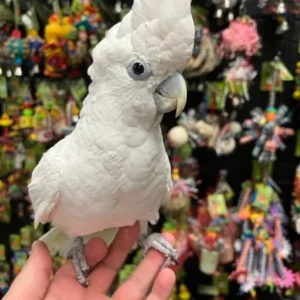
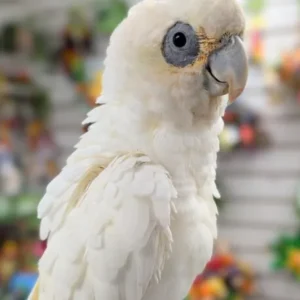
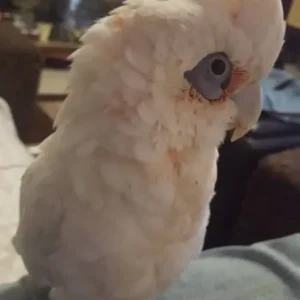
The Goffin Cockatoo is compact and elegant, measuring 30-32 cm (12-13 inches) in length, with a wingspan of 50-55 cm (20-22 inches), and weighing 250-350 grams (9-12 ounces). Its plumage is predominantly white, with subtle grayish or yellowish tinges on the head, neck, and underbody, giving it a soft, ethereal appearance. The crest is small and rounded, often raised during excitement or alarm, and the face features bare, pale gray skin around the eyes and beak. The beak is short, curved, and horn-colored, adapted for cracking seeds, while the eyes are dark and expressive. Unlike larger cockatoos, it lacks prominent color accents, relying on its clean white look for appeal. Juveniles have duller plumage and less defined facial skin, which matures over time. Sexual dimorphism is minimal, with males sometimes slightly larger or more vocal, but DNA testing is needed for confirmation. Their zygodactylous feet are strong for gripping, and in flight, they display quick, agile wingbeats with occasional glides. Overall, its petite size and subtle features make it approachable yet striking.
Habitat and Distribution
The Goffin Cockatoo is endemic to the Tanimbar Islands (also known as the Tanimbars), a small archipelago in Indonesia’s Maluku province, between Timor and New Guinea. It inhabits tropical forests, woodlands, and coastal areas, preferring dense vegetation for foraging and nesting. The islands’ isolation has led to a unique adaptation, with the species thriving in both primary and secondary forests, though deforestation from logging and agriculture has reduced suitable habitats. Climate change, with rising sea levels and altered weather patterns, poses additional risks to these low-lying islands. In the wild, Goffin Cockatoo are adaptable to human-altered landscapes, sometimes visiting plantations, but this exposes them to trapping. Conservation areas on the islands aim to protect key sites, but illegal export for the pet trade remains a significant threat.
Behavior and Diet
Highly intelligent and social, Goffin Cockatoo are known for their playful, inquisitive nature and advanced cognitive abilities, including tool use, self-recognition, and complex problem-solving. In the wild, they form small flocks of 10-20 individuals, engaging in communal foraging and vocal interactions. Goffin Cockatoo are diurnal, active during the day, and exhibit behaviors like acrobatic play, mutual preening, and exploration. Monogamous pairs bond closely, with courtship involving displays and soft calls. Their curiosity extends to manipulating objects, making them adept at puzzles in captivity.
Dietarily, Goffin Cockatoo are omnivorous, eating seeds, nuts, fruits, berries, and occasional insects. In the wild, they forage on the ground and in trees, using their beaks to extract food. In captivity, a balanced diet includes 50-60% pellets, fresh fruits (apples, bananas), vegetables (carrots, greens), and nuts (in moderation). Foraging toys encourage natural behaviors. Avoid toxins like avocado or chocolate.
Breeding and Reproduction
Breeding occurs during the dry season, with pairs nesting in tree hollows. Females lay 2-4 eggs, incubated for 24-26 days. Goffin Cockatoo Chicks fledge after 8-10 weeks but stay with parents longer. Wild success is affected by habitat loss.
Vocalizations and Communication
Goffin Cockatoo are vocal mimics, learning whistles, phrases, and sounds with clarity. Their calls include screeches and chatter for social bonding.
Health and Common Issues
Prone to PBFD, nutritional issues, and behavioral problems like plucking from stress. Goffin Cockatoo Lifespan: 30-50 years. Regular vet care is essential.
As Pets: Care, Training, and Considerations
Ideal for experienced owners, they need large cages, daily interaction, and enrichment. Training uses positive reinforcement for tricks and speech. Adopt ethically for responsible ownership.
Conservation and Cultural Significance
Near Threatened, efforts include habitat protection. In Indonesian culture, Goffin Cockatoo valued for its intelligence, symbolizing curiosity.
2 reviews for Goffin Cockatoo
Add a review
Related products
Cockatoo Parrot
Cockatoo Parrot
Cockatoo Parrot
Cockatoo Parrot
Logan Alvarez –
Loving my Goffin Cockatoo, Nimbus. He’s playful, mimics sounds well, and bonds deeply with me. His bare eyes give him such a unique, expressive look.
Victoria Patel –
Goffin Cockatoos are fantastic. My guy, Rio, is smart, affectionate, and loves outdoor time. Beautiful plumage and a calm demeanor highly recommend!