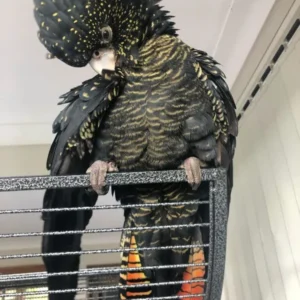
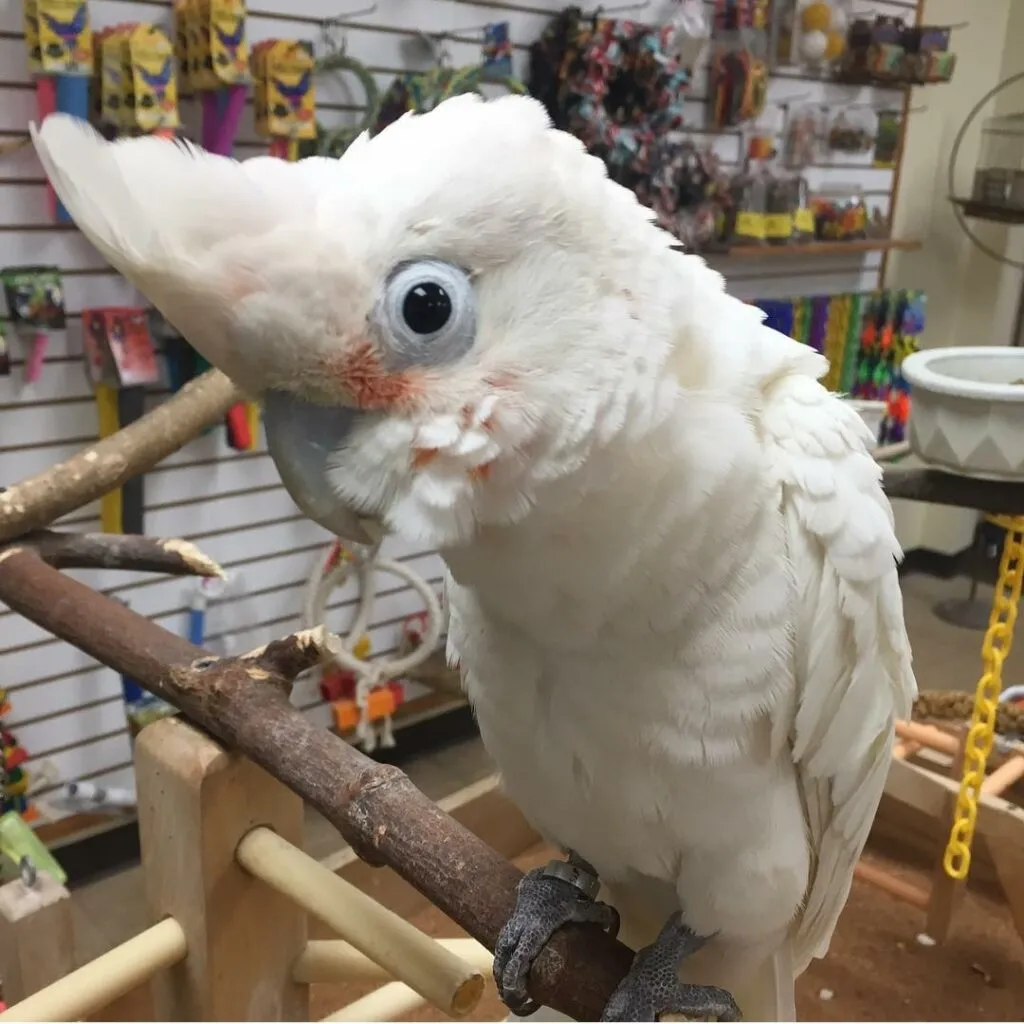
Red Tailed Black Cockatoo
Red tailed Black Cockatoo (Calyptorhynchus banksii), commonly referred to as the Banksian Cockatoo or simply the Red-tailed Black-Cockatoo, is a magnificent and emblematic species within the cockatoo family (Cacatuidae). Named after the botanist Sir Joseph Banks, who encountered it during Captain James Cook’s voyages in the 18th century, Red Tailed Black Cockatoo is one of Australia’s most recognizable parrots, celebrated for its glossy black plumage, vibrant red tail, and resonant calls that resonate across the vast Australian landscape. As a large, social, and intelligent parrot, it embodies the spirit of the outback, thriving in diverse environments from coastal woodlands to arid interiors. In the wild, Red-tailed Black Cockatoos are nomadic wanderers, following seasonal food sources and playing a vital ecological role as seed dispersers, helping regenerate eucalyptus forests by spreading the seeds of the nuts and fruits they consume. This adaptability has allowed them to persist despite human encroachment, but threats like habitat fragmentation and introduced predators have led to localized declines. Classified as Least Concern by the IUCN Red List, with an estimated population of 50,000-100,000 individuals, they are still monitored closely in some regions. In captivity, they are prized for their affectionate, playful nature and vocal abilities, but their size, noise, and longevity (up to 50-70 years) make them challenging pets suited only for experienced owners. Ethical considerations are crucial, as wild-caught birds contribute to population pressures, so adoption from reputable breeders or rescues is advocated. This species not only represents Australia’s rich avian heritage but also highlights the importance of balancing conservation with human activities, as its presence evokes the untamed beauty of the continent’s natural world.
Physical Description
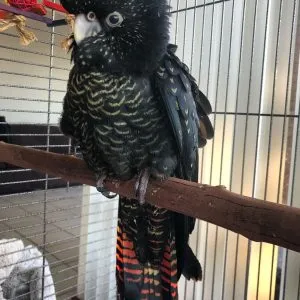
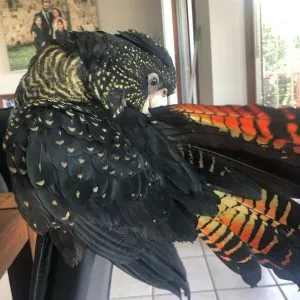
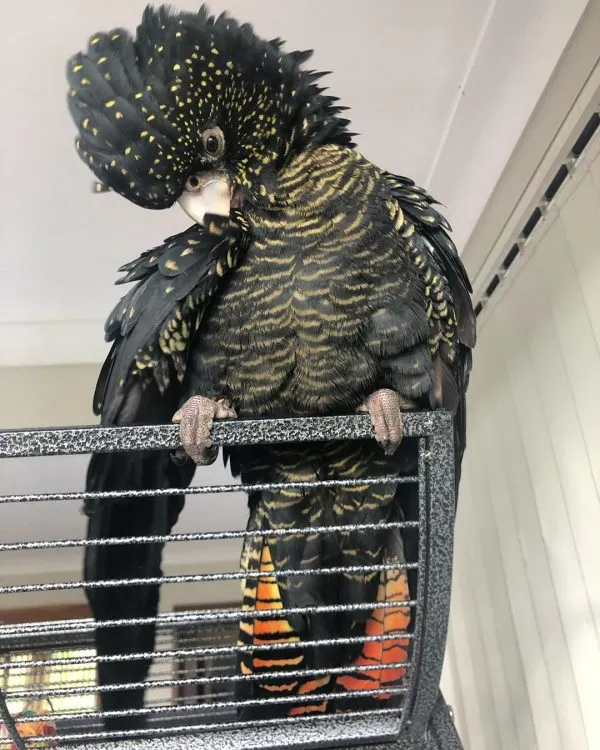
The Red tailed Black Cockatoo is an imposing and elegant bird, standing out among parrots with its substantial size and striking contrasts. Measuring 55-65 cm (22-26 inches) in length from beak to tail, it boasts a wingspan of 90-110 cm (35-43 inches) that enables powerful, soaring flights over open landscapes. Weighing between 600-900 grams (21-32 ounces), Red Tailed Black Cockatoo has a robust, muscular build with broad shoulders and a sturdy frame, adapted for cracking hard-shelled nuts and navigating dense vegetation. Its plumage is predominantly glossy black, shimmering with iridescent hues of green, purple, or blue on the body and wings, particularly vivid in males and under bright sunlight. Red Tailed Black Cockatoo tail is the crowning glory: broad and rounded, with bright red or orange-red panels on the underside that become prominently visible when fanned during flight or displays, creating a dramatic visual effect. The crest is short, erectile, and composed of black feathers that can be raised into a slight fan shape, often accompanied by head-bobbing. The face features bare, grayish-white skin around the eyes and beak, which can flush pinkish during excitement, adding to its expressive appearance. Red Tailed Black Cockatoo beak is large, curved, and immensely strong, with a bone-colored or grayish tip, perfectly suited for its nut-cracking diet. Eyes are large, dark brown, and alert, surrounded by the bare facial skin that aids in thermoregulation. Sexual dimorphism is pronounced: males exhibit brighter red tails, more pronounced crests, and glossier plumage, while females have duller colors with distinctive yellow barring or spots on the tail feathers, making them easier to identify. Juveniles closely resemble females, with less vibrant tails and crests that develop over 3-4 years as they mature. Their feet are zygodactylous, with powerful claws for gripping branches and foraging on the ground. In flight, they display a slow, deliberate wingbeat interspersed with graceful glides, allowing them to cover long distances efficiently. Overall, the Red-tailed Black Cockatoo’s physique is a blend of strength and beauty, reflecting its evolutionary adaptation to Australia’s varied terrains and making it a standout in any avian collection.
Habitat and Distribution
The Red tailed Black Cockatoo is endemic to Australia, with a broad and adaptable distribution spanning the continent from the southwestern corner (Western Australia) through the central arid zones to the eastern coastal regions (Queensland and New South Wales). It inhabits a wide array of ecosystems, including eucalyptus woodlands, open forests, savannas, and even arid scrublands, often favoring areas near water sources like rivers, lakes, or coastal zones for drinking and bathing. Red Tailed Black Cockatoo nomadic species doesn’t maintain fixed territories; instead, it migrates seasonally in response to food availability, such as the flowering of eucalyptus trees or the ripening of nuts, which can lead to large flocks congregating in productive areas. Its adaptability extends to human-altered landscapes, where it forages in urban parks, gardens, and agricultural fields, sometimes causing conflicts with farmers due to crop damage. However, habitat fragmentation from logging, agriculture, and urbanization has reduced connectivity between populations, isolating groups and increasing vulnerability to local extinctions. In Western Australia, for instance, populations in the wheatbelt region have declined due to land clearing, while eastern populations face pressures from mining and development. Climate change exacerbates these issues by altering rainfall patterns, leading to droughts that affect breeding and food supplies. Protected areas like national parks and reserves provide refuges, but the species’ broad range ensures overall stability. In captivity, it requires spacious enclosures mimicking open woodlands, with access to outdoor aviaries for exercise and natural behaviors.
Behavior and Diet
Red-tailed Black Cockatoos are highly social and gregarious, often forming flocks of 10-100 individuals, though larger aggregations can occur during food booms. Red Tailed Black Cockatoo are diurnal, most active during the day, and exhibit a range of behaviors including acrobatic play, mutual preening, and cooperative foraging. Intelligent and curious, they demonstrate problem-solving skills, such as using tools to extract food or navigating complex puzzles. Monogamous pairs form strong bonds, engaging in courtship displays like crest-raising and vocal duets. In the wild, they are wary but adaptable, often integrating into human environments.
Dietarily, they are primarily herbivorous, focusing on seeds, nuts, fruits, and flowers, with a special preference for eucalyptus nuts and seeds. Red Tailed Black Cockatoo occasionally supplement with insects or larvae. Foraging involves cracking open hard shells with their beaks, often on the ground or in trees. In captivity, a diet of pellets, fresh fruits, nuts, and veggies, with foraging enrichment, is ideal.
Breeding and Reproduction
Breeding typically occurs in spring or after rains, with pairs nesting in tree hollows. Females lay 1-2 eggs, incubated for 28-30 days. Chicks fledge after 3-4 months. Success varies with habitat quality.
Vocalizations and Communication
Their calls are loud and resonant, including screeches and whistles. They can mimic sounds in captivity.
Health and Common Issues
Susceptible to nutritional imbalances and diseases like PBFD. Lifespan: 40-70 years. Regular vet care is key.
As Pets: Care, Training, and Considerations
Red Tailed Black Cockatoo birds need large spaces, mental stimulation, and experienced owners. Training emphasizes positive methods for bonding.
Conservation and Cultural Significance
Least Concern overall, but regionally protected. In Aboriginal Australian cultures, they symbolize resilience and are featured in stories.
2 reviews for Red Tailed Black Cockatoo
Add a review
Related products
Cockatoo Parrot
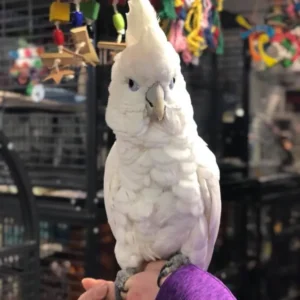
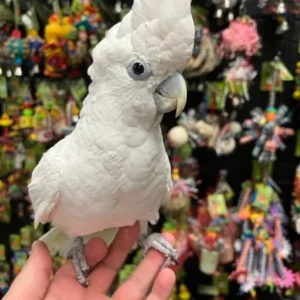
Cockatoo Parrot
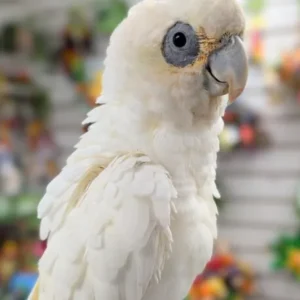
Cockatoo Parrot
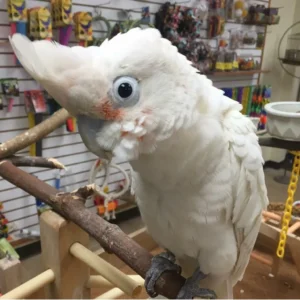
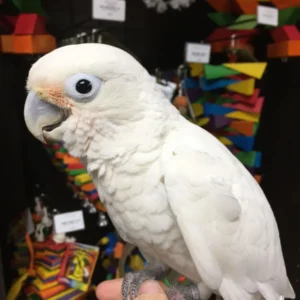
Cockatoo Parrot
Tyler Singh –
Red tailed black Cockatoo are amazing pets. My bird, Sunny, has the most beautiful eyes and loves foraging games. Quiet compared to other cockatoos, and so loyal.
Zoe Morales –
Red tailed black Cockatoo named Echo is my best friend. His curious behavior keeps me entertained, and he’s easy to care for. Gorgeous white feathers and a sweet temperament.