Bronze Wing Pionus
Bronze Wing Pionus (Pionus chalcopterus), commonly referred to as the Bronze-winged Parrot, is a captivating medium-sized parrot species belonging to the Pionus genus, which encompasses several colorful and intelligent Neotropical parrots. Native to the lush rainforests of Central and South America, this bird is renowned for its striking plumage, gentle disposition, and subtle vocal abilities, making it a favorite among aviculturists and pet owners alike. Its name derives from the distinctive bronze-red patches on its wing feathers, which gleam during flight and add a touch of metallic elegance to its otherwise earthy tones. In the wild, Bronze Wing Pionus are social flock dwellers that contribute to ecosystem health by dispersing seeds from the fruits and nuts they consume, aiding in forest regeneration and biodiversity. With an estimated population in the hundreds of thousands, it’s classified as Least Concern by the IUCN Red List, reflecting its adaptability, though ongoing deforestation for agriculture, logging, and urban expansion poses significant threats to its habitats. Climate change further complicates matters by altering rainfall patterns and food availability, potentially impacting breeding cycles. As pets, Bronze Wing Pionus parrots are prized for their affectionate, low-key personalities—they’re quieter than many cockatoos or amazons, forming strong bonds with owners without the high-maintenance demands of larger species. Their intelligence allows them to learn tricks and mimic simple sounds, and with a lifespan of 30-40 years, they reward patient caretakers with decades of companionship. However, they require mental stimulation to prevent boredom-related behaviors, and ethical ownership is essential, as wild-caught birds can perpetuate illegal trade. The Bronze-winged Pionus embodies the serene beauty of tropical forests, serving as a reminder of the delicate balance between human activities and wildlife preservation.
Physical Description
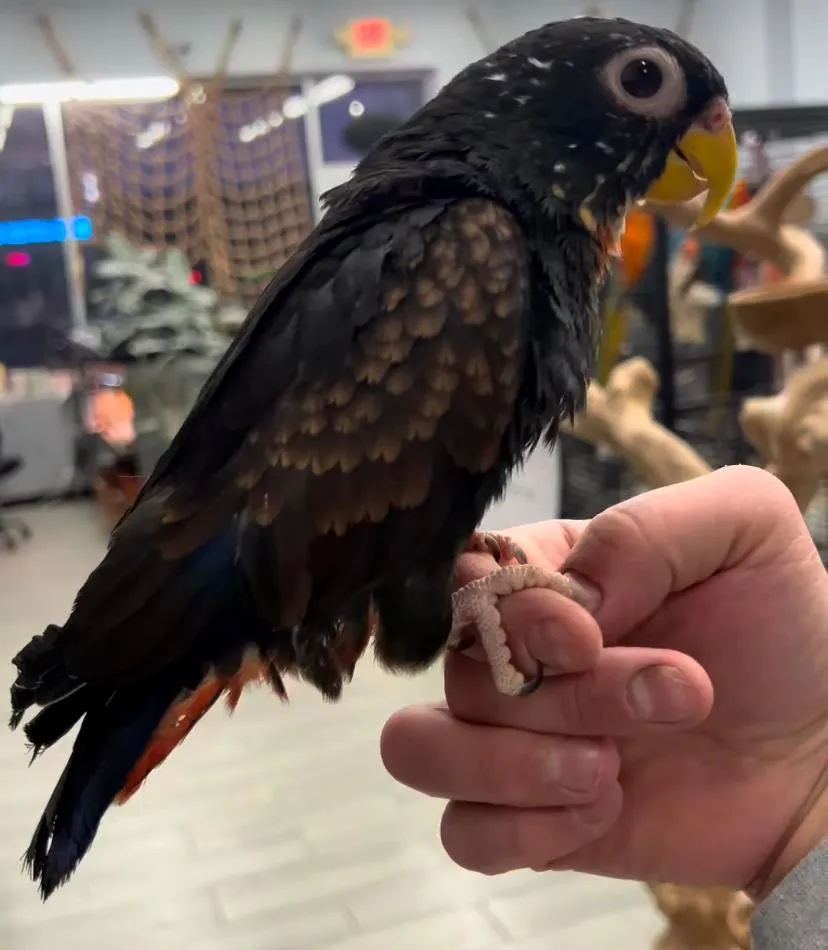
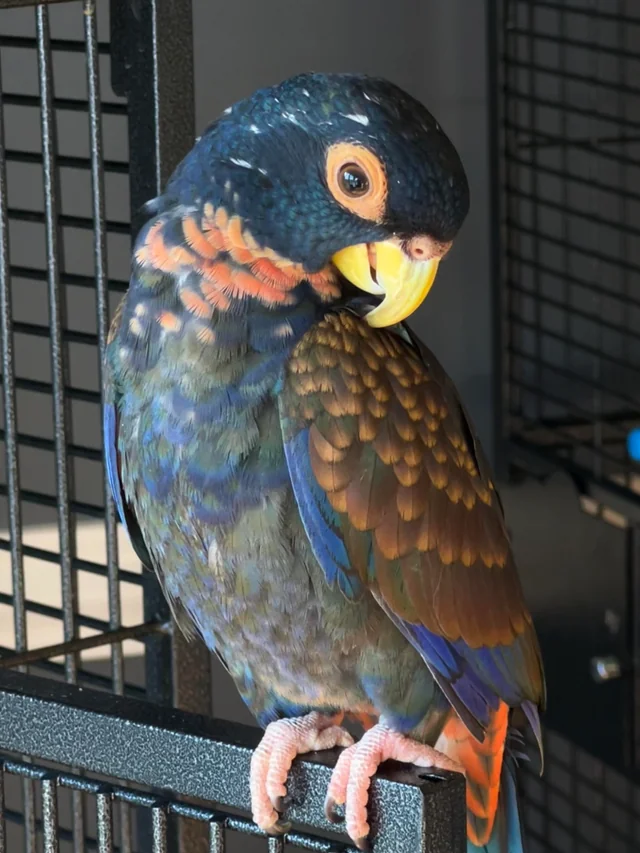
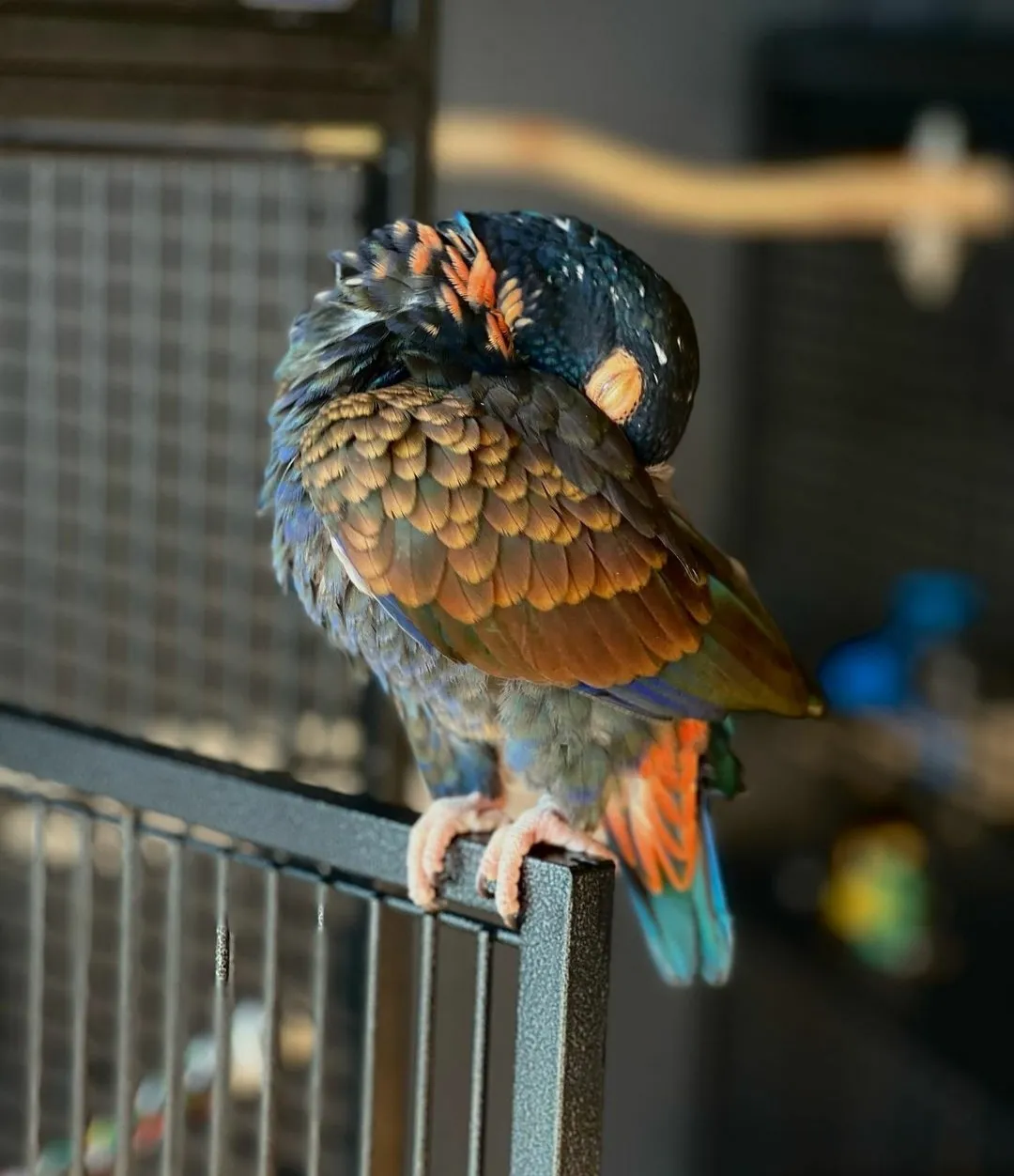
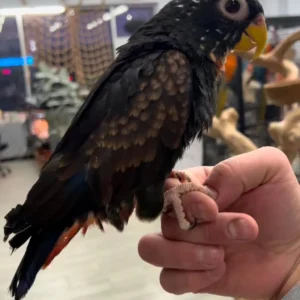
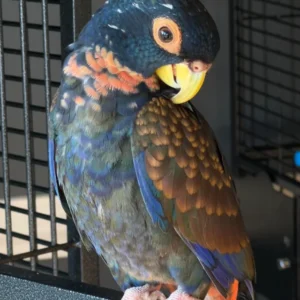
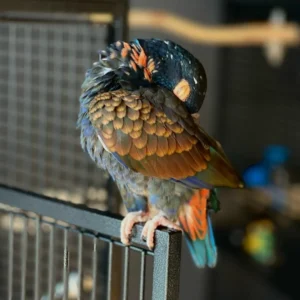
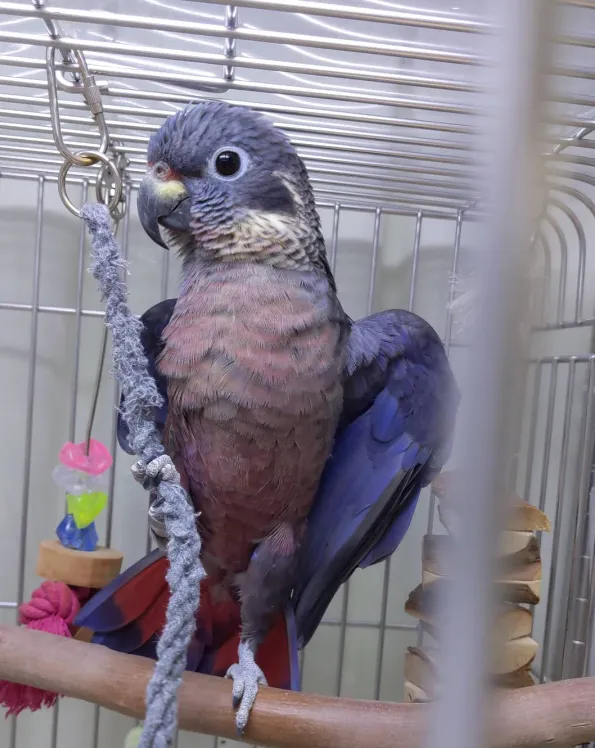
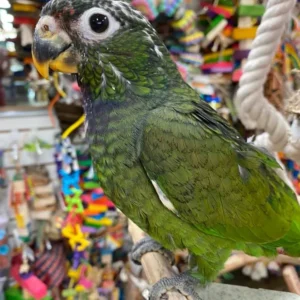
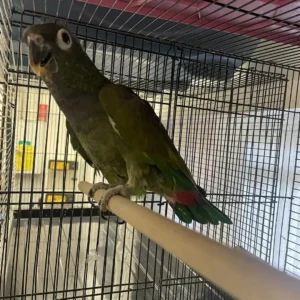
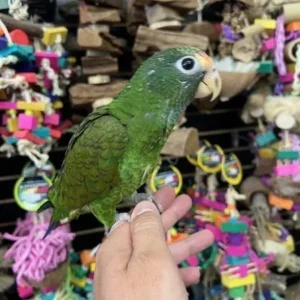
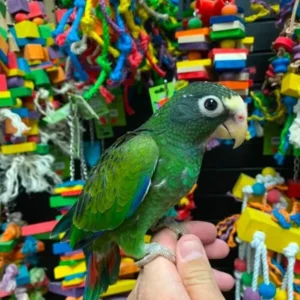
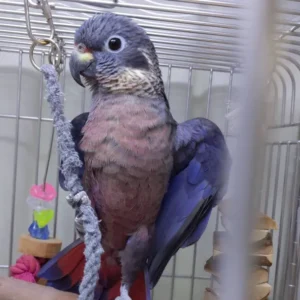
The Bronze Wing Pionus is a gracefully proportioned parrot, measuring 28-30 cm (11-12 inches) in length from beak to tail, with a wingspan of 45-50 cm (18-20 inches) that allows for agile, undulating flights through dense foliage. Weighing 200-250 grams (7-9 ounces), it has a compact, stocky build with a rounded head and a long, tapered tail that provides balance during perching and maneuvering. Its plumage is a harmonious blend of greens and earthy tones, with the body primarily olive-green or yellowish-green, transitioning to brighter shades on the back and wings. The most striking feature is the bronze-red or coppery-red patches on the secondary flight feathers, which are concealed when the wings are folded but flash prominently when spread, giving the bird its name and a shimmering, metallic quality in sunlight. Bronze Wing Pionus head is adorned with a rich maroon or reddish-brown cap that extends to the nape, contrasting vividly with the green body, while the throat and upper chest display subtle blue-gray or lavender hues that add depth to its coloration. The beak is stout, dark gray to black, and curved for efficiently cracking seeds and nuts, with a lighter base in some individuals. Eyes are large, dark brown, and expressive, surrounded by bare, pale gray or whitish skin that can appear slightly flushed during excitement. The tail is long and graduated, with green feathers tipped in red or bronze, enhancing its aerodynamic profile. Sexual dimorphism is subtle and often hard to discern visually; males may exhibit slightly brighter wing patches and more pronounced colors, but behavioral differences or DNA testing are typically required for accurate sexing. Juveniles present a duller version of adult plumage, with muted greens and less defined red on the wings, which intensifies over 1-2 years through successive molts. Their feet are zygodactylous, with strong, curved claws adapted for gripping branches and foraging. In flight, the Bronze Wing Pionus displays a smooth, wavering pattern with quick wingbeats, showcasing its agility in forested environments. Overall, Bronze Wing Pionus appearance is understated yet elegant, with a natural camouflage that blends seamlessly into tropical canopies while offering flashes of brilliance that captivate observers.
Habitat and Distribution
The Bronze Wing Pionus is native to the humid tropical regions of Central and South America, with a range spanning from Costa Rica and Panama in the north to Colombia, Venezuela, Ecuador, Peru, and possibly parts of Bolivia in the south. It inhabits a variety of forested ecosystems, including lowland rainforests, cloud forests, and montane woodlands, typically at elevations between 500-2,500 meters (1,640-8,200 feet) where humidity and vegetation density are high. These habitats provide ample cover for nesting, foraging, and roosting, with the birds favoring areas near rivers or streams for water access. Bronze Wing Pionus species is somewhat adaptable, occasionally venturing into secondary forests, forest edges, or even plantations, but it avoids open savannas or arid zones. Its distribution is patchy due to geographical barriers like mountains and rivers, leading to potential subspecies variations in color intensity. Deforestation for agriculture (e.g., coffee or banana plantations), logging, and infrastructure development has severely fragmented habitats, reducing population connectivity and increasing vulnerability to local extinctions. In regions like the Andes, mining and road construction exacerbate habitat loss. Climate change introduces additional pressures, with shifting rainfall patterns causing droughts that affect fruit availability and breeding success. Protected areas, such as national parks in Costa Rica and Ecuador, offer refuges, but enforcement is often inadequate. In captivity, replicating these conditions requires warm, humid enclosures with natural perches and vegetation to maintain health and behavior.
Behavior and Diet
Bronze Wing Pionus are inherently social creatures, typically forming small to medium-sized flocks of 10-30 individuals that forage, roost, and travel together, providing safety in numbers against predators. They are diurnal, active from dawn to dusk, and exhibit a calm, inquisitive demeanor with behaviors like gentle preening, branch-swinging, and exploratory play. Intelligent and observant, they can learn simple tasks or tricks and demonstrate problem-solving in the wild, such as navigating complex foliage for food. Monogamous pairs form close bonds, engaging in mutual grooming and soft vocal exchanges during courtship. In the wild, they are wary of humans but curious, often observing from a distance.
Dietarily, they are primarily frugivorous and granivorous, consuming a variety of fruits, seeds, nuts, berries, and flowers, with occasional insects or larvae for protein. Foraging involves plucking items from trees or the ground. In captivity, a balanced diet includes high-quality pellets, fresh fruits (e.g., apples, bananas), vegetables (carrots, greens), and seeds, with foraging enrichment to stimulate natural eating habits.
Breeding and Reproduction
Breeding seasons vary by region but often align with wet periods for abundant food. Pairs nest in tree cavities or hollows, laying 3-4 white eggs incubated for 24-26 days. Chicks fledge after 8-10 weeks, with parental care extending longer.
Vocalizations and Communication
They produce soft whistles and chirps for communication; capable of mimicking simple sounds but not highly vocal.
Health and Common Issues
Susceptible to nutritional deficiencies and stress-related plucking. Lifespan: 30-40 years.
As Pets: Care, Training, and Considerations
Gentle and affectionate, Bronze Wing Pionus bond well with owners and respond to positive training. Require moderate space and daily interaction.
Conservation and Cultural Significance
Least Concern, but habitat loss is a concern. Appreciated in local cultures for its beauty and role in folklore.
2 reviews for Bronze Wing Pionus
Add a review
Related products
Pionus
Pionus
Pionus
Ryan Alvarez –
My Bronze wing pionus, Glacier, is amazing. Curious, affectionate, and easy to train. Beautiful white look and bare eyes.
Gabriela Singh –
Bronze wing pionus named Echo is incredible. Playful, intelligent, and bonds strongly. Gorgeous plumage and gentle nature.