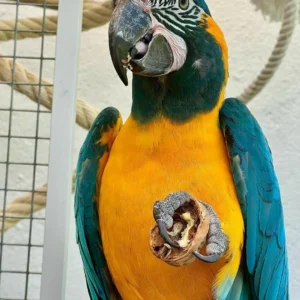
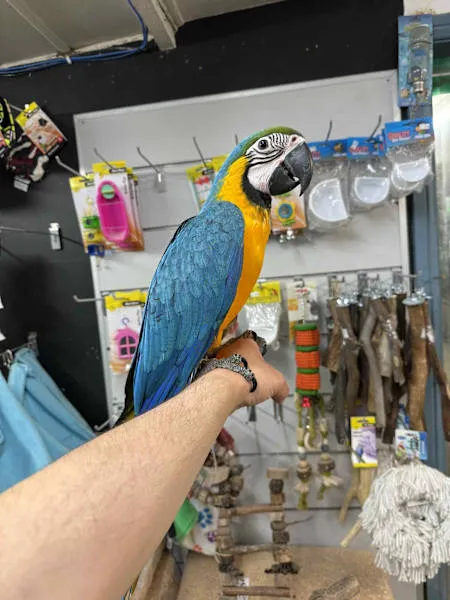
Blue Throated Macaw
Blue Throated Macaw (Ara glaucogularis), also known as the Caninde Macaw or Blue-throated Ara, is a magnificent and critically endangered macaw species that stands as one of the rarest and most visually stunning parrots on Earth. Native exclusively to Bolivia, this large, vibrant bird is characterized by its brilliant yellow plumage, striking red accents, and a distinctive bare blue throat patch that gives it its name, making it instantly recognizable among macaws. As a member of the Ara genus, it shares the family’s intelligence, social nature, and longevity, but its scarcity— with fewer than 400 individuals remaining in the wild—elevates it to a symbol of conservation urgency. In its natural habitat, the Blue throated Macaw plays a vital role in ecosystem dynamics as a seed disperser, consuming and spreading the seeds of palm trees and other plants, which aids in forest regeneration and biodiversity maintenance. This process supports the health of Bolivia’s dry forests and savannas, where the bird’s presence indicates a balanced, thriving environment. However, its existence is perilously threatened by habitat destruction from agricultural expansion, illegal logging, and mining, compounded by the devastating impact of the illegal pet trade, which has decimated populations over the past century. Climate change further exacerbates these issues by causing droughts that reduce food availability and disrupt breeding cycles. Classified as Critically Endangered by the IUCN Red List since 2012, the Blue-throated Macaw is the subject of intensive international conservation efforts, including captive breeding programs at zoos and sanctuaries, habitat protection initiatives, and community education in Bolivia. In captivity, it is a highly prized but extraordinarily demanding pet, requiring specialized care due to its size, intelligence, and longevity (up to 50-70 years). Its affectionate, playful personality and ability to form deep bonds with owners make it rewarding for experienced caretakers, but its rarity means that ethical ownership is heavily regulated wild-caught birds are illegal, and adoption from conservation programs is the only responsible path. The Blue throated Macaw’s story is one of beauty, resilience, and fragility, underscoring the critical need for global action to preserve Bolivia’s unique biodiversity and prevent the extinction of this iconic species.
Physical Description
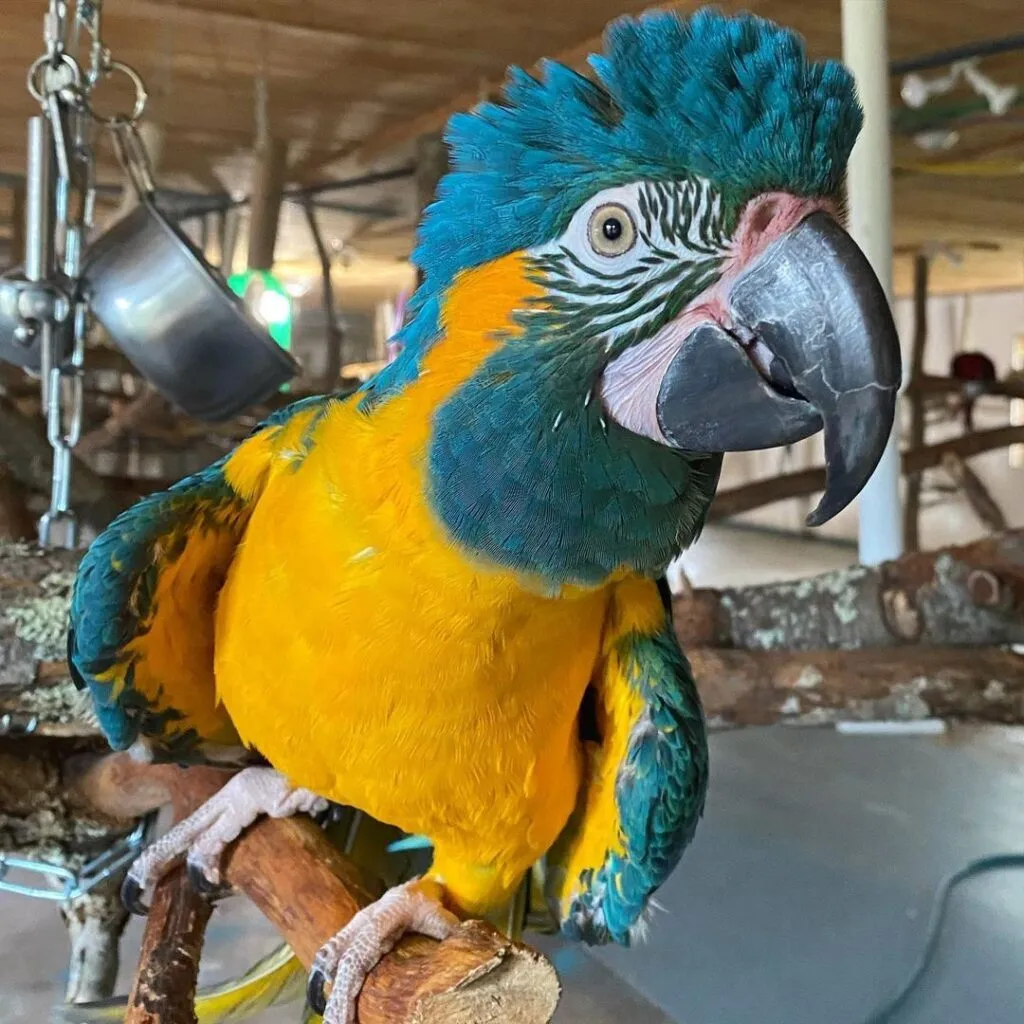
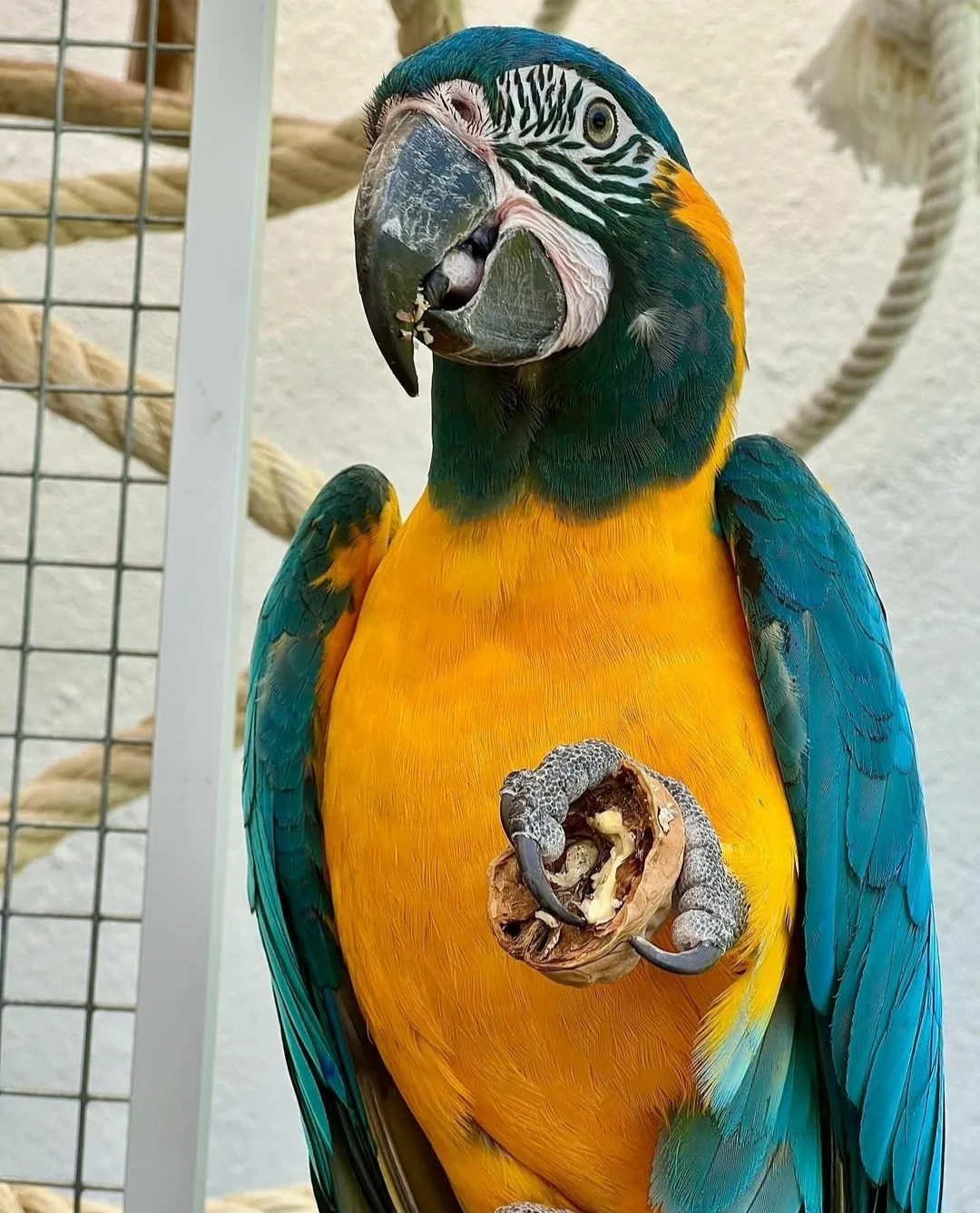
The Blue throated Macaw is an imposing and visually spectacular parrot, embodying the grandeur of the macaw family with its large size and bold coloration. Measuring 85-90 cm (33-35 inches) in length from the tip of its beak to the end of its tail, it boasts a wingspan of 100-110 cm (39-43 inches) that enables powerful, soaring flights across open savannas, and weighs between 900-1,200 grams (32-42 ounces), giving it a robust, muscular build suited for cracking hard-shelled nuts and navigating dense vegetation. Its plumage is a dazzling display of yellows and reds, with the body primarily bright lemon-yellow that fades to paler shades on the underbody, while the shoulders, back, and tail feature vibrant red patches that create a striking contrast, especially visible during flight or displays. Blue Throated Macaw most iconic feature is the bare, smooth facial skin, which ranges from pale pink to grayish-white, framing the eyes and beak, and the prominent blue patch on the throat and upper chest, a unique iridescent blue that deepens in intensity and serves as a key identifier distinguishing it from other macaws. This blue throat is not just ornamental; it may play a role in social signaling or thermoregulation in Bolivia’s hot, dry climate. Blue Throated Macaw beak is massive, curved, and black, with a powerful bite force capable of crushing palm nuts, while the eyes are large, dark brown, and highly expressive, surrounded by the bare facial skin that can flush or change color with emotion. The tail is long, broad, and graduated, with red and yellow feathers that fan out dramatically during courtship or alarm. Sexual dimorphism is subtle and not always apparent; males and females appear nearly identical, though males may have slightly larger beaks or more pronounced blue throats, and accurate sexing often requires behavioral observation, vocal differences, or DNA testing. Juveniles present a muted version of adult plumage, with duller yellows, less defined red accents, and a faint or absent blue throat patch, which develops fully over 2-3 years through successive molts. Their feet are zygodactylous, with two toes facing forward and two backward, each equipped with strong, curved claws for securely gripping branches, perches, and food items. In flight, the Blue throated Macaw exhibits a majestic, direct soar interspersed with deep wingbeats, allowing it to cover long distances efficiently while showcasing its red and yellow flashes. Overall, its physical attributes combine raw power with aesthetic brilliance, reflecting an evolutionary adaptation to a challenging savanna environment while captivating observers with its regal presence.
Habitat and Distribution
The Blue throated Macaw is endemic to Bolivia, with its remaining wild population confined to the northeastern region, particularly the Beni department’s dry forests, savannas, and palm groves along the Rio Mamoré and Rio Iténez basins. Blue Throated Macaw species inhabits tropical dry forests, open woodlands, and savanna ecosystems, often near rivers, lagoons, or wetlands that provide water and abundant palm trees for foraging and nesting. The landscape is characterized by scattered palms (like Attalea phalerata, its primary food source), grasslands, and low shrubs, offering a mix of open spaces for flight and dense cover for protection. Historically, its range extended across a broader area of eastern Bolivia, but extensive deforestation for soybean and sugarcane agriculture, cattle ranching, and infrastructure development has reduced suitable habitats by over 80% in the last few decades. Illegal logging for timber and charcoal production further fragments the landscape, isolating small populations and increasing vulnerability to predation, disease, and human disturbances. Mining activities in the region add to habitat degradation, while climate change introduces droughts that diminish palm fruit availability and alter breeding seasons. The species’ adaptability to semi-open areas has allowed some persistence, but it avoids densely forested or arid zones. Key conservation sites, such as the Barba Azul Nature Reserve (established in 2006) and the Beni Biological Station, provide protected refuges where populations are monitored and threats mitigated. In captivity, replicating these conditions requires large, outdoor aviaries with palm trees, open spaces, and access to natural sunlight to maintain health and behavioral needs.
Behavior and Diet
Blue throated Macaws are highly social and monogamous birds, typically forming lifelong pair bonds and living in small family groups or loose flocks of up to 10-20 individuals, especially during the non-breeding season when food is abundant. Blue Throated Macaw are diurnal, active from dawn to dusk, and exhibit a range of expressive behaviors, including acrobatic aerial displays, mutual preening, vocal duets, and playful interactions like tossing objects or swinging from branches. Intelligent and curious, they demonstrate advanced problem-solving skills, such as using tools to access food or navigating complex puzzles, and can form strong, affectionate relationships with their mates or human caretakers. In the wild, Blue Throated Macaw are wary of threats but bold in familiar territories, often vocalizing loudly to communicate. Dietarily, they are primarily herbivorous, with a strong preference for palm nuts (especially from the motacú palm), seeds, fruits, and occasionally insects or larvae for protein. Foraging involves flying to palm trees, cracking open hard husks with their powerful beaks, and extracting the nutritious kernels. In captivity, a nutritionally complete diet includes high-quality macaw pellets formulated for large parrots, fresh fruits (apples, bananas, mangoes), vegetables (carrots, broccoli), and nuts (macadamias, almonds—in moderation). Foraging enrichment, such as scatter feeding or puzzle toys, is essential to mimic natural behaviors, stimulate mental acuity, and prevent obesity or boredom-related issues.
Breeding and Reproduction
Breeding in Blue throated Macaws is a seasonal affair, typically occurring during Bolivia’s dry season (May to September) when food resources are concentrated and nesting conditions are favorable. Monogamous pairs establish territories and excavate or enlarge cavities in dead or decaying palm trees, often at heights of 10-20 meters to deter predators. The nest is a simple hollow, sometimes lined with wood chips or feathers for insulation. Females lay 2-4 white, oval eggs, which are incubated by both parents for 24-28 days, with the male providing food and protection. Chicks hatch altricial (helpless) and are fed a regurgitated mixture of partially digested food by both adults, developing rapidly under parental care. They fledge after 3-4 months but remain dependent on the family for up to a year, learning foraging and social skills. In the wild, breeding success is low (30-50%) due to predation by snakes, raptors, or mammals, habitat loss, and human interference, with many nests failing. Captive breeding programs, such as those at the Loro Parque Fundación in Spain or Bolivian sanctuaries, have successfully produced offspring for potential reintroduction, though challenges like low fertility rates and incubation issues persist. These efforts are crucial for bolstering the population.
Vocalizations and Communication
Blue throated Macaws are vocally expressive, using a repertoire of loud, resonant calls to communicate within flocks, defend territories, and maintain pair bonds. Their vocalizations include deep, booming squawks, high-pitched screeches, and melodic whistles, often heard echoing across savannas. They can mimic environmental sounds, other birds, or even human speech with impressive clarity, adding to their appeal in captive settings. Calls vary by context: softer, guttural sounds for pair interactions, alarm calls for threats, and playful chatter during group activities. Blue Throated Macaw vocal complexity reflects their social intelligence and aids in coordinating group movements.
Health and Common Issues
As a large, long-lived species, Blue throated Macaws are prone to specific health challenges, including nutritional deficiencies from imbalanced diets (leading to bone issues or feather problems), infectious diseases like psittacosis or avian influenza, and stress-related disorders such as feather plucking or aggression. Lifespan in the wild is 40-60 years, but in captivity, with optimal care, they can live 50-70 years or more. Preventive measures include annual veterinary check-ups with avian specialists, blood tests for diseases, and a clean, enriched environment. Signs of illness include lethargy, abnormal droppings, weight loss, or behavioral changes—prompt intervention is vital, as these birds can hide symptoms until severe.
As Pets: Care, Training, and Considerations
Blue throated Macaws make extraordinary pets for experienced owners who can commit to their unique needs, but they are not suitable for novices due to their size, intelligence, and potential for destructive behaviors. They form deep, loyal bonds with owners, displaying affection through cuddling or vocal interactions, but require a large, secure aviary or indoor enclosure (at least 6x6x10 feet) with climbing structures, toys, and out-of-cage time for exercise. Daily interaction (4-6 hours) is essential for socialization and mental health. Training focuses on positive reinforcement techniques, rewarding behaviors like stepping up, tricks, or commands with treats. They’re generally gentle but can be territorial or nippy if not handled regularly. Ownership demands patience, as they can be noisy and messy, with a lifespan requiring long-term planning. Legally, they fall under CITES regulations, and ethical sourcing from conservation programs is mandatory.
Conservation and Cultural Significance
Critically Endangered with fewer than 400 individuals in the wild, the Blue throated Macaw faces imminent extinction without intervention. Threats include habitat loss (80% reduction), illegal trapping (hundreds captured annually), and low reproduction. Conservation efforts, led by organizations like the World Parrot Trust and Fundación Armonía, include breeding sanctuaries, anti-poaching patrols, and habitat restoration. In Bolivian culture, it’s a symbol of national pride and biodiversity, featured in art and education. Protecting it highlights global parrot conservation needs.
2 reviews for Blue Throated Macaw
Add a review
Related products
Macaws


Macaws
Macaws
Macaws
Macaws
Macaws
Macaws

Macaws
Marcus Patel –
Loving my Blue throated macaw, Aurora. She’s playful, smart, and has gorgeous white feathers. Her bare eyes make her special.
Natalie Lee –
Blue throated macaw are fantastic. My bird, Nimbus, is gentle, learns tricks, and has a sweet temperament. Highly recommend!