
Hahns Macaw
Hahns Macaw (Diopsittaca nobilis), commonly referred to as the Red-shouldered Macaw, is a delightful and diminutive macaw species that stands out for its compact size, vibrant plumage, and gentle, sociable nature among the larger members of the Ara genus. Native to the lush tropical forests of northern South America, this bird has captured the hearts of aviculturists and pet owners alike for its intelligence, playfulness, and ability to form deep bonds with humans, making it one of the most popular small macaws in captivity. Its name honors the German ornithologist Carl-Wilhelm Hahn, who described it in the 19th century, and it embodies the charm of Neotropical biodiversity. In the wild, Hahns Macaws are integral to their ecosystems as social flock dwellers that aid in seed dispersal, consuming fruits, nuts, and berries and excreting viable seeds that promote forest regeneration and support a wide array of plant and animal life. Hahns Macaw role is vital in maintaining the health of South America’s rainforests, where they contribute to the intricate web of ecological interactions. With an estimated population numbering in the millions across its extensive range, the species is classified as Least Concern by the IUCN Red List, indicating overall stability despite regional pressures. However, habitat destruction from deforestation for agriculture (e.g., soybean and palm oil farming), logging, and infrastructure development has led to localized declines, fragmenting populations and reducing nesting sites. The illegal pet trade also impacts wild numbers, with birds captured for sale despite protections. Climate change further complicates matters by disrupting rainfall patterns, potentially affecting breeding and food availability. In captivity, Hahns Macaws are cherished as pets for their affectionate, curious personalities, exceptional trainability, and vocal abilities, which allow them to mimic sounds and learn tricks with ease. They form strong, loyal relationships with owners, displaying humor and playfulness that make them engaging companions. Yet, their intelligence and energy levels require mental stimulation to prevent boredom-related behaviors, and their longevity (up to 20-30 years) demands a long-term commitment. Ethical ownership is essential, as wild-caught birds perpetuate trade issues, so adopting from reputable breeders or rescues is highly recommended. Hahns Macaw’s appeal lies in its blend of beauty, sociability, and manageability, serving as a gateway for many into the world of parrot ownership while highlighting the importance of conservation for its wild counterparts.
Physical Description
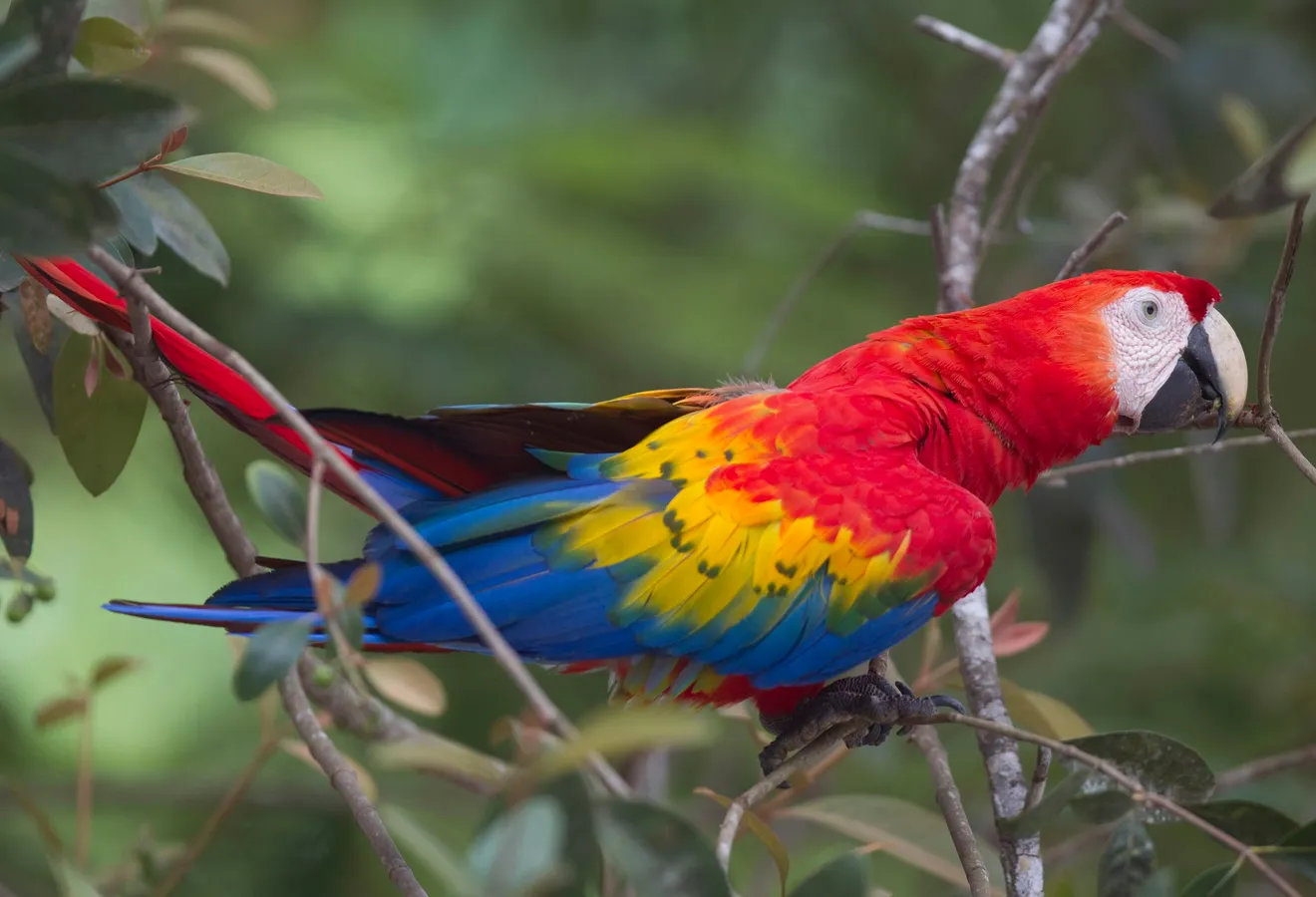
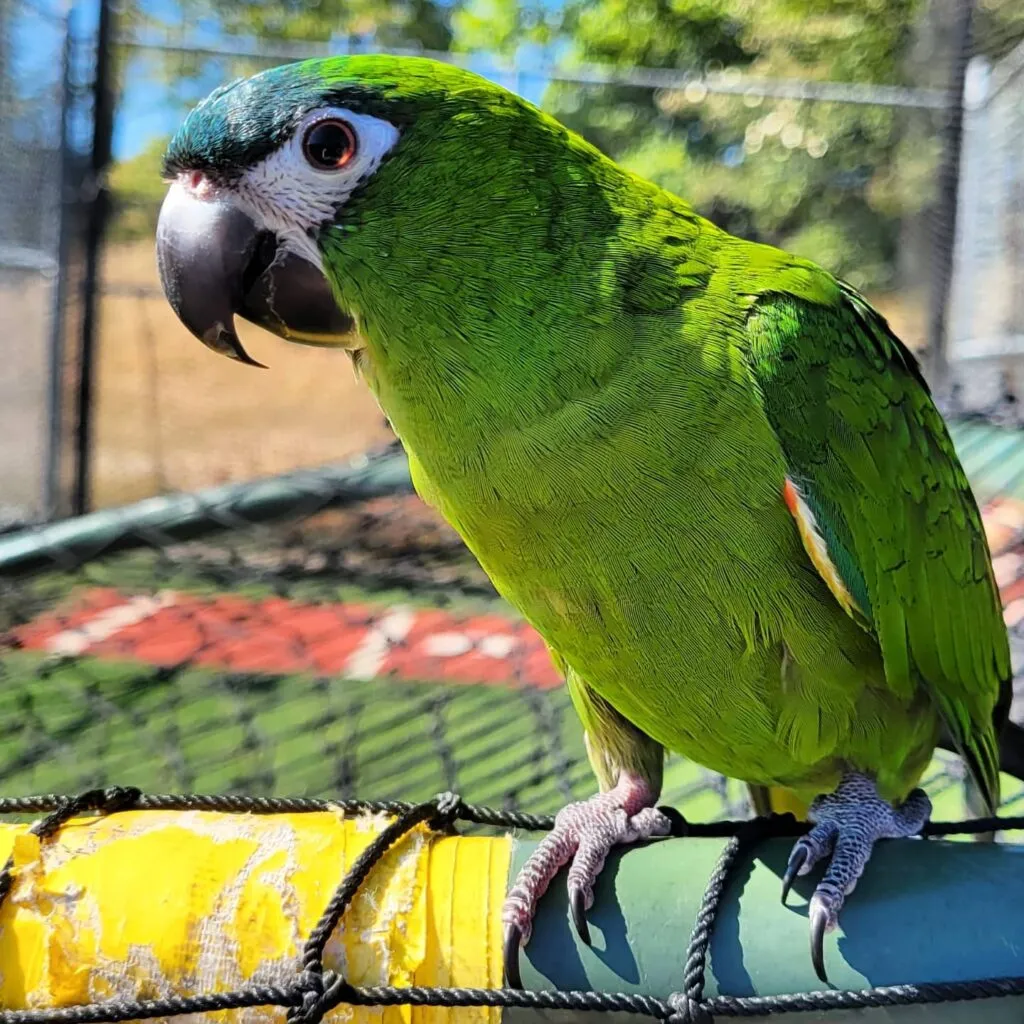
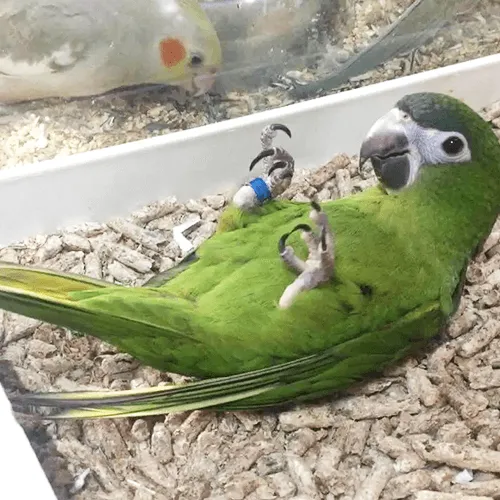
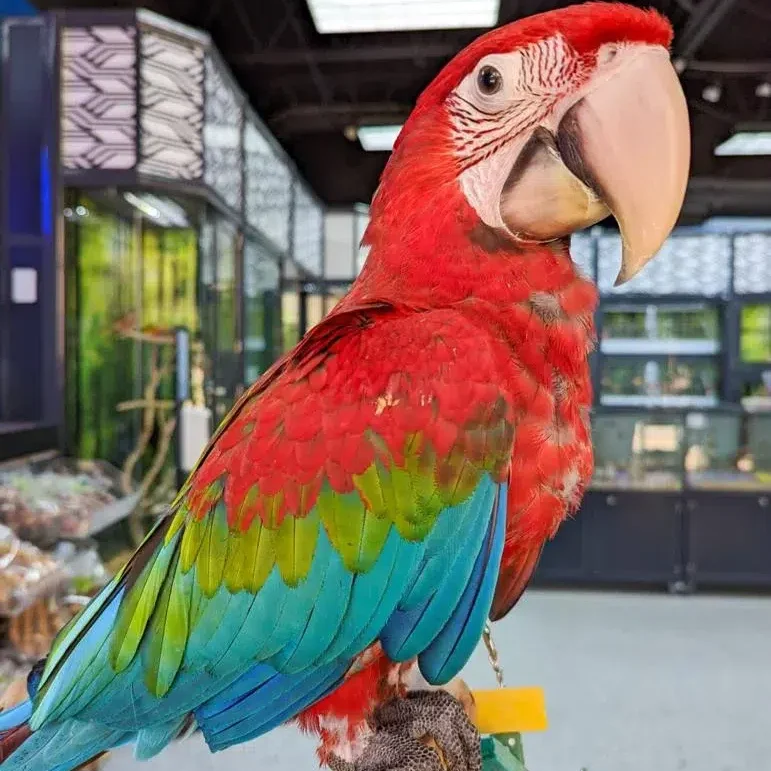
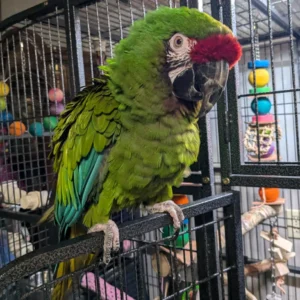
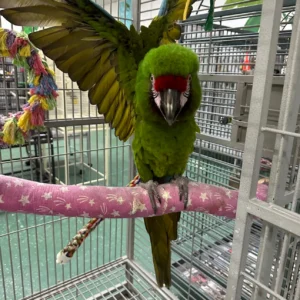
Hahns Macaw is a petite yet strikingly beautiful macaw, embodying the elegance and colorfulness of the Ara genus in a more compact form that makes it approachable and endearing. Measuring 30-35 cm (12-14 inches) in length from the tip of its beak to the end of its tail, it boasts a wingspan of 40-45 cm (16-18 inches) for agile, swift flights through dense forest canopies or open woodlands, and weighs between 140-170 grams (5-6 ounces), giving it a lightweight, nimble build suited for acrobatic maneuvers and seed-cracking. Hahns Macaw plumage is a harmonious blend of vibrant greens, reds, and blues, with the body primarily a rich, olive-green that provides excellent camouflage in foliage, while the shoulders, forehead, and thighs are adorned with bright red patches that add a splash of color and serve as visual signals during displays. Hahns Macaw wings and tail feature subtle blue highlights, particularly on the flight feathers and tail tips, creating a subtle iridescence that shines in sunlight. The bare facial skin is smooth and pale white or grayish, framing the eyes and beak, and adding to the bird’s expressive, almost whimsical visage. Hahns Macaw beak is stout, curved, and dark gray, with a strong bite for cracking nuts and seeds, while the eyes are large, dark brown, and highly alert, surrounded by the bare skin that can flush or change color with emotion. Hahns Macaw tail is long and tapered, with green and blue feathers that aid in balance and directional control. Sexual dimorphism is subtle and not always obvious; males may exhibit slightly brighter red accents and more pronounced blue highlights, while females appear marginally duller, but accurate sexing often requires behavioral observation, vocal differences, or DNA testing. Juveniles present a muted version of adult plumage, with paler greens, less defined red patches, and a duller facial skin, which intensifies over 1-2 years through successive molts as they reach maturity. THahns Macaw feet are zygodactylous, with two toes facing forward and two backward, each equipped with strong, curved claws for securely gripping branches, perches, and food items. In flight, Hahns Macaw displays quick, agile wingbeats with occasional glides, showcasing flashes of red and blue that make it a charming sight. Overall, its physical attributes combine delicacy with vibrancy, reflecting an evolutionary adaptation to a lush, challenging habitat while captivating observers with its playful presence and colorful charm.
Habitat and Distribution
Hahns Macaw is native to the tropical lowlands of northern South America, with a broad range encompassing Brazil (especially the Amazon Basin), Peru, Colombia, Venezuela, Ecuador, Bolivia, Guyana, Suriname, and French Guiana. It inhabits a variety of humid, forested ecosystems, including tropical rainforests, riverine forests, savannas, and palm groves, often near rivers, lakes, or wetlands that provide water and abundant food sources. These habitats are characterized by dense canopy cover, epiphytes, and fruit-bearing trees, offering ideal conditions for foraging, nesting, and social interactions. Hahns Macaw species is highly adaptable, venturing into secondary forests, agricultural edges, or even urban areas in some regions, but it thrives best in undisturbed woodlands. Its distribution is shaped by geographical features like the Amazon River system, which facilitates movement but also poses barriers. Deforestation for agriculture (e.g., soybean and palm oil plantations), logging for timber, and infrastructure projects like roads and dams have severely impacted its range, reducing habitat by significant percentages in key areas and fragmenting populations. In Brazil’s Amazon, illegal logging and land conversion have isolated groups, increasing vulnerability to predation and disease. Climate change adds pressure with altered rainfall patterns causing floods or droughts that affect fruit availability and breeding. Protected areas, such as national parks in Peru and Brazil, provide refuges, but enforcement is often inadequate. In captivity, replicating these conditions requires large, outdoor aviaries with trees, water features, and natural sunlight to maintain health and behavioral needs.
Behavior and Diet
Hahns Macaws are inherently social and playful birds, typically forming small flocks of 10-20 individuals that forage, roost, and travel together, fostering cooperation and safety in complex environments. Hahns Macaw are diurnal, active from dawn to dusk, and exhibit a curious, affectionate repertoire of behaviors, including acrobatic play, mutual preening, vocal interactions, and exploratory antics like investigating objects or swinging from branches. Intelligent and trainable, they demonstrate problem-solving skills, such as manipulating toys or learning commands, and can form strong, loyal bonds with their mates or human caretakers. In the wild, they are bold and inquisitive, often approaching humans or exploring their surroundings. Dietarily, they are primarily herbivorous, with a focus on fruits, seeds, nuts, and berries, supplemented by occasional insects or larvae for protein. Foraging involves plucking items from trees or the ground. In captivity, a balanced diet includes high-quality macaw pellets, fresh fruits (e.g., apples, bananas), vegetables (carrots, broccoli), and nuts (in moderation). Foraging enrichment is crucial to stimulate natural behaviors and prevent boredom.
Breeding and Reproduction
Breeding in Hahns Macaws is seasonal, often aligned with the wet season when food is plentiful. Pairs nest in tree cavities, laying 3-4 eggs incubated for 24-26 days. Chicks fledge after 8-10 weeks.
Vocalizations and Communication
Soft whistles and chirps; capable of mimicking simple sounds.
Health and Common Issues
Susceptible to nutritional deficiencies. Lifespan: 20-30 years.
As Pets: Care, Training, and Considerations
Affectionate and trainable; require moderate space and interaction.
Conservation and Cultural Significance
Least Concern; valued in regional folklore.
Reviews
There are no reviews yet.
Related products
Macaws

Macaws
Macaws
Macaws

Macaws
Macaws


Macaws

Macaws
Be the first to review “Hahns Macaw”