
Hyacinth Macaw
Hyacinth Macaw (Anodorhynchus hyacinthinus) is the largest and most majestic parrot species in the world, renowned for its stunning cobalt-blue plumage, immense size, and gentle, intelligent nature. Native to the savannas and palm groves of central South America, particularly Brazil and parts of Bolivia and Paraguay, this bird has captivated humans for centuries with its beauty and rarity. In the wild, Hyacinth Macaws are monogamous and social, playing a vital role in their ecosystems as seed dispersers, consuming palm nuts and helping regenerate forests. However, with fewer than 5,000 individuals remaining in the wild, it’s classified as Endangered by the IUCN Red List, facing severe threats from habitat loss, illegal trapping for the pet trade, and low reproductive rates. In captivity, Hyacinth Macaw are highly prized as pets for their affectionate bonds, problem-solving abilities, and longevity (up to 50-60 years), but their size, needs, and rarity make them unsuitable for inexperienced owners. Ethical ownership emphasizes adoption from conservation programs or rescues to support recovery efforts. The Hyacinth Macaw symbolizes the fragility of biodiversity and the urgent need for protection in the Pantanal region.
Physical Description
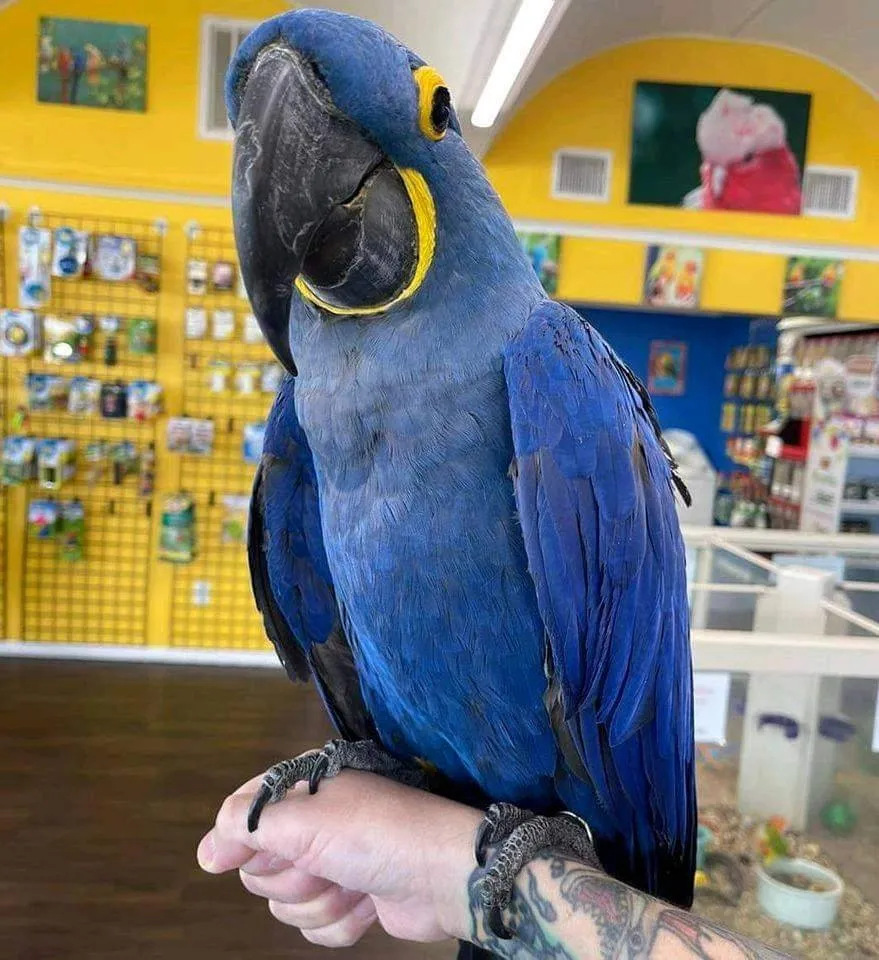
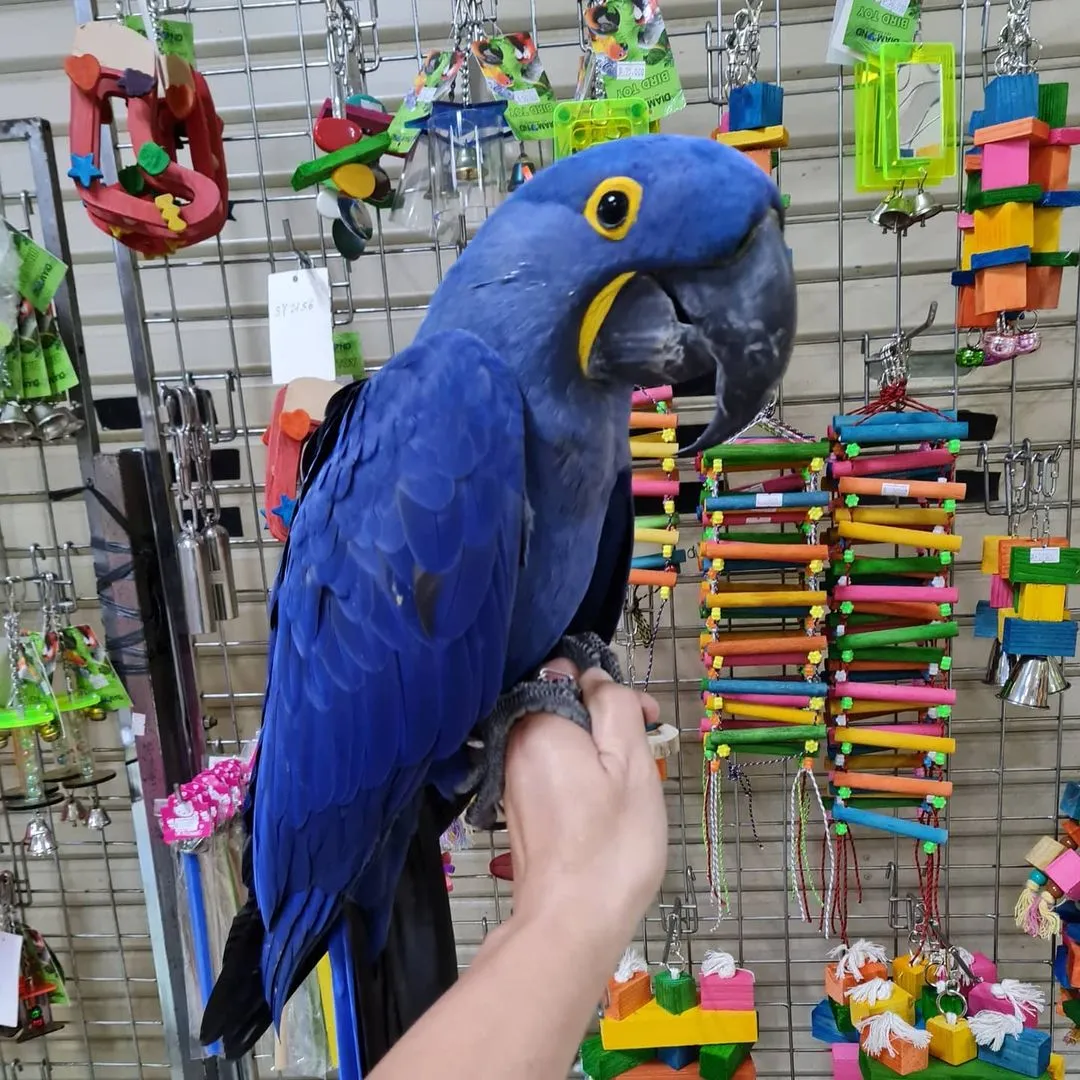
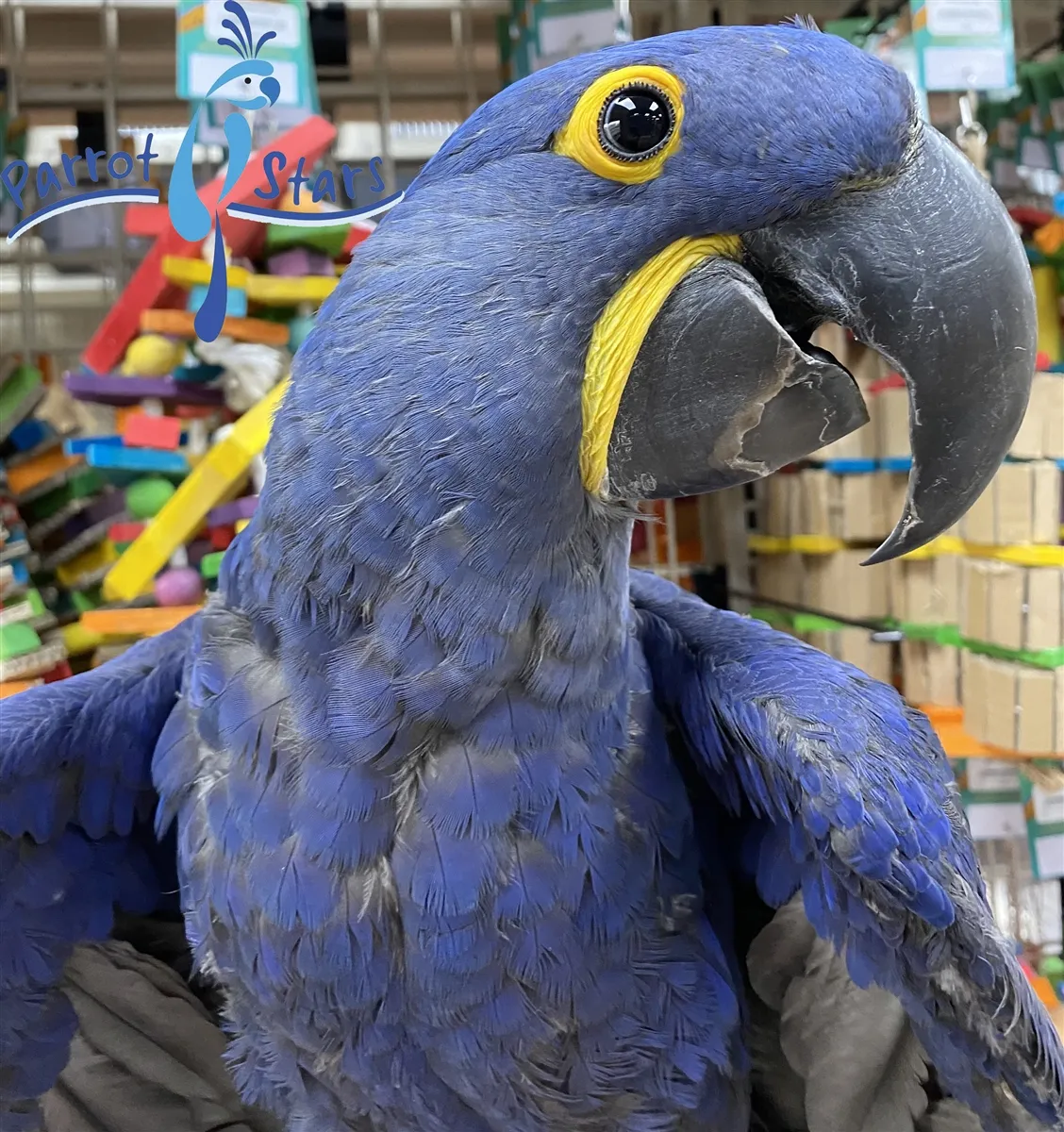
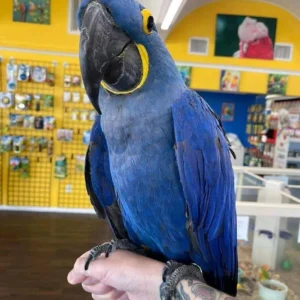
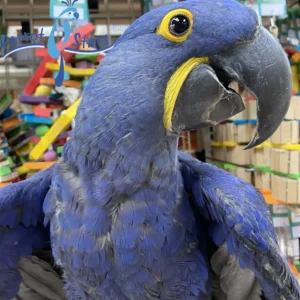
The Hyacinth Macaw is an awe-inspiring giant among parrots, measuring 95-105 cm (37-41 inches) in length from beak to tail, with a wingspan of 120-140 cm (47-55 inches) that enables powerful, soaring flights across open landscapes, and weighing 1,200-1,700 grams (42-60 ounces), giving it a robust, muscular build suited for cracking the hardest palm nuts. Hyacinth Macaw plumage is a uniform, deep cobalt-blue that shimmers with iridescent highlights in sunlight, making it one of the most visually striking birds on Earth—there are no other colors or patterns, just pure, intense blue from head to tail. Hyacinth Macaw bare facial skin is pale yellow or white, contrasting sharply with the blue feathers and adding to its expressive face. The beak is massive, curved, and black, with an extraordinary bite force capable of crushing acuri palm nuts, while the eyes are large, dark brown, and alert, surrounded by the bare skin that can flush with emotion. Hyacinth Macaw tail is long and broad, aiding in balance and maneuverability. Sexual dimorphism is minimal; males may have slightly larger beaks, but accurate sexing requires behavioral cues or DNA testing. Juveniles have duller blue plumage and grayish facial skin, which matures over 3-4 years. Their zygodactylous feet are strong for gripping branches. In flight, they display slow, deliberate wingbeats with glides, showcasing their majestic presence. Overall, the Hyacinth Macaw’s sheer size and monochromatic beauty make it a living sapphire, reflecting adaptations to its savanna habitat.
Habitat and Distribution
The Hyacinth Macaw is endemic to the central regions of South America, primarily the Pantanal wetlands in Brazil, with smaller populations in eastern Bolivia and possibly Paraguay. It inhabits open savannas, palm groves, and riverine forests, favoring areas with abundant acuri palms (Attalea phalerata), its primary food source. Hyacinth Macaw habitats provide nesting sites in tall trees and open spaces for foraging. The species is nomadic, moving seasonally for food, but deforestation for agriculture (e.g., soybean farming) and cattle ranching has destroyed much of its range, reducing suitable areas by over 80%. Illegal logging and mining further fragment populations. Climate change, with droughts affecting palm fruiting, exacerbates threats. Protected areas like Brazil’s Pantanal National Park offer refuges, but poaching remains rampant. In captivity, they require large aviaries mimicking savanna conditions with palms and open flight space.
Behavior and Diet
Hyacinth Macaws are highly social and monogamous, forming lifelong pair bonds and living in small family groups or loose flocks. They are diurnal, active during the day, and exhibit gentle, curious behaviors like mutual preening, aerial displays, and problem-solving. Intelligent and affectionate, they can learn complex tasks and form deep bonds with caretakers. Dietarily, they are primarily herbivorous, specializing in acuri palm nuts, supplemented by seeds, fruits, and occasional insects. Foraging involves flying to palms and cracking nuts with their powerful beaks. In captivity, a diet of high-quality macaw pellets, fresh fruits (e.g., apples, mangoes), vegetables, and nuts is essential, with foraging enrichment to stimulate natural behaviors.
Breeding and Reproduction
Breeding occurs during the wet season, with pairs nesting in tree cavities in tall palms. Females lay 2-4 eggs, incubated for 24-28 days. Chicks are altricial, fledging after 3-4 months but dependent longer. Wild success is low due to threats, with captive programs aiding reintroduction.
Vocalizations and Communication
Loud, resonant calls for communication; capable of mimicking sounds but less vocal than some Hyacinth Macaw .
Health and Common Issues
Susceptible to nutritional deficiencies and psittacosis. Lifespan: 50-60 years.
As Pets: Care, Training, and Considerations
Demanding pets needing large spaces and stimulation; best for experts.
Conservation and Cultural Significance
Endangered with <5,000 left; conservation efforts include breeding and habitat protection. Symbolizes Brazilian wildlife.
Reviews
There are no reviews yet.
Related products
Macaws

Macaws


Macaws
Macaws
Macaws
Macaws

Macaws

Macaws
Be the first to review “Hyacinth Macaw”