Blue Spix Macaw
Blue Spix Macaw (Cyanopsitta spixii), often simply referred to as the Spix’s Macaw or the Little Blue Macaw, stands as one of the most iconic and tragically endangered birds on the planet. With its mesmerizing all-blue plumage that shimmers like the sky at dusk, this small parrot has become a symbol of both the beauty and fragility of biodiversity. Once thriving in the wilds of Brazil, the Spix Macaw now teeters on the brink of extinction, its story a poignant reminder of humanity’s impact on the natural world. In this expanded guide, we’ll delve deep into its biology, history, conservation challenges, and cultural significance, drawing on scientific insights and real-world efforts to protect it.
Physical Description and Behavior: A Closer Look at the Bird
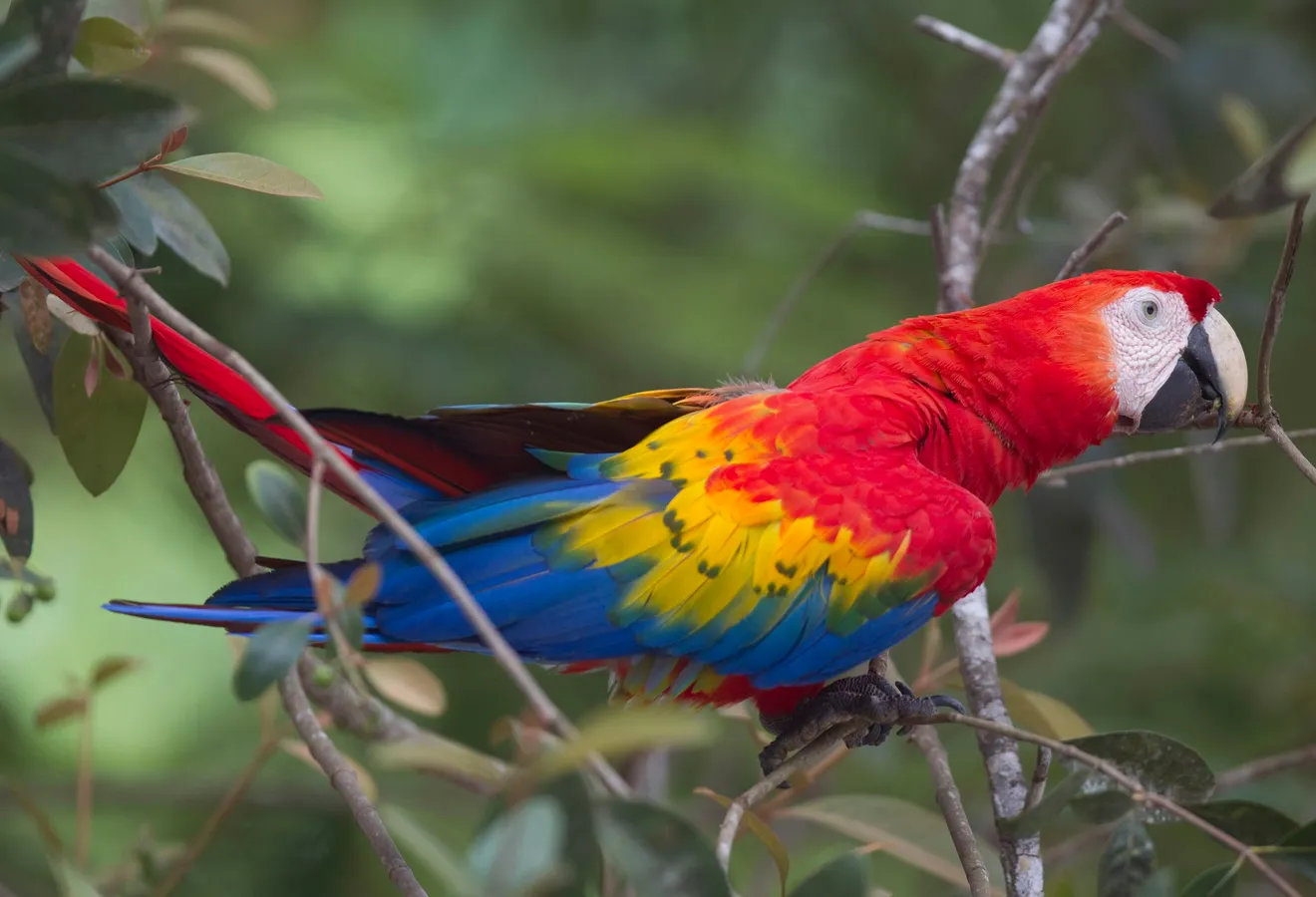
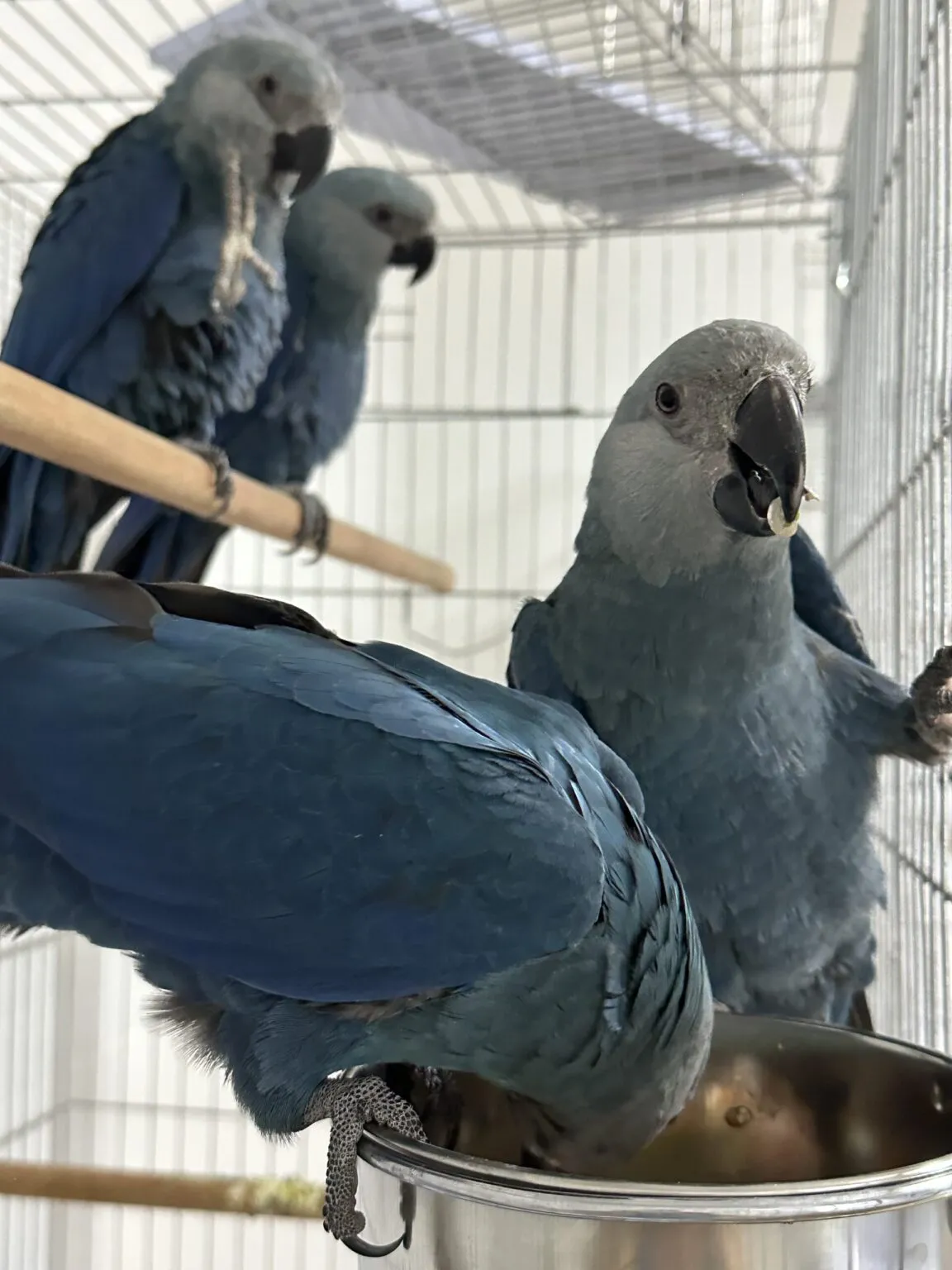
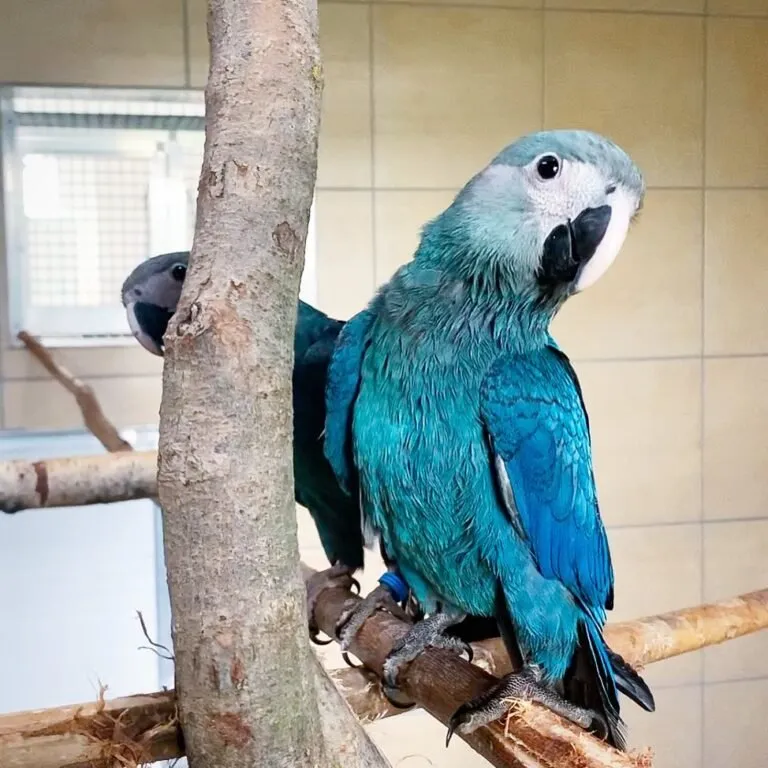
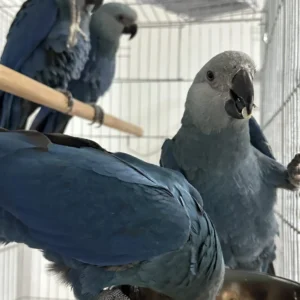
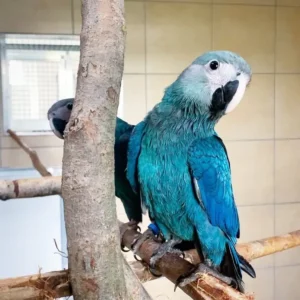
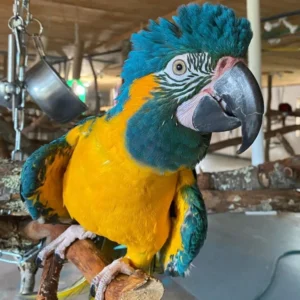
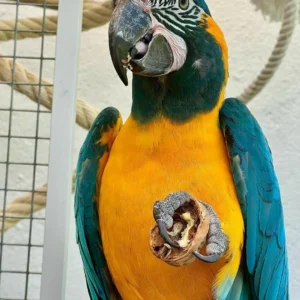
The Blue Spix Macaw is a marvel of avian design, measuring approximately 22-23 inches (56-58 cm) from beak to tail tip, with a wingspan of about 16-18 inches (40-45 cm). Unlike its larger macaw cousins, such as the Scarlet or Hyacinth Macaws, the blue Spix macaw is slender and compact, weighing in at just 10-12 ounces (280-340 grams). Its most striking feature is its uniform blue coloration: a soft, powdery blue on the head and underbody that deepens to a richer, cobalt hue on the wings, back, and tail. This monochromatic beauty is accented by a bare, pale gray facial patch around the eyes, which gives the bird an almost inquisitive, expressive look. Juveniles start with a duller, grayish-blue plumage that gradually intensifies as they mature, a process that takes about 2-3 years.
Behaviorally, the blue Spix Macaw is a highly intelligent and social creature, exhibiting traits that make it both endearing and complex. As a member of the parrot family (Psittacidae), it possesses a strong, curved beak ideal for cracking seeds and nuts, and its zygodactyl feet—two toes facing forward and two backward—allow for exceptional climbing and manipulation. In the wild, they form monogamous pairs that bond for life, often seen preening each other or engaging in synchronized flights. Their social structure extends to small family groups, where they communicate through a repertoire of calls: sharp, high-pitched squawks for alarms, softer chirps for bonding, and even mimicry of environmental sounds like flowing water or distant animal cries. Captive individuals have demonstrated remarkable cognitive abilities, learning to mimic human speech, solve simple puzzles, and even use tools to access food. Playfulness is a hallmark; they enjoy acrobatic aerial displays, tumbling through the air or hanging upside down from branches, behaviors that highlight their curious and energetic nature. However, this sociability also makes them vulnerable—isolated birds in captivity can suffer from depression-like symptoms, underscoring the importance of enrichment programs.
Habitat and Range: The Caatinga Ecosystem
The Blue Spix Macaw is native to the Caatinga, a unique and biodiverse dry forest biome in northeastern Brazil. This region, often called the “white forest” due to its pale, thorny vegetation that reflects sunlight, covers about 11% of Brazil’s land area and is characterized by semi-arid conditions with seasonal rainfall. The Caatinga is home to over 3,000 plant species, many of which are endemic, and supports a rich array of wildlife, including armadillos, anteaters, and other birds. Historically, the blue Spix Macaw’s range was centered around the São Francisco River basin, particularly in the states of Bahia and Pernambuco, where it inhabited scrubby woodlands, gallery forests along rivers, and areas dotted with licuri palms (Syagrus coronata)—a key tree for nesting.
These palms provide the perfect nesting sites: deep, hollow trunks that offer protection from predators and the elements. The macaws would excavate or enlarge these cavities, lining them with wood chips and feathers. Foraging grounds included the forest floor and low branches, where they fed on a diet rich in seeds from licuri and other palms, fruits, nuts, and occasional insects. The Caatinga’s dry climate, with temperatures ranging from 68-86°F (20-30°C) and rainfall concentrated in a few months, shaped their adaptations— they are drought-tolerant and active during cooler parts of the day to conserve energy.
Sadly, this habitat has been severely degraded. Deforestation for agriculture (e.g., soybean and cotton plantations), cattle ranching, and infrastructure projects like dams has fragmented the landscape, reducing suitable areas by over 50% in recent decades. The São Francisco River, once a lifeline, has been dammed extensively, altering water flows and flooding nesting sites. As a result, the Spix’s Macaw’s natural range has shrunk dramatically, pushing the species to the edge.
Conservation Status: A Race Against Extinction
The Blue Spix Macaw is classified as Critically Endangered by the International Union for Conservation of Nature (IUCN) Red List, with a population estimate of zero in the wild. The last confirmed sighting of a wild individual was in 2000, near Curaçá in Bahia, Brazil, though unconfirmed reports and camera traps have fueled hopes of a few survivors in remote pockets. Extensive surveys by organizations like BirdLife International and the Brazilian Institute of Environment and Renewable Natural Resources (IBAMA) have largely come up empty, leading experts to declare the species functionally extinct in nature.
The road to this dire status began in the 19th century, when European collectors and the exotic pet trade targeted the Blue Spix Macaw for its rarity and beauty. By the 1980s, only a handful remained in the wild, and the last known breeding pair was captured in 1987. Habitat destruction accelerated the decline, compounded by competition from invasive species like feral cats and rats, which prey on eggs and chicks. Climate change exacerbates the issue, with shifting rainfall patterns drying out the Caatinga further.
Despite this bleak outlook, conservation efforts offer a glimmer of hope. Captive breeding programs have been remarkably successful, with zoos and sanctuaries worldwide maintaining a population of around 200 individuals as of 2023. Key players include the Al Wabra Wildlife Preservation in Qatar, Loro Parque in Spain, and facilities in Germany and Brazil. These programs use techniques like artificial incubation, hand-rearing, and behavioral enrichment to ensure genetic diversity. Reintroduction efforts began in 2019, with the release of captive-bred birds into protected areas in Bahia. Monitoring via GPS trackers and camera traps tracks their survival, with some birds forming pairs and even nesting. Challenges remain, including predation and the need for ongoing habitat restoration, but these initiatives have prevented total extinction.
Organizations like the Blue Spix Macaw Project, IUCN, and the Brazilian government collaborate on broader strategies, including anti-poaching patrols, reforestation with native palms, and community education to reduce illegal trade. The species’ plight has also spurred legal protections; it’s listed under CITES Appendix I, banning international trade.
Cultural and Media Impact: From Folklore to Film
The Blue Spix Macaw holds a special place in Brazilian culture, symbolizing the resilience of the Caatinga’s wildlife. In local folklore, it’s sometimes depicted as a guardian spirit of the dry forests, its blue feathers representing the sky and water—precious resources in an arid land. Indigenous communities, such as the Tupi and Guarani peoples, have incorporated it into myths, viewing it as a messenger between worlds.
Globally, the blue Spix Macaw gained mainstream fame through the 2011 animated film Rio, where the character Blu—a domesticated blue Spix Macaw voiced by Jesse Eisenberg—embarks on an adventure to find his kind and save his species. While the film took creative liberties (e.g., portraying the bird as a samba-dancing pet), it raised unprecedented awareness, donating proceeds to conservation and inspiring a generation. However, it also sparked controversy for potentially glamorizing the pet trade, though the filmmakers emphasized education.
Beyond Rio, the macaw has appeared in documentaries like The Last Flight of the Blue Spix Macaw and art installations, highlighting themes of loss and hope. Its story resonates in environmental activism, serving as a case study in how human actions can drive species to extinction—and how science can fight back.
Fun Facts and Additional Insights
- Lifespan and Reproduction: In captivity, blue Spix Macaws can live 20-30 years, with breeding pairs laying 2-4 eggs per clutch. Incubation takes about 24 days, and chicks fledge after 3-4 months, staying with parents for up to a year.
- Diet Details: Their menu includes over 20 types of seeds and fruits, with a preference for licuri palm nuts, which they crack open with precision. This diet supports their high metabolism and vibrant plumage.
- Unique Traits: Unlike noisy larger macaws, their calls are softer and more melodic, aiding stealth in open habitats. They’ve also shown self-recognition in mirrors, a sign of advanced cognition.
- Related Species and Evolution: As the only member of the Cyanopsitta genus, it’s closely related to the Illiger’s Macaw (another endangered species). Genetic studies suggest it diverged from other macaws millions of years ago, adapting to the Caatinga’s harsh conditions.
- Economic Value: In the pet trade, a single bird could fetch thousands of dollars before bans, underscoring the need for ethical sourcing—today, all Blue Spix Macaws in captivity are part of conservation programs.
- Global Connections: The species has inspired international collaborations, with birds “loaned” between zoos for breeding, creating a global network of hope.
The Blue Spix Macaw’s tale is one of tragedy and triumph, reminding us that extinction is not inevitable with concerted effort. If you’d like more on specific conservation updates, a fictional story featuring this macaw, comparisons to other endangered birds, or anything else, just say the word!
Reviews
There are no reviews yet.
Related products
Macaws
Macaws
Macaws
Macaws
Macaws
Macaws
Macaws
Macaws
Be the first to review “Blue Spix Macaw”