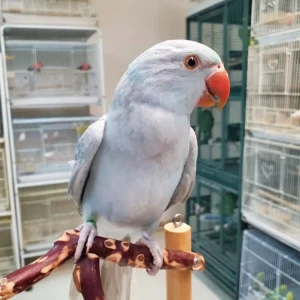
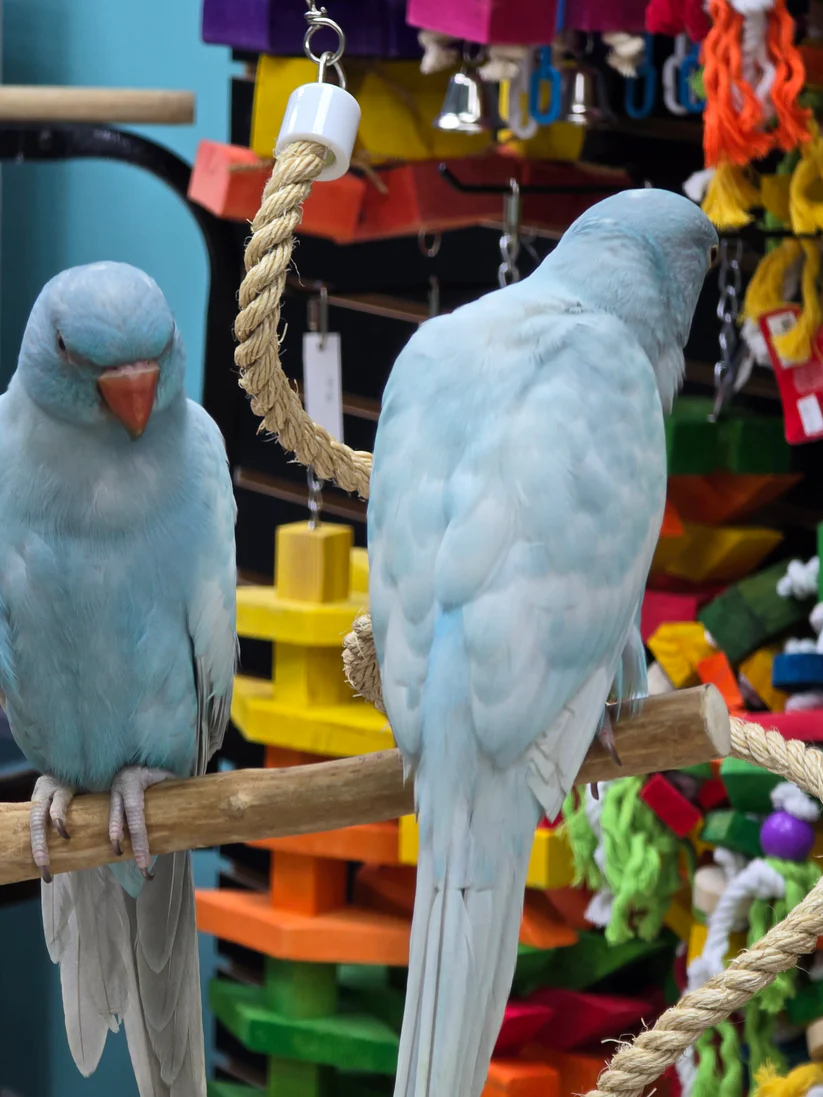
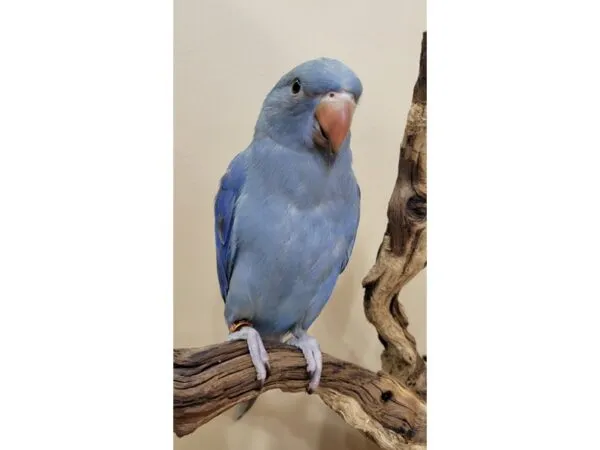
Blue/White Lacewing Parrot
Blue/White Lacewing Parrot is a stunning genetic mutation that showcases the intricate artistry of nature through its lace-like feather patterns, blending deep blue hues with pristine white in a mesmerizing display. As a variant of the Indian Ringneck Parrot (Psittacula krameri), this bird originates from the Indian subcontinent and Southeast Asia, where its ancestors have been admired for generations for their intelligence, vocal talents, and ability to connect deeply with humans. The Lacewing mutation creates a delicate, lacework pattern on the feathers, giving the bird an ethereal, almost embroidered appearance. In this comprehensive guide, we’ll delve into the origins, traits, behavior, and care of the Blue/White Lacewing Parrot, providing essential insights for bird enthusiasts and potential owners. Whether you’re captivated by its patterned plumage or its charming personality, this article will help you understand the magic of this rare and exquisite companion.
What is a Blue/White Lacewing Parrot?
The Blue/White Lacewing Parrot is a genetic mutation of the Indian Ringneck Parrot, characterized by a unique lace-like pattern on its feathers, primarily in shades of blue and white. The “Lacewing” mutation results from alterations in feather structure, where the edges of the feathers develop a fringed or lace appearance, often with blue bases and white tips or borders, creating a soft, textured look. Unlike the solid-colored or standard green Indian Ringneck, this variant displays a mottled, lace-patterned plumage that resembles delicate fabric or frost on glass. This recessive mutation is produced through selective breeding in captivity and does not occur in the wild. Blue/White Lacewing Parrots are medium-sized birds, measuring 14-16 inches in length and weighing around 4-5 ounces, with a lifespan that can reach 25-30 years. Their intricate beauty and rarity make them a favorite among breeders and collectors, symbolizing the pinnacle of avian genetic diversity.
Physical Characteristics of the Blue/White Lacewing Parrot
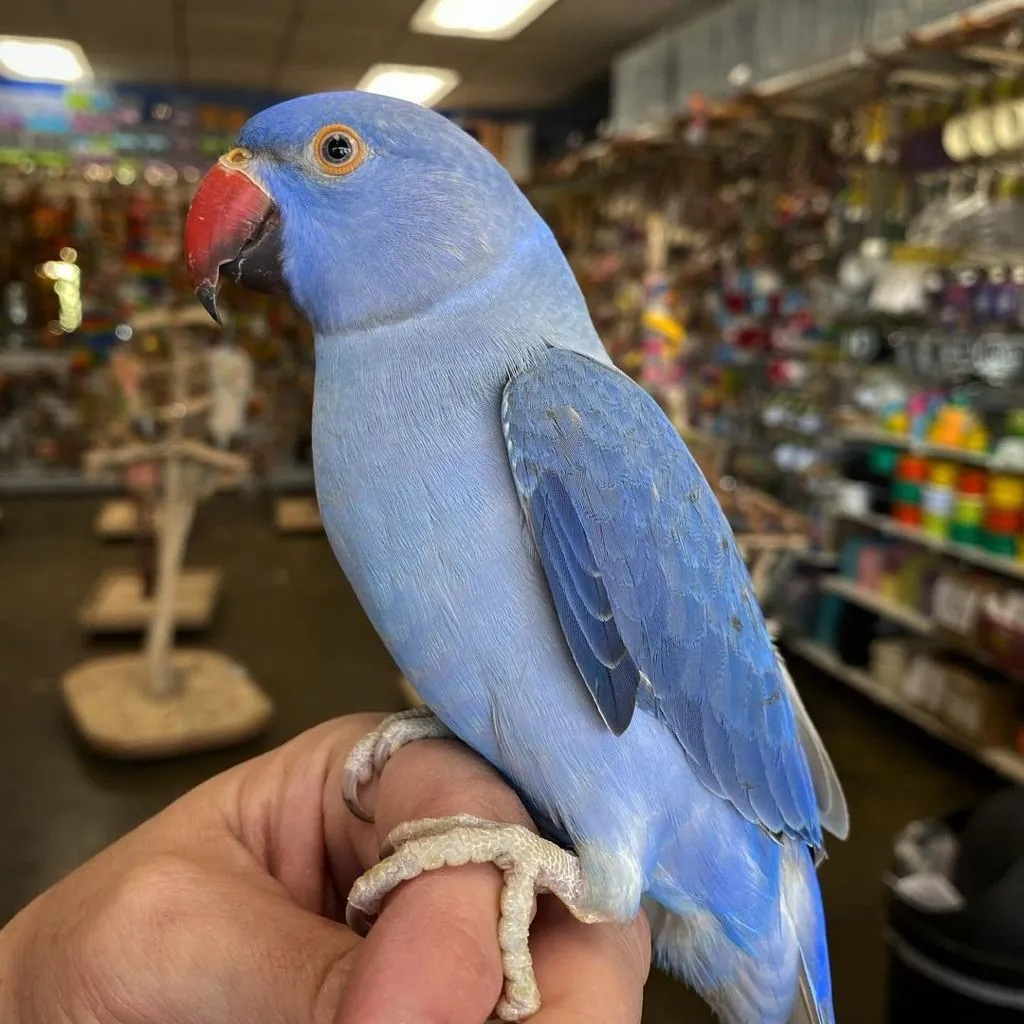
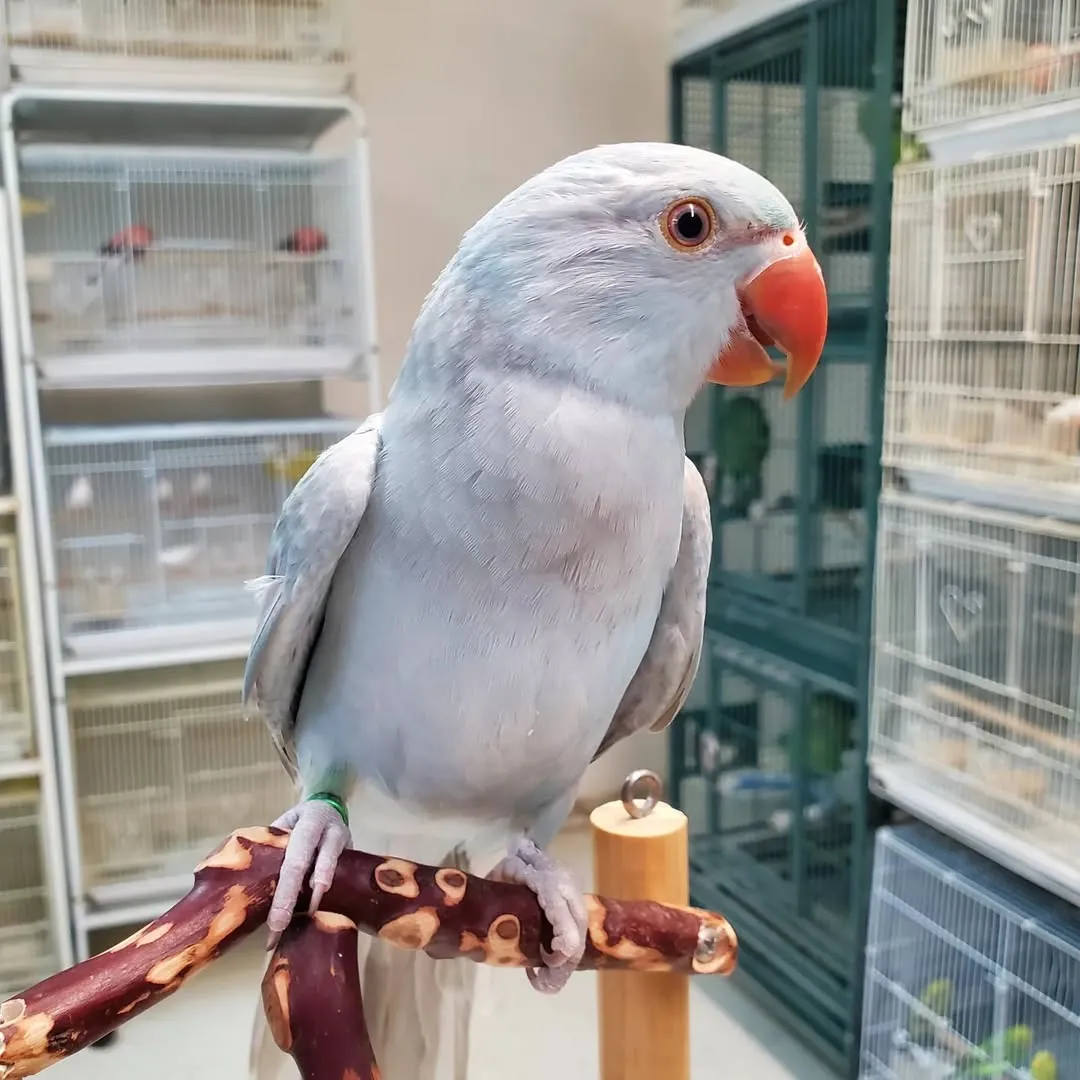
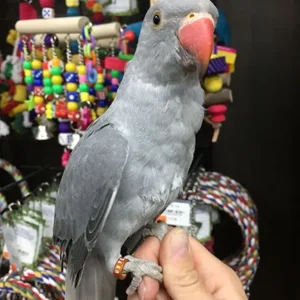
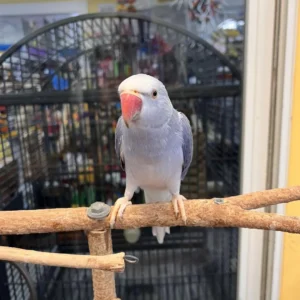
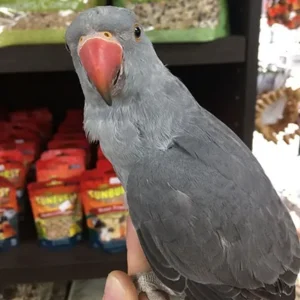
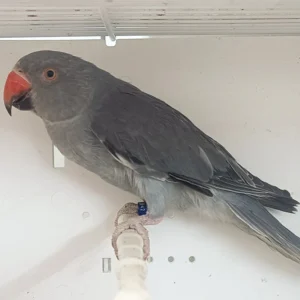
The most enchanting aspect of the Blue/White Lacewing Parrot is its lace-patterned plumage, which combines deep blue tones with white fringing in a delicate, intricate design. The body feathers are predominantly a rich cobalt blue, edged or tipped with white lacework that gives the bird a soft, feathered texture—almost like a living lace doily. Wings and tail feathers exhibit similar patterns, with blue bases and white lace borders that catch the light beautifully, sometimes revealing subtle iridescent hints. The beak is a vibrant red, contrasting sharply with the blue and white palette, and the eyes are dark, surrounded by a white ring that adds to the bird’s alert and expressive gaze. Males develop the signature black neck ring as they mature, which may be softened or accentuated by the lace pattern, while females have a less prominent or absent ring. The feet and legs are grey or pale, and the overall build is sleek and agile, with strong wings for flight and a powerful beak for foraging. This mutation does not affect the bird’s physical health; Blue/White Lacewing Parrots are as robust and active as their standard counterparts.
Behavior and Personality of the Blue/White Lacewing Parrot
The Blue/White Lacewing Parrot is celebrated for its intelligent, playful, and affectionate nature, making it an engaging pet for those who value interactive companionship. These birds are highly trainable and excel at mimicking human speech, often learning words, phrases, and sounds with impressive clarity and enthusiasm. Their curious and social disposition leads them to explore toys, puzzles, and their environment, forming deep bonds with owners through behaviors like head-bobbing, preening, and gentle vocalizations. As flock animals, they thrive on attention and may exhibit boredom-related issues, such as screaming or feather plucking, if left alone for extended periods. Early socialization helps prevent shyness or aggression, and they generally get along well with other birds or pets when introduced properly. Energetic and acrobatic, Blue/White Lacewing Parrots enjoy climbing, flying, and playful games, bringing daily joy and entertainment. However, their vocal nature can make them noisy, especially at dawn and dusk, so potential owners should be mindful of this trait.
Care and Maintenance for Your Blue/White Lacewing Parrot
Caring for a Blue/White Lacewing Parrot requires dedication to its physical, mental, and environmental needs to ensure a long, healthy life. Start with a spacious cage—at least 24x24x36 inches—made from durable stainless steel to handle the bird’s beak. Include a variety of perches, toys, and enrichment items such as bells, ladders, and foraging puzzles to stimulate the mind and prevent boredom. Daily supervised out-of-cage time is essential for exercise and bonding; provide a safe, bird-proofed area to avoid hazards like toxic plants or open windows. Bathing is important for maintaining the lace-patterned plumage; offer a shallow water dish or gentle mist to keep feathers clean and vibrant.
Nutrition forms the foundation of the Blue/White Lacewing Parrot’s well-being. Feed a balanced diet of high-quality parrot pellets, supplemented with fresh fruits like apples, berries, and pears, and vegetables such as carrots, broccoli, and leafy greens. Nuts and seeds should be limited to maintain nutritional balance and prevent obesity. Ensure fresh water is available daily, and monitor food portions for optimal weight. Consult an avian veterinarian for personalized dietary advice. Regular grooming, including nail and beak trims, supports overall hygiene and comfort.
Health Considerations for the Blue/White Lacewing Parrot
While the Blue/White Lacewing Parrot is generally hardy, its lace-patterned mutation may make it more sensitive to environmental factors, though it doesn’t predispose the bird to specific diseases. The blue and white feathers can fade with excessive sunlight, so provide shaded resting spots. Common avian health issues like respiratory infections, vitamin deficiencies, or parasitic infestations can occur, signaled by symptoms such as lethargy, abnormal droppings, or changes in behavior. Feather plucking often indicates stress or inadequate stimulation, highlighting the need for mental enrichment. Routine veterinary check-ups, every 6-12 months, are vital for examinations, vaccinations, and early detection of problems. Maintain a clean living space to minimize bacterial risks, and establish a consistent routine to reduce stress and promote longevity.
Breeding and Genetics of the Blue/White Lacewing Variant
The genetics of the Blue/White Lacewing Parrot involve recessive genes that alter feather structure to produce the lace pattern in blue and white. Breeders selectively pair birds with compatible mutations to achieve this effect, prioritizing ethical practices. Breeding requires knowledge of avian genetics, incubation, and chick rearing. Young lacewing parrots may show developing patterns as they mature, with the lacework becoming more defined over time. Responsible breeding preserves this variant while ensuring the welfare of the birds.
The Appeal of Owning a Blue/White Lacewing Parrot
Owning a Blue/White Lacewing Parrot offers a blend of delicate beauty and intellectual companionship, appealing to bird lovers who seek something unique. Its lace-patterned plumage adds an artistic touch to any home, while its trainable nature fosters meaningful bonds. These parrots teach responsibility and provide years of joy. For enthusiasts, the blue/white lacewing mutation highlights the creativity of selective breeding. However, commitment to care is essential for a rewarding experience.
Conclusion: Embracing the Blue/White Lacewing Parrot
The Blue/White Lacewing Parrot embodies the intricate and intelligent charm of exotic birds, with its lace-patterned elegance inspiring wonder and connection. From its delicate plumage to its lively personality, this parrot promises a lifetime of discovery and companionship. By investing in proper care, you can nurture a thriving relationship with this remarkable species. If avian beauty fascinates you, the blue/white lacewing variant invites deeper exploration of parrot care. Explore reputable resources on bird health to enhance your knowledge and cultivate a harmonious bond with your feathered friend.
Reviews
There are no reviews yet.
Related products
Indian Ringnecks
Indian Ringnecks
Indian Ringnecks

Indian Ringnecks
Indian Ringnecks

Indian Ringnecks

Indian Ringnecks
Indian Ringnecks
Be the first to review “Blue/White Lacewing Parrot”