Crimson Bellied Conure
Crimson Bellied Conure is a small to medium-sized parrot belonging to the genus Pyrrhura, which includes several conure species. Native to the Andean regions of Colombia, Ecuador, Peru, and Venezuela, these birds thrive in subtropical or tropical moist montane forests. Their scientific name, Pyrrhura perlata, translates to “pearl-like fire,” a nod to their fiery red plumage and iridescent sheen.
Physical Appearance
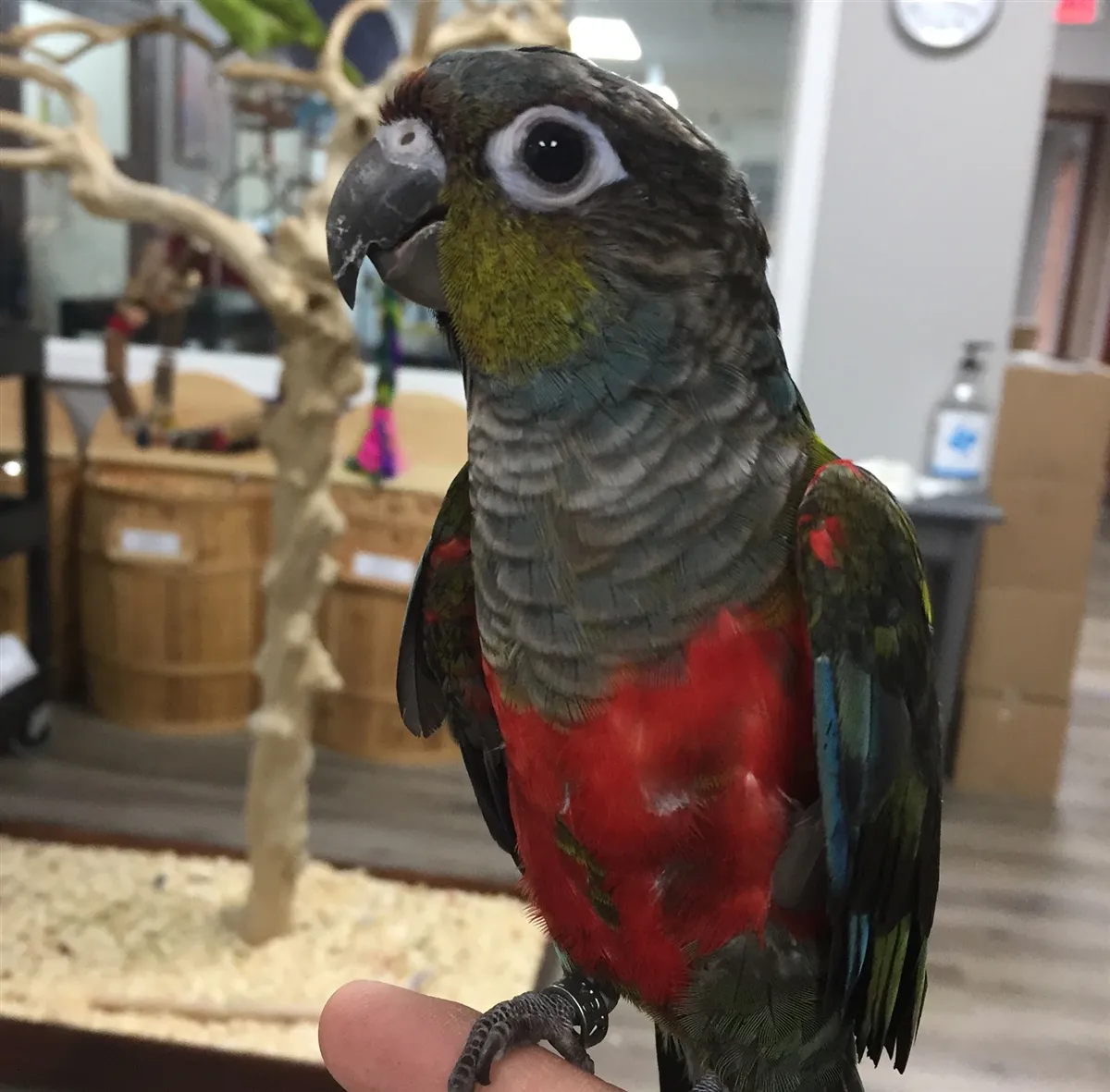
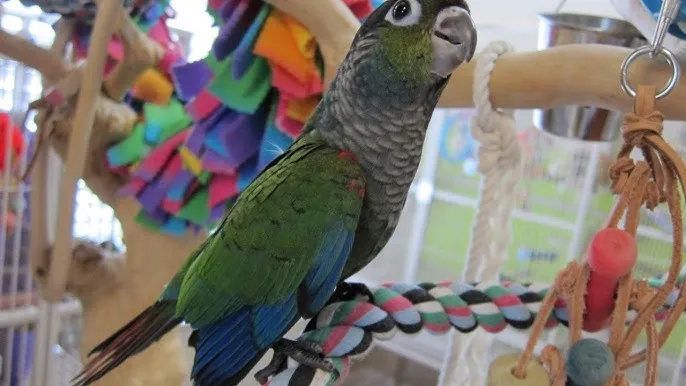
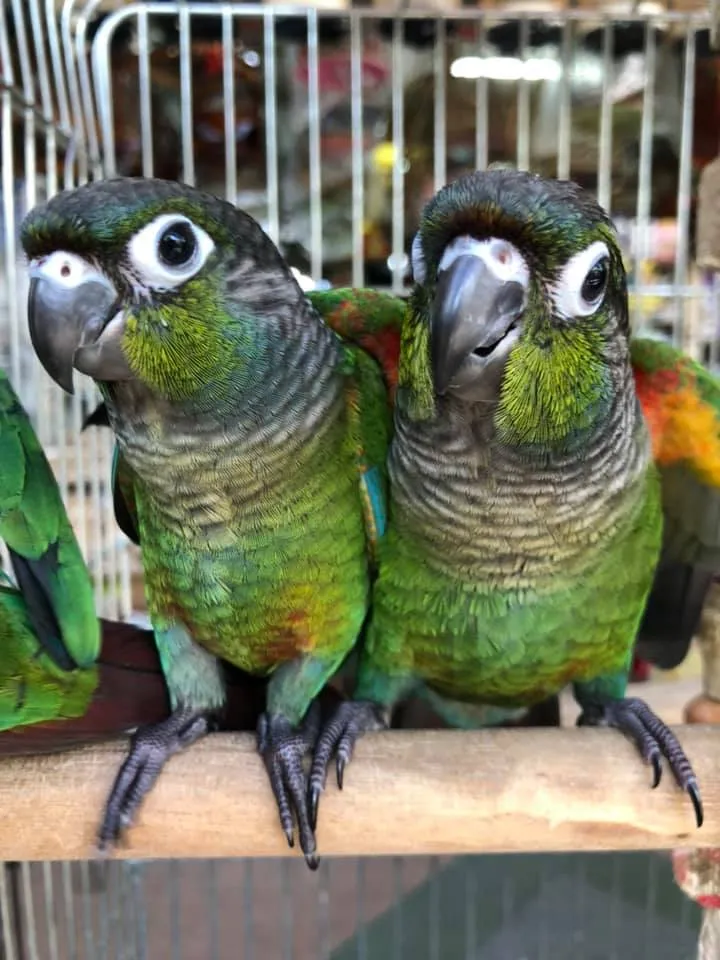
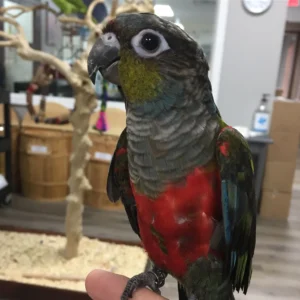
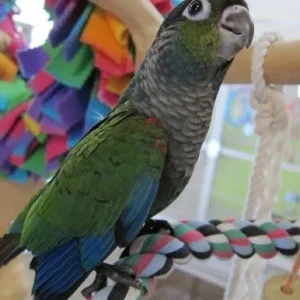
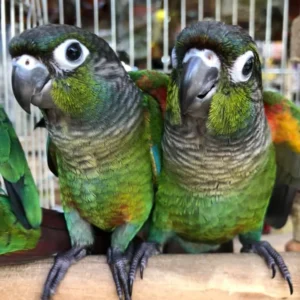
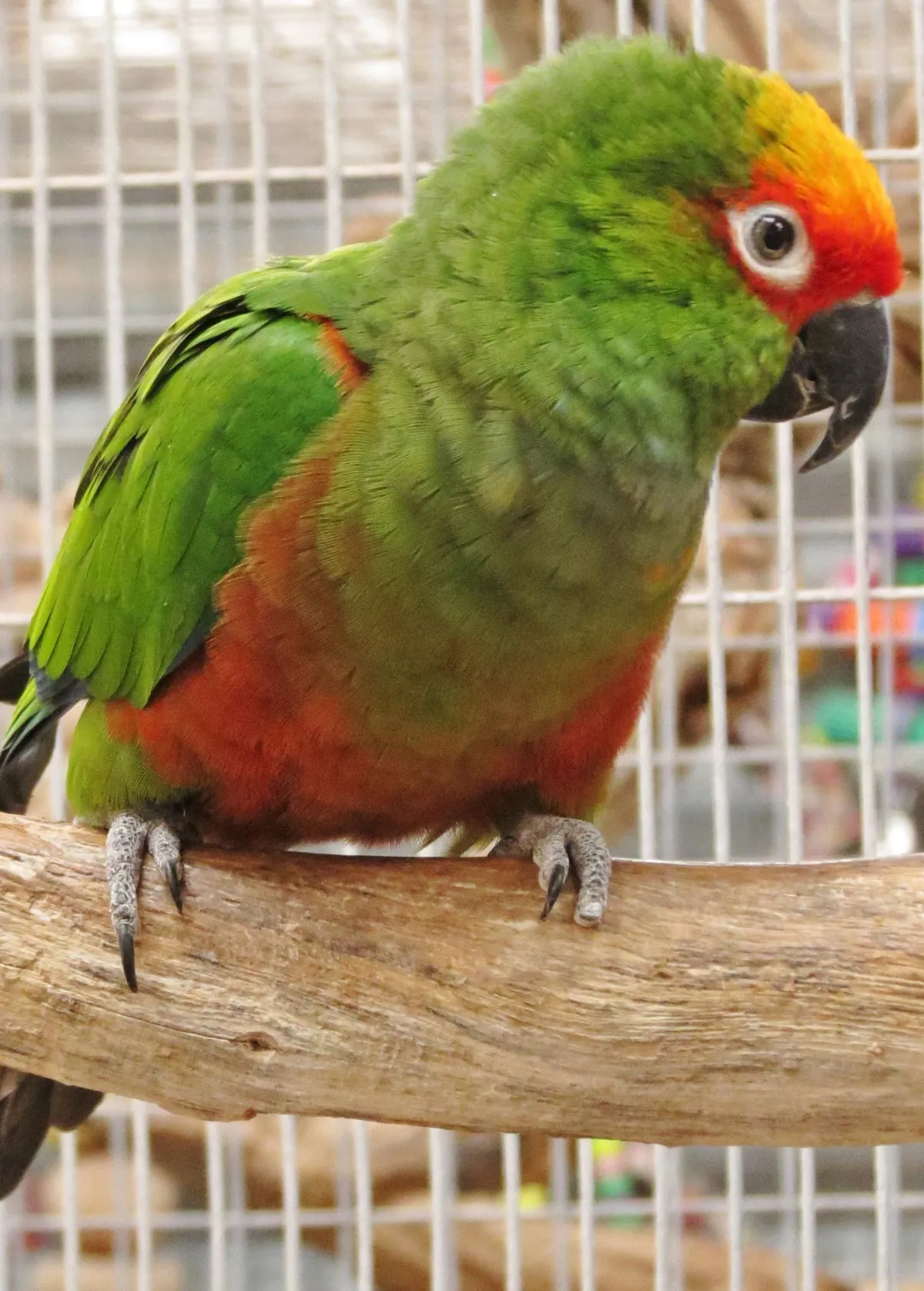
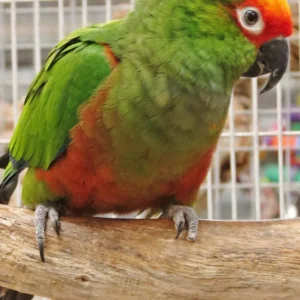
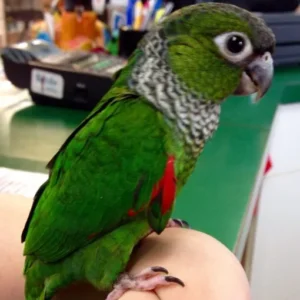
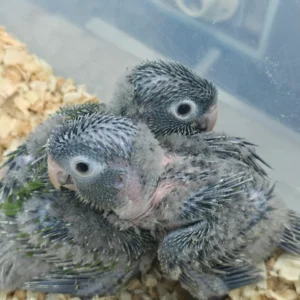
One of the most captivating features of the Crimson Bellied Conure is its vibrant coloration. Adults typically measure 9-10 inches (23-25 cm) in length and weigh around 3-4 ounces (85-115 grams). Their bodies are predominantly green, with a brilliant crimson-red belly that contrasts beautifully against their emerald feathers. The head is adorned with a maroon-brown crown, and the wings feature subtle blue and yellow accents. Males and females look similar, though subtle differences in beak size and behavior can help distinguish them. Juveniles have duller colors that brighten as they mature.
This conure’s appearance isn’t just for show; it’s a testament to their adaptability in the wild. The green camouflage helps them blend into foliage, while the red belly serves as a signal during mating or territorial displays.
Natural Habitat and Behavior in the Wild
In their native South American habitats, Crimson Bellied Conures inhabit dense forests at elevations ranging from 1,000 to 3,000 meters. They are social birds, often found in flocks of 10-20 individuals, foraging for fruits, seeds, nuts, and insects. These parrots play a crucial role in their ecosystem as seed dispersers, helping to regenerate forests.
Wild behavior includes playful antics like hanging upside down from branches and engaging in vocal duets with flock mates. They are diurnal, meaning they’re active during the day, and they form monogamous pairs during breeding season. Unfortunately, habitat loss due to deforestation poses a significant threat to wild populations, making captive breeding and responsible ownership even more important.
Why Choose a Crimson Bellied Conure as a Pet?
If you’re searching for a pet bird that’s both entertaining and low-maintenance, the Crimson Bellied Conure fits the bill. Known for their intelligence and sociability, these birds are often recommended for first-time parrot owners. Here’s why they stand out:
- Affectionate and Social: Unlike some larger parrots, Crimson Bellied Conures bond closely with their owners. They enjoy cuddling, preening, and mimicking sounds, making them excellent companions.
- Playful Personality: Expect lots of acrobatics and toy-playing. They’re curious explorers who thrive on interaction.
- Vocal but Not Overly Loud: Their calls are melodic and varied, but they’re not as screechy as some conure species, making them suitable for apartments.
- Longevity: With proper care, they can live 15-20 years, offering years of joy.
However, they require mental stimulation to prevent boredom, which can lead to destructive behaviors like feather plucking.
Setting Up the Perfect Habitat for Your Crimson Bellied Conure
Creating a suitable environment is key to your bird’s health and happiness. A spacious cage is essential—aim for at least 24x24x36 inches for one bird, with room for expansion if you add a companion.
Cage Essentials
- Perches and Toys: Provide multiple perches of varying diameters to promote foot health. Include chew toys, puzzles, and foraging items to keep them engaged.
- Food and Water Dishes: Opt for heavy, tip-resistant bowls. Fresh water should be available at all times.
- Lighting and Temperature: Position the cage in a well-lit area with natural sunlight, supplemented by full-spectrum UVB bulbs. Maintain temperatures between 65-80°F (18-27°C), avoiding drafts.
- Substrate: Line the cage bottom with newspaper or bird-safe liners for easy cleaning.
Outside the cage, allow supervised flight time daily to prevent obesity and encourage natural behaviors.
Diet and Nutrition for Crimson Bellied Conures
A balanced diet is crucial for the Crimson Bellied Conure’s vibrant plumage and overall well-being. In the wild, they eat a mix of fruits, vegetables, seeds, and insects, so replicate that in captivity.
Recommended Foods
- Pellets: High-quality formulated pellets should make up 50-70% of their diet. Brands like Harrison’s or Zupreem offer nutritionally complete options.
- Fresh Produce: Offer a variety of fruits (apples, berries, mangoes) and vegetables (carrots, leafy greens, bell peppers) daily. Avoid avocados, chocolate, and high-sugar items.
- Seeds and Nuts: Provide in moderation as treats. Sunflower seeds and almonds are favorites, but limit to prevent weight gain.
- Supplements: Add calcium (via cuttlebone) and vitamins if needed, especially during molting.
Feed small portions twice a day, and monitor for picky eating. Hydration is vital—ensure clean water is always accessible.
Health and Common Issues
Crimson Bellied Conures are generally hardy, but proactive care prevents problems. Regular vet check-ups (at least annually) are essential.
Common Health Concerns
- Feather Plucking: Often due to stress, boredom, or nutritional deficiencies. Address by enriching their environment and consulting a vet.
- Respiratory Issues: Sensitive to drafts and smoke; ensure good air quality.
- Obesity: From overfeeding seeds; promote activity with toys and flight.
- Parasites and Infections: Watch for signs like lethargy or abnormal droppings. Vaccinations and deworming may be recommended.
Signs of illness include ruffled feathers, weight loss, or changes in behavior. If noticed, seek avian veterinary care immediately.
Training and Socialization
These intelligent birds are eager learners, making training rewarding. Start with positive reinforcement using treats and praise.
Basic Training Tips
- Step-Up Command: Teach them to step onto your finger for handling.
- Mimicry and Tricks: They excel at mimicking sounds and performing tricks like rolling over.
- Socialization: Introduce to family members gradually. Avoid isolation, as it can lead to depression.
Consistency is key—short, daily sessions yield the best results.
Breeding Crimson Bellied Conures
If you’re interested in breeding, ensure both birds are healthy and over 2 years old. Provide a nesting box (12x12x18 inches) with soft bedding. Breeding season is typically spring; expect 4-6 eggs per clutch, incubated for 22-24 days. Hand-raising chicks requires expertise—consult breeders or vets for guidance.
Conclusion: Embracing the Joy of Crimson Bellied Conures
The Crimson Bellied Conure is more than just a pretty bird—it’s a lively, loving companion that brings endless entertainment and affection to your home. With their striking looks, playful antics, and manageable care needs, they’re an ideal choice for bird lovers of all experience levels. By providing a stimulating environment, balanced diet, and regular veterinary care, you can ensure your conure thrives for years. If you’re ready to welcome one into your life, research local breeders or rescues today. Remember, responsible ownership means commitment to their well-being—your feathered friend will repay you with unwavering loyalty and joy.
Reviews
There are no reviews yet.
Related products
Conure
Conure
Conure
Conure
Conure
Conure
Conure
Be the first to review “Crimson Bellied Conure”