Maximilian Pionus
Maximilian Pionus (Pionus maximiliani), often known as the Scaly-headed Pionus, is a captivating medium-sized parrot species that belongs to the Pionus genus, a group of Neotropical parrots admired for their gentle dispositions, subtle beauty, and remarkable adaptability. Named after Prince Maximilian of Wied-Neuwied, a German explorer and naturalist who documented it during his 19th-century expeditions in Brazil, this bird embodies the serene elegance of South American woodlands. Its distinctive scaly head pattern, formed by feathers with pale edges, gives it a unique, almost prehistoric appearance that sets it apart from other parrots. In the wild, Maximilian Pionus are social flock dwellers that contribute to ecosystem health by dispersing seeds from the fruits, nuts, and berries they consume, aiding in forest regeneration and supporting biodiversity. This role is crucial in maintaining the balance of tropical and subtropical habitats, where they help propagate plant species that form the foundation of complex food webs. With an estimated population numbering in the hundreds of thousands across its range, the species is classified as Least Concern by the IUCN Red List, reflecting its resilience and wide distribution. However, this status masks localized threats from habitat loss due to deforestation for agriculture, logging, and urban expansion, which can fragment populations and reduce genetic diversity. Climate change adds further pressure by altering rainfall patterns, potentially affecting breeding cycles and food availability. In captivity, Maximilian Pionus are highly valued as pets for their quiet, affectionate nature—they are among the less vocal parrots, making them ideal for noise-sensitive environments—and their capacity for forming deep, loyal bonds with owners. Maximilian Pionus intelligence allows them to learn simple tricks, mimic basic sounds, and engage in interactive play, while their longevity of up to 40 years ensures a rewarding, long-term companionship for dedicated caretakers. Nonetheless, they require consistent mental stimulation to prevent boredom-related behaviors like feather plucking or excessive chewing. Ethical ownership is paramount, as wild-caught birds can perpetuate illegal trade, so adopting from reputable breeders or rescue organizations is strongly recommended. The Maximilian’s Pionus represents the understated charm and ecological importance of South American avifauna, serving as a reminder of the need for conservation efforts to protect these vital habitats and the species that depend on them.
Physical Description
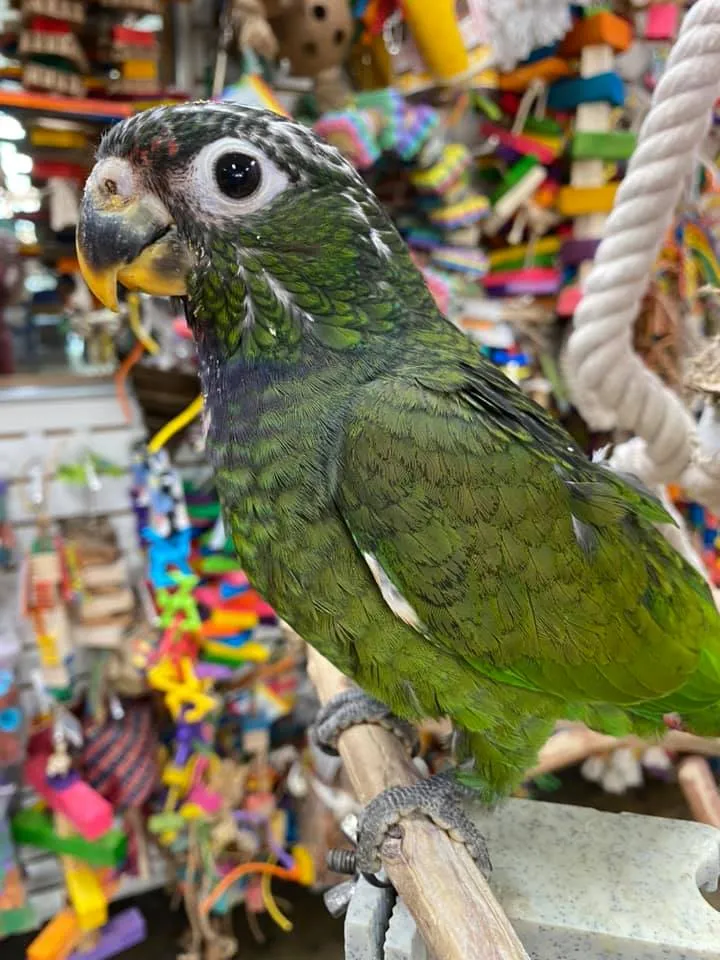
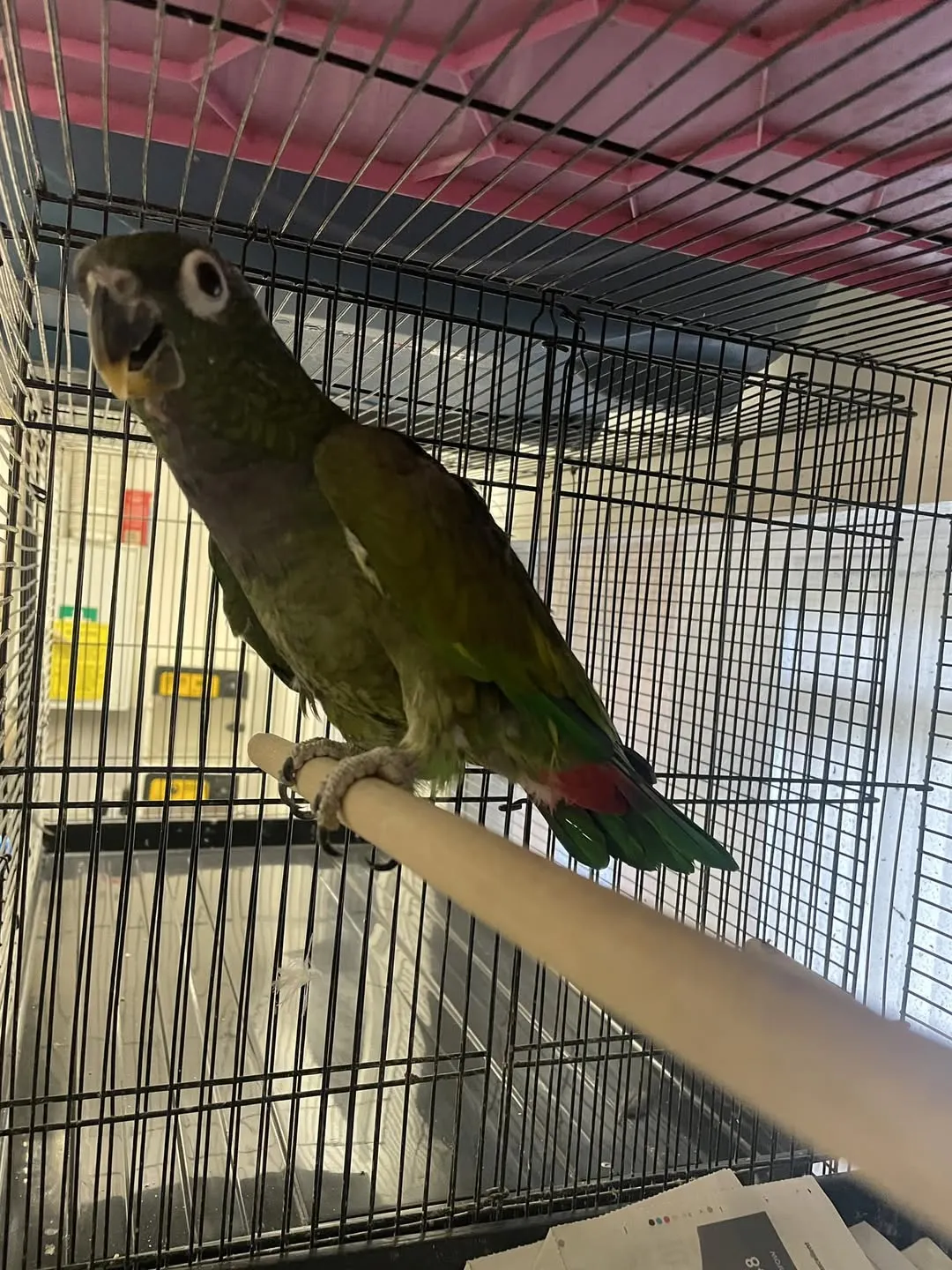
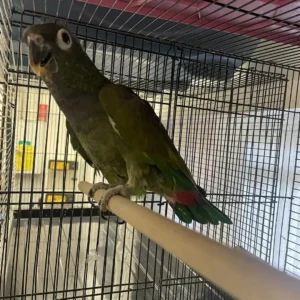
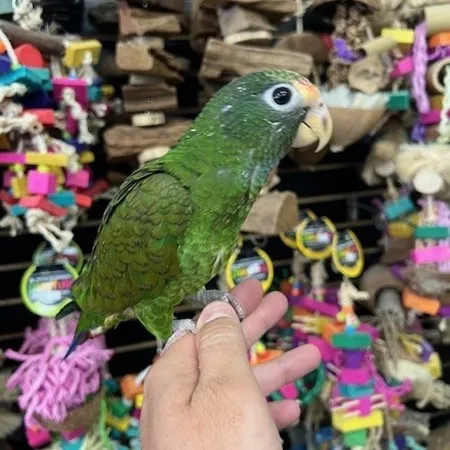
The Maximilian Pionus is a gracefully proportioned parrot with a compact, sturdy build, measuring 28-30 cm (11-12 inches) in length from beak to tail, featuring a wingspan of 45-50 cm (18-20 inches) for agile flight through dense vegetation, and weighing 200-250 grams (7-9 ounces). Maximilian Pionus plumage is a harmonious blend of greens and subtle patterns, with the body primarily olive-green or yellowish-green, providing excellent camouflage in forested environments. The most striking feature is the scaly or mottled head, created by feathers edged in pale yellow, white, or cream, which gives the appearance of fine scales or a textured surface, especially on the crown, forehead, and cheeks. Maximilian Pionus pattern extends to the nape and can vary in intensity among individuals, adding to the bird’s unique allure. The throat and upper chest display soft blue-gray or lavender hues that contrast gently with the green body, while the wings and tail are similarly green, with the tail being long and tapered for balance. Maximilian Pionus beak is robust, dark gray to black, and slightly curved, well-suited for cracking seeds and nuts without the exaggerated size of larger parrots. Eyes are large, dark brown, and expressive, encircled by bare, pale gray or whitish skin that may flush slightly during excitement. The overall effect is one of quiet sophistication, with the scaly head providing a distinctive, almost reptilian charm that makes this species instantly recognizable. Sexual dimorphism is subtle and often hard to detect visually; males may exhibit slightly brighter or more defined scaly patterns and blue-gray accents, while females appear marginally duller, but behavioral observations or DNA testing are typically required for accurate identification. Juveniles lack the full scaly pattern, presenting a plainer green head that develops the characteristic edges over 1-2 years through molting. Maximilian Pionus feet are zygodactylous, with strong, curved claws for gripping branches and foraging. In flight, the Maximilian Pionus shows a smooth, undulating motion with quick wingbeats, allowing it to navigate forest canopies efficiently. This physical design reflects its evolutionary adaptation to a life in trees, combining functionality with an aesthetic that appeals to bird enthusiasts worldwide.
Habitat and Distribution
The Maximilian Pionus is native to the tropical and subtropical regions of South America, with a primary range encompassing eastern and central Brazil, extending into Paraguay, northern Argentina, and possibly adjacent areas of Bolivia and Uruguay. It inhabits a variety of forested and wooded ecosystems, including tropical rainforests, deciduous woodlands, savannas, and gallery forests along rivers, typically at elevations from sea level up to 1,500 meters (4,920 feet). Maximilian Pionus habitats offer abundant fruit-bearing trees, shrubs, and understory vegetation, providing food, shelter, and nesting sites. The species is adaptable, occasionally venturing into secondary forests, plantations, or urban fringes, but it prefers areas with dense cover to avoid predation. Its distribution is influenced by geographical features like the Paraná River basin, which shapes population movements and connectivity. Deforestation for agriculture (e.g., soybean or sugarcane farming), cattle ranching, and logging has significantly impacted its range, leading to habitat fragmentation that isolates groups and increases vulnerability to environmental changes. In Brazil’s Cerrado and Atlantic Forest biomes, rapid land conversion has reduced suitable areas, while climate change exacerbates issues with droughts affecting fruit production. Protected areas, such as national parks in Brazil and Paraguay, provide refuges, but enforcement is often insufficient. In captivity, replicating these conditions involves warm, humid enclosures with natural elements to maintain health.
Behavior and Diet
Maximilian Pionus are inherently social and flock-oriented, forming groups of 10-30 individuals that forage, roost, and travel together, enhancing safety and cooperation. Maximilian Pionus are diurnal, active during the day, and exhibit calm, inquisitive behaviors like gentle preening, exploratory perching, and soft interactions. Intelligent and observant, they can learn simple tasks and form monogamous bonds. Diet includes fruits, seeds, nuts, and insects; in captivity, provide balanced pellets and fresh produce with foraging enrichment.
Breeding and Reproduction
Breeding occurs in tree cavities, with 3-4 eggs incubated for 24-26 days. Chicks fledge after 8-10 weeks.
Vocalizations and Communication
Soft whistles and chirps; capable of simple mimicry.
Health and Common Issues
Susceptible to nutritional deficiencies. Lifespan: 30-40 years.
As Pets: Care, Training, and Considerations
Affectionate and trainable; require moderate space and interaction.
Conservation and Cultural Significance
Least Concern; appreciated in local cultures.
2 reviews for Maximilian Pionus
Add a review
Related products
Pionus
Pionus
Pionus
Lily Thompson –
My Maximilian pionus, Luna, is perfect. Smart, playful, and loves interaction. His bare eyes add unique charm.
Diego Morales –
Maximillian pionus named Sky is fantastic. Gentle, learns fast, and has a beautiful appearance. Sweet and loyal!