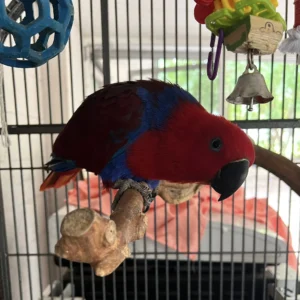

Solomon Island Eclectus
Solomon Island Eclectus (Eclectus roratus solomonensis), a captivating subspecies of the Eclectus Parrot, is a testament to the vibrant biodiversity of the South Pacific. Endemic to the Solomon Islands archipelago, this bird dazzles with its striking sexual dimorphism, remarkable intelligence, and adaptability to island life. Often distinguished from its Moluccan cousin by subtle plumage differences, the Solomon Island Eclectus has become a favorite among bird watchers, researchers, and aviculturists for its beauty and behavioral complexity. In this comprehensive overview, we’ll dive into its biology, natural history, conservation challenges, and cultural ties, offering a window into one of Oceania’s avian treasures.
Physical Description: Dimorphism in Full Display
Measuring 12-14 inches (30-35 cm) in length and weighing 10-17 ounces (300-500 grams), with a wingspan of about 8-10 inches (20-25 cm), the Solomon Island Eclectus is a medium-sized parrot that epitomizes avian elegance. Its most iconic feature is extreme sexual dimorphism, where males and females appear so different they were once mistaken for separate species.
- Males: Cloaked in brilliant emerald green plumage, accented by a yellow-orange beak, red underwings, and an orange head and neck. The green is often deeper and more iridescent than in other subspecies, giving them a lush, tropical glow.
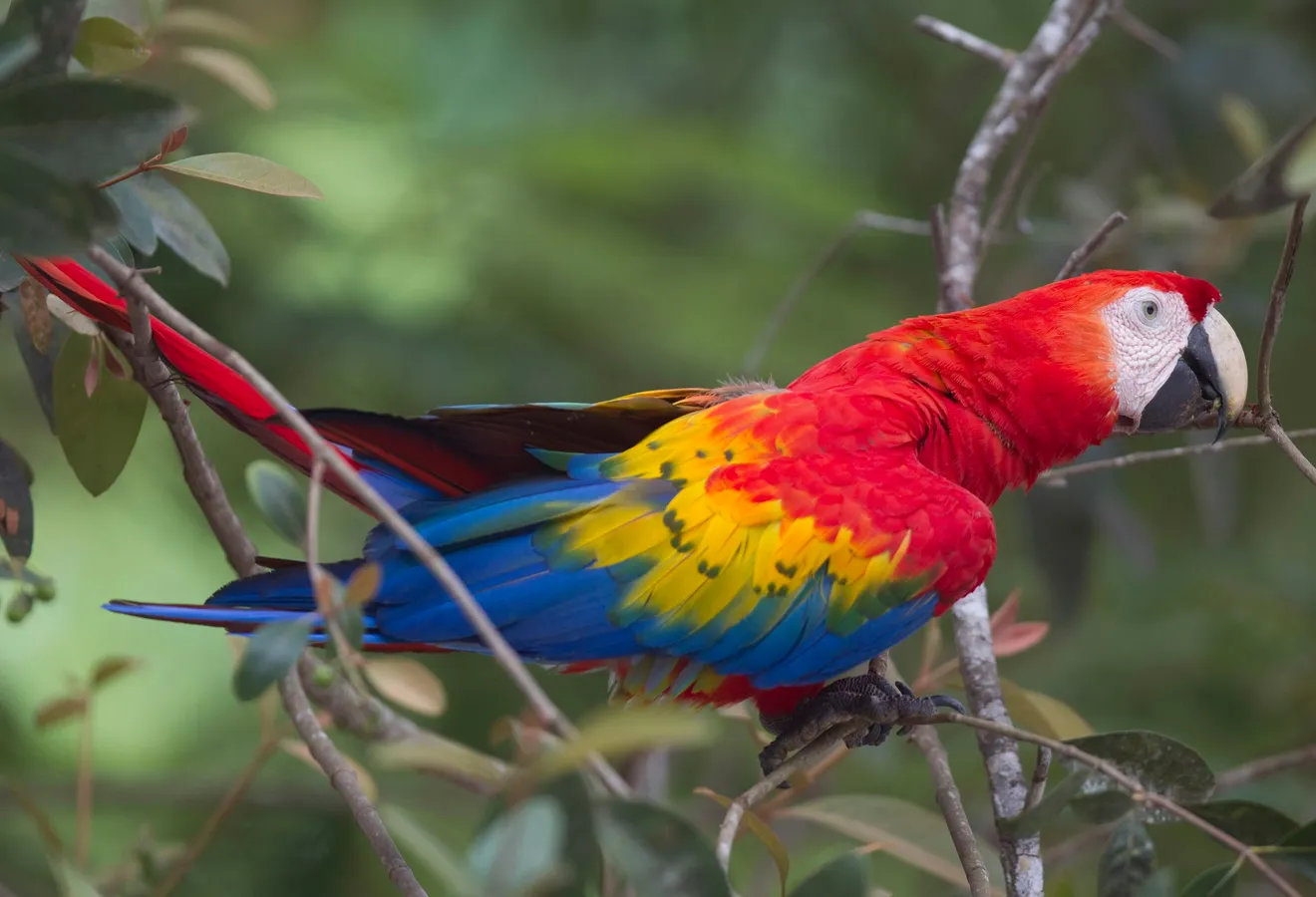
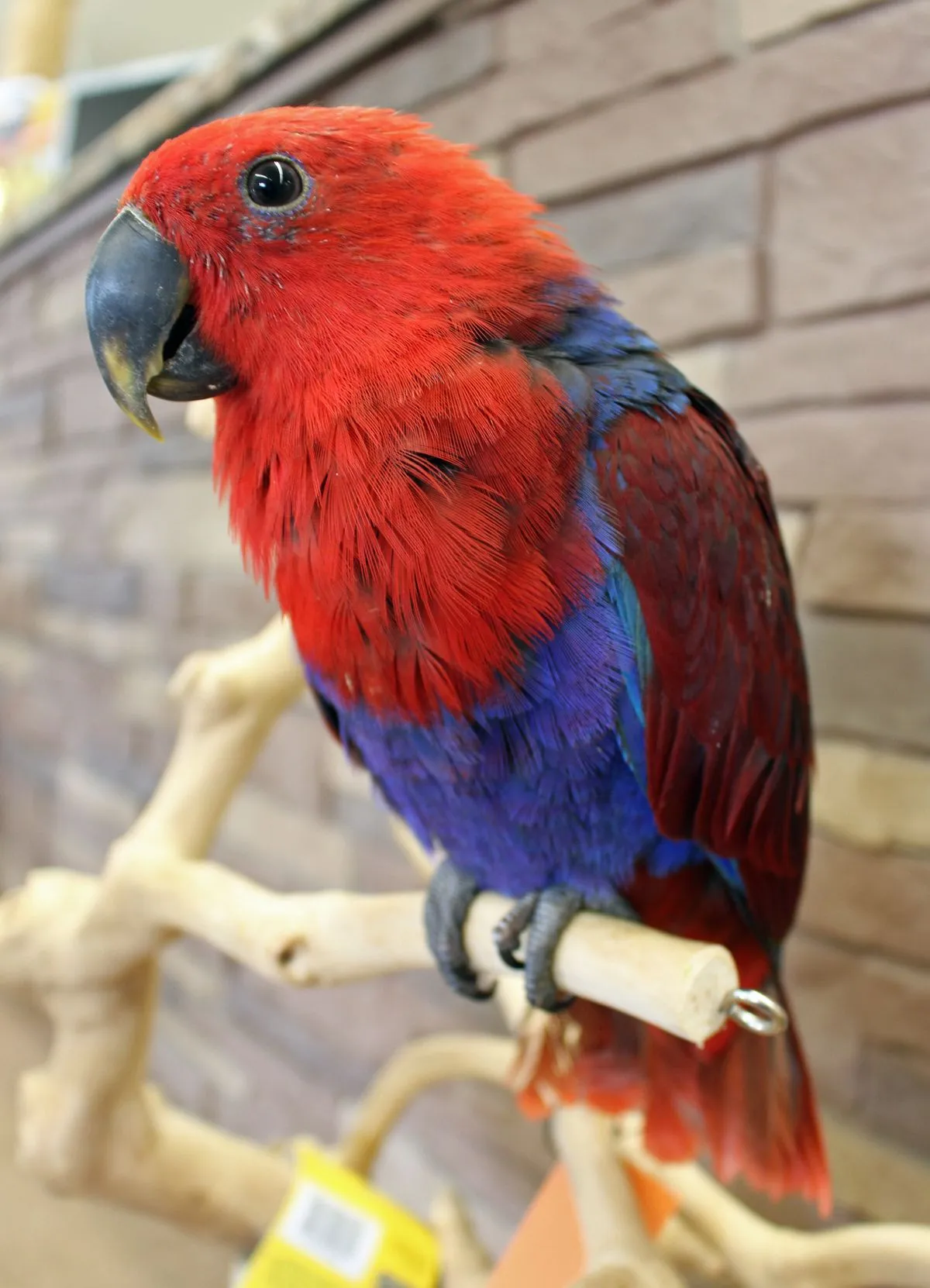
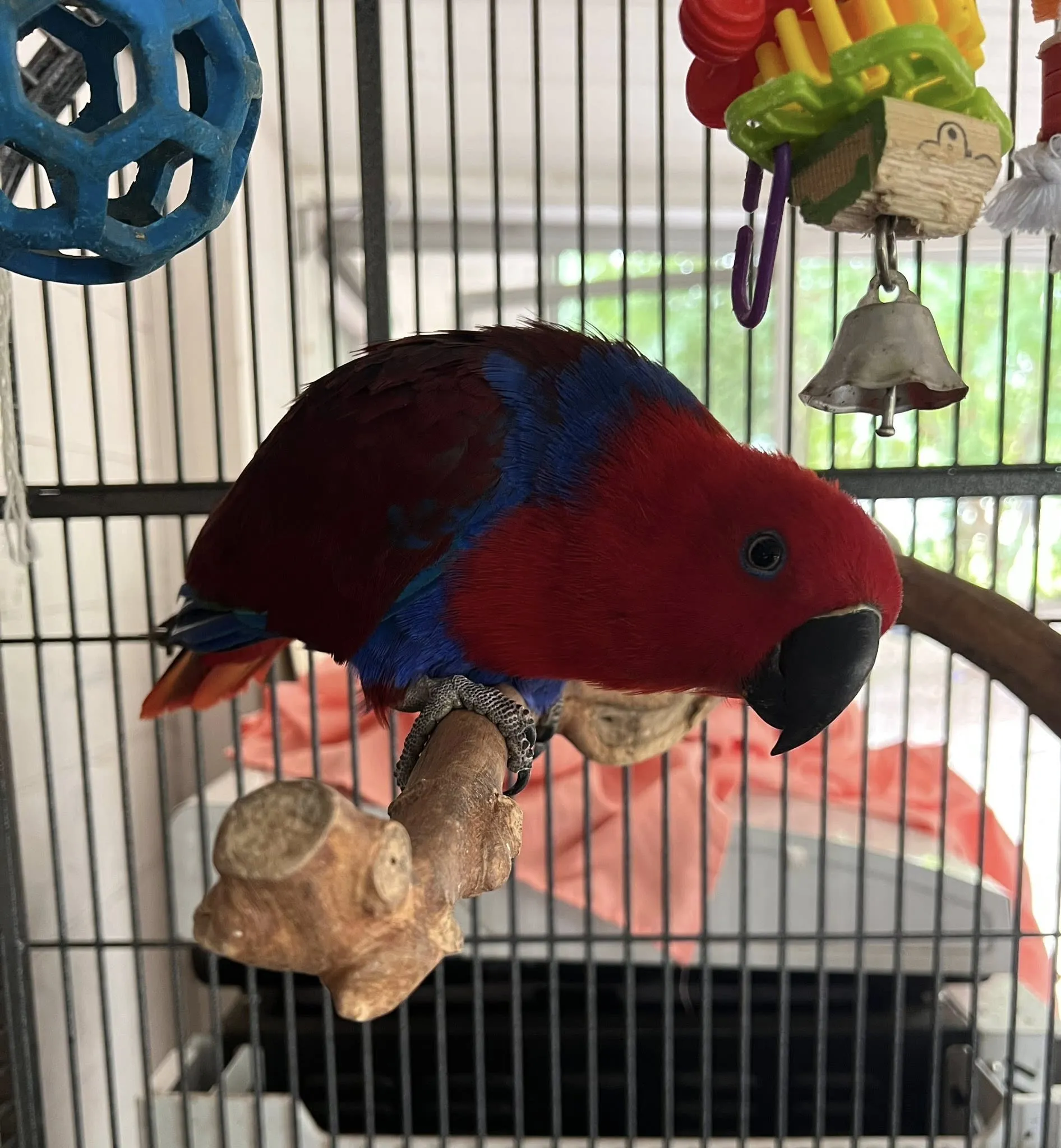
- Females: A flamboyant palette of red, purple, and blue, with a black beak, violet-blue chests, and crimson heads and tails. Their colors are bolder, serving as excellent camouflage among flowering trees.
Both sexes boast strong, hooked beaks for foraging, zygodactyl feet for agile climbing, and expressive facial skin that shifts hues with emotion—pale for contentment, flushed for excitement. Juveniles start with female-like coloring, transitioning to adult hues over 1-2 years. This dimorphism is thought to evolve from mate selection pressures, allowing quick identification in dense forests.
Habitat and Range: Islands of Isolation and Abundance
The Solomon Island Eclectus is native to the Solomon Islands chain in the southwestern Pacific Ocean, spanning over 900 islands and covering about 11,000 square miles (28,500 km²). Key locations include Guadalcanal, Malaita, Santa Isabel, and smaller atolls, where it thrives in tropical rainforests, mangroves, and coastal woodlands. The region’s equatorial climate features high humidity, temperatures of 75-85°F (24-29°C), and abundant rainfall (up to 120 inches or 300 cm annually), creating lush habitats rich in biodiversity.
They prefer lowland and mid-elevation forests (up to 2,500 feet or 760 meters), nesting in tree hollows and foraging in fruit-laden canopies. The Solomon Islands’ volcanic origins and isolation have fostered unique ecosystems, with the Solomon Island Eclectus coexisting with species like the Solomon Islands Frogmouth and various pigeons. Historically, these islands’ remoteness protected them from mainland threats, but modern pressures have changed that.
Behavior and Ecology: Intelligence and Social Dynamics
Solomon Island Eclectus are renowned for their smarts, and the Solomon Islands subspecies is no exception, exhibiting behaviors that rival primates in complexity. Highly social, they form flocks of 10-30 birds, though pairs are monogamous and territorial during breeding.
- Diet and Foraging: Frugivorous by nature, they feast on figs, papaya, palm fruits, seeds, nuts, and flowers. Their powerful beaks crack tough shells, and in the wild, they play a role in seed dispersal, aiding forest regeneration. Captive diets mirror this with pellets, fresh produce, and nuts.
- Social Structure and Communication: Flocks are hierarchical, with vocal duets strengthening pair bonds. Their calls range from melodic whistles to sharp squawks; males are prolific mimics, often imitating environmental sounds or human speech. Studies show they understand context, using different vocalizations for alarms, greetings, and play.
- Reproduction: Breeding peaks in the wet season (November to March). Pairs excavate or use natural tree cavities for nests, laying 2-3 eggs incubated for 26-28 days. Both parents incubate and feed chicks, which fledge after 10-12 weeks and stay dependent for months.
- Intelligence and Play: Solomon Island Eclectus parrots excel in problem-solving, tool use, and self-recognition. In the wild, they engage in acrobatic flights and social games; captivity requires enrichment to prevent boredom-related issues like feather destruction.
- Adaptations: Their dimorphism may influence roles—females are often more assertive in flocks, while males dazzle with displays. Island life has honed their resilience to cyclones and variable food sources.
Conservation Status: Stable but Vigilant
Solomon Island Eclectus overall is listed as Least Concern by the IUCN, with a global population of 10,000-50,000. The Solomon Islands subspecies is stable within its range, bolstered by the islands’ relative isolation and protected areas like the Guadalcanal Plains Palm Oil Biosphere Reserve. However, threats loom:
- Habitat Degradation: Logging for timber and agriculture (e.g., palm oil) fragments forests, reducing nesting sites.
- Illegal Trade: Poaching for pets persists despite CITES Appendix II protections, with birds smuggled to Asia and beyond.
- Invasive Species: Rats, cats, and pigs prey on nests and compete for food.
- Climate Impacts: Rising sea levels and storms threaten coastal habitats.
Conservation initiatives include habitat monitoring by BirdLife International, anti-trafficking efforts, and community education in the Solomon Islands. Captive breeding supports genetic diversity, and ecotourism promotes awareness. With proactive measures, the subspecies remains secure, but vigilance is key.
Cultural and Human Connections: From Island Lore to Global Appeal
In Solomon Islands culture, the Solomon Island Eclectus is a symbol of natural harmony, featured in myths as wise forest guardians or messengers of the spirits. Indigenous communities have long admired their colors, sometimes keeping them as pets or using feathers in ceremonies.
Globally, the Solomon Island Eclectus is a sought-after companion bird, valued for its longevity (30-50 years), affectionate personality, and talking prowess. They’re popular in aviaries and homes, forming deep bonds with owners, though they demand mental stimulation. In research, they’ve advanced studies on avian cognition, and media portrayals (e.g., in wildlife documentaries) highlight their charisma.
Fun Facts and Additional Insights
- Lifespan: 30-50 years, with some individuals living over 60 in captivity.
- Unique Traits: Females can occasionally reproduce via parthenogenesis. Their vocal range includes over 100 sounds, and they’ve been trained for assistance roles.
- Diet Nuances: Wild birds consume up to 50 fruit species, aiding digestion with grit from riverbeds.
- Subspecies Comparison: Vs. Moluccan: Solomon Islands males have richer greens; females, more pronounced purples.
- Economic Angle: The pet trade boosts local economies but requires sustainable practices.
- Research Notes: Genetic studies reveal adaptations to island hopping, influencing their evolutionary path.
The Solomon Island Eclectus encapsulates the allure of Pacific islands, blending beauty with brainpower. If you’d like a fictional tale featuring this parrot, care guides for owners, comparisons to other subspecies, or details on Solomon Islands wildlife, just let me know
Reviews
There are no reviews yet.
Related products


Eclectus
Be the first to review “Solomon Island Eclectus”