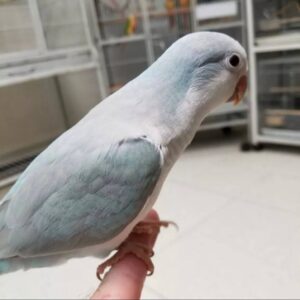
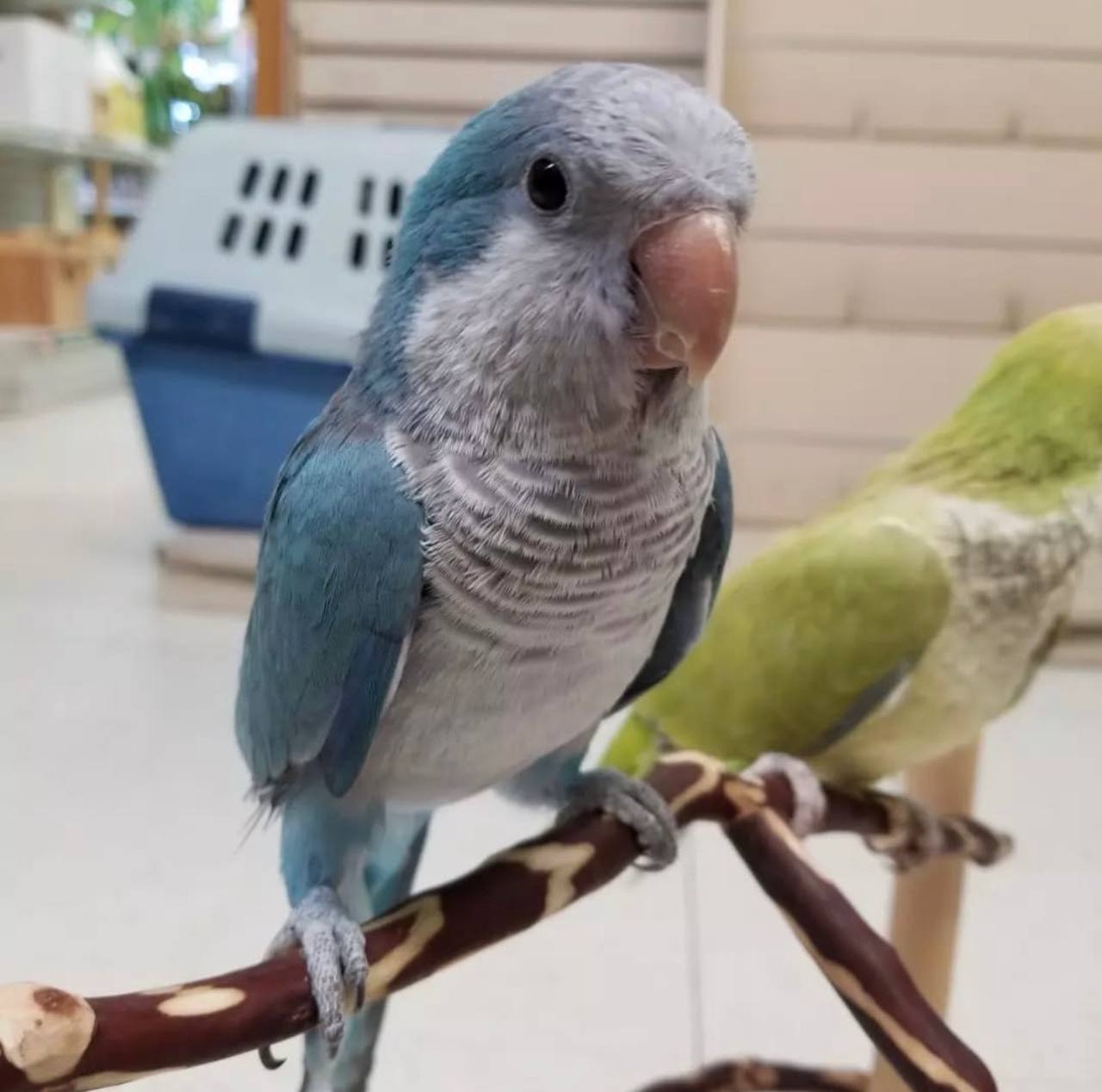
Blue Palid Quaker Bird
Blue Palid Quaker is a selective color mutation of the nominate Quaker parrot species, native to South America. Quakers are medium-sized parrots, typically measuring 11-12 inches from beak to tail, with a stocky build and a distinctive monk-like hood of feathers around the head—hence their alternative name.
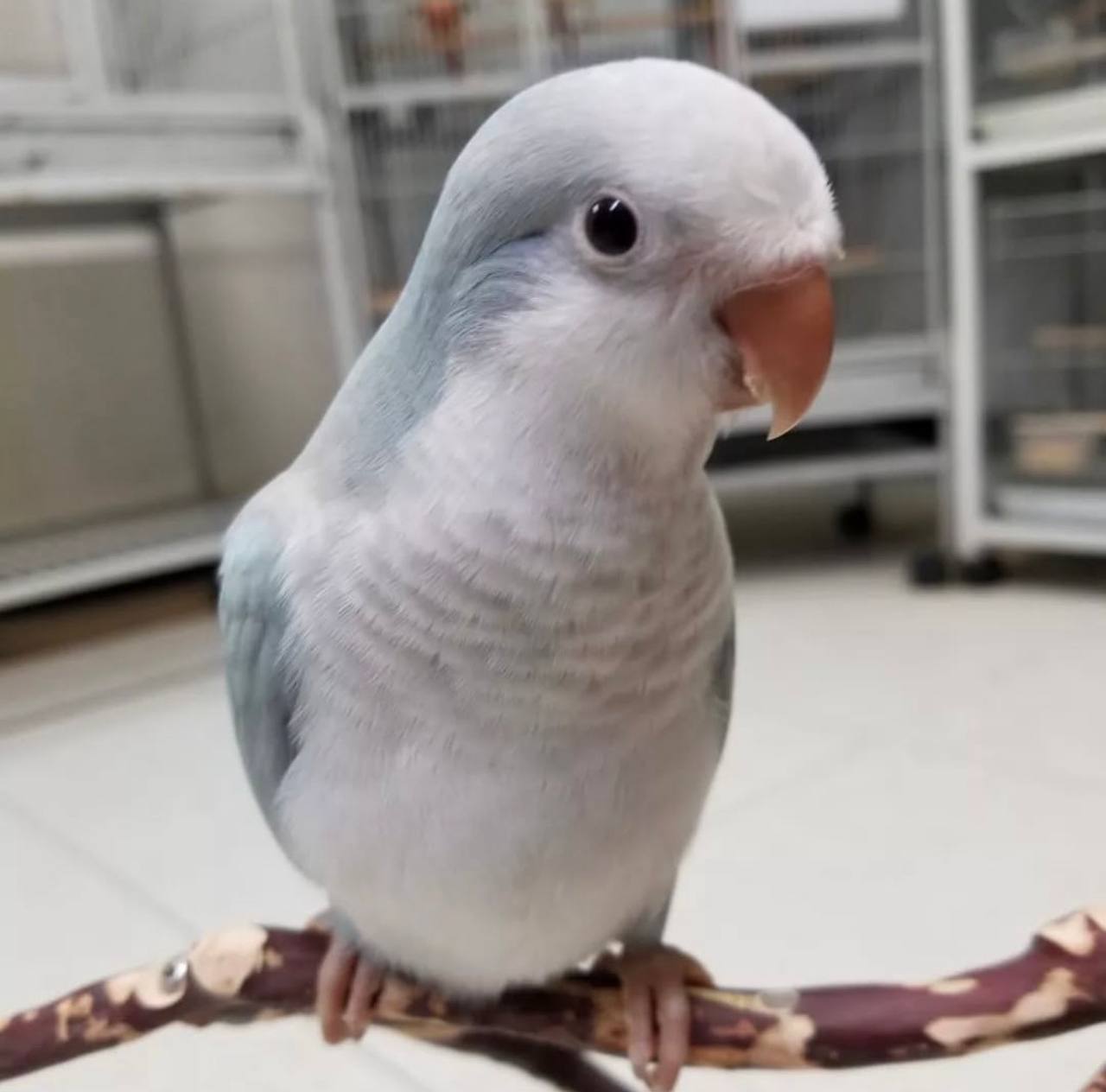
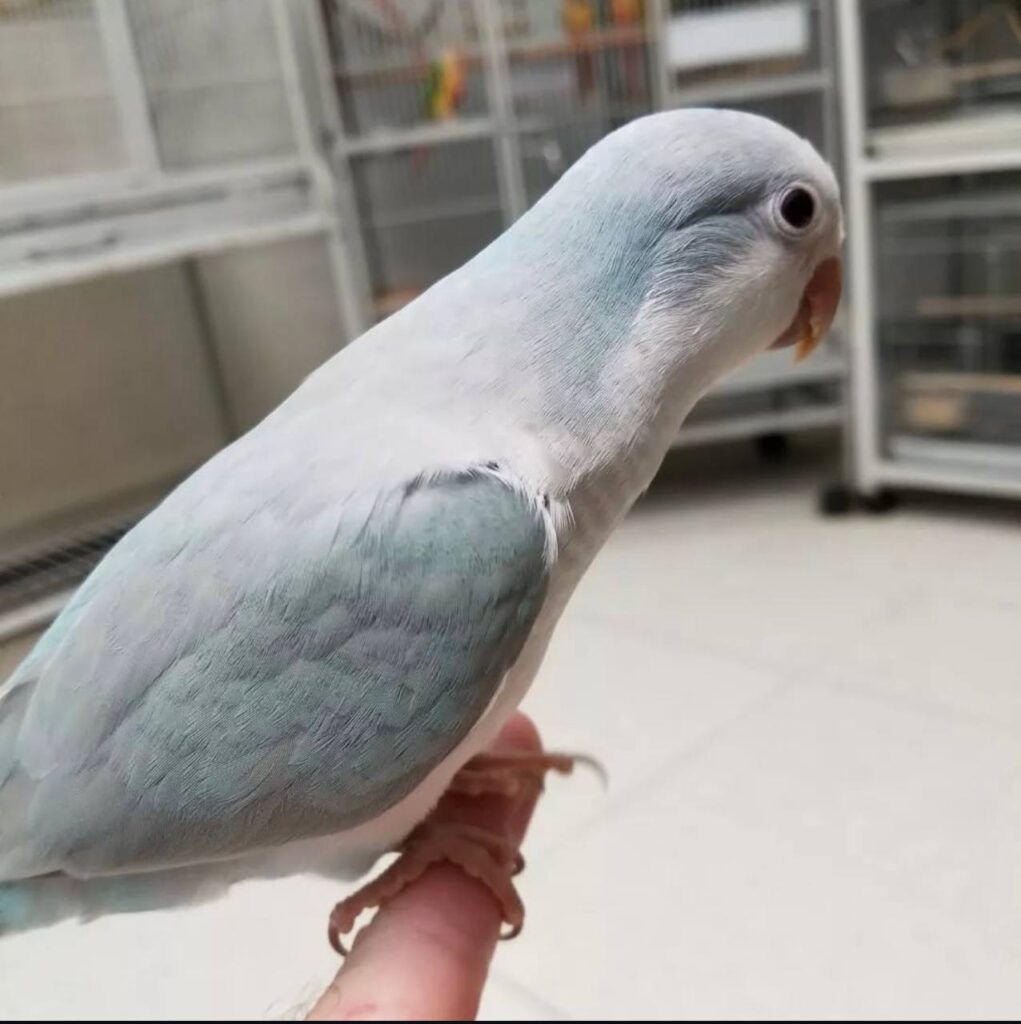
The “Blue” refers to the dominant blue plumage that replaces the wild-type green feathers, creating a soft, powdery sky-blue body. “Palid” (often stylized as “Pallid”) indicates a dilution factor that lightens the coloration further, resulting in a pale, almost frosty pastel blue appearance. This mutation combines the blue gene (which inhibits yellow pigmentation, shifting greens to blues) with the pallid dilution gene, which reduces melanin and overall intensity, giving the bird an ethereal, washed-out elegance.
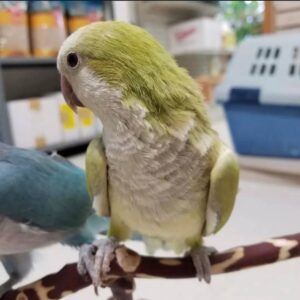
Unlike the vivid cobalt or turquoise blues seen in other parrot mutations, the Blue Palid Quaker’s hues are subtler—think soft azure on the body, fading to lighter shades on the underparts, with a creamy white face and subtle grayish wing markings. The eyes are typically dark, and the beak retains the classic Quaker horn-colored curve. Males and females are visually indistinguishable (monomorphic), making DNA sexing necessary for breeders.
This mutation originated in captive breeding programs, primarily in Europe and the United States, during the late 20th century. It’s prized for its rarity and aesthetic beauty, making Blue Palid Quakers a highlight in avian shows and collections.
Genetics Behind the Blue Palid Quaker Mutation
Understanding the genetics of the Blue Palid Quaker requires a grasp of avian color theory. Quakers, like many parrots, derive their wild green color from a combination of psittacin (yellow pigment) and melanin (gray-black).
-
Blue Mutation: This is a recessive sex-linked trait. In simple terms, the blue gene suppresses psittacin production, turning green birds blue. To produce a visual blue Quaker, both parents must carry the gene (split blue) or be visual blues.
-
Pallid Dilution: A recessive autosomal gene that dilutes both psittacin and melanin. When paired with blue, it creates the signature pale, desaturated look. The genotype for a visual Blue Palid is bl/bl pa/pa (homozygous for both mutations).
Breeding outcomes are predictable but complex:
| Parent Pairing | Offspring Possibilities |
|---|---|
| Blue Palid x Blue Palid | 100% Blue Palid |
| Blue Palid x Blue (normal) | 50% Blue Palid, 50% Blue |
| Blue Palid x Green Split Blue Pallid | 25% Blue Palid, 25% Blue, 25% Green Split, 25% Green |
Ethical breeding prioritizes health over rarity, as double mutations can sometimes lead to weaker immune responses if not line-bred carefully. Reputable breeders select for vigor, ensuring Blue Palid Quakers remain robust.
Physical Characteristics and Identification
At a glance, the Blue Palid Quaker is unmistakable:
- Plumage: Pale blue body with lighter blue-grey flights and tail feathers. The pallid effect gives a “frosted” texture, especially visible in good lighting.
- Size and Weight: 11-12 inches long; 120-150 grams.
- Distinctive Features: Feathered feet (unique among parrots), short square tail, and a bold, rounded head. No red markings like some other Quaker mutations.
- Juvenile vs. Adult: Chicks hatch with downy pale fuzz, developing adult colors by 8-12 weeks. Immatures have duller tones that brighten with first molt.
Compared to other Quaker mutations:
- Regular Blue Quaker: Deeper, more vibrant blue without pallid dilution.
- Turquoise Quaker: Greenish-blue tint.
- Violet Factor Blue: Added purple sheen.
Health indicators include bright eyes, smooth feathers, and active posture. Blue Palid Quakers often live 20-30 years with proper care, outpacing wild counterparts due to veterinary advancements.
Personality and Behavior of Blue Palid Quakers
What truly sets Blue Palid Quakers apart isn’t just their looks—it’s their notorious charisma. Quakers are nicknamed “clowns of the bird world” for their playful, mischievous antics.
- Intelligence: Comparable to small macaws, they excel at puzzles, mimicry, and problem-solving. Many learn 20-50 words, with clear enunciation.
- Social Nature: Highly flock-oriented, they bond deeply with owners but can become “one-person birds.” Blue Palids retain the species’ bold confidence, often strutting or “dancing” for attention.
- Vocalizations: Loud, varied calls including chatters, whistles, and laughs. They’re natural mimics, copying household sounds like phones or doorbells.
- Playfulness: Love foraging toys, swings, and shreddables. They’re acrobatic, hanging upside down or performing tricks.
Potential challenges include hormonal aggression during breeding season (spring), manifesting as biting or screaming. Early socialization and consistent training mitigate this. Blue Palid Quakers thrive in households with time for interaction, making them ideal for dedicated owners rather than beginners.
Ideal Habitat and Environment Setup
Replicating a Blue Palid Quaker’s South American savanna origins ensures well-being:
- Cage Size: Minimum 24x24x36 inches for one bird; larger for pairs. Bar spacing 5/8 inch.
- Perches: Varied diameters (1/2-1 inch) from natural wood to prevent foot issues.
- Toys and Enrichment: Rotate weekly—puzzles, bells, ladders. Foraging encourages natural behaviors.
- Location: High-traffic area away from drafts, kitchens (fumes), and direct sun. Cover at night for 10-12 hours sleep.
Temperature: 65-80°F (18-27°C); humidity 40-60%. UV lighting supports vitamin D synthesis.
Nutrition for Optimal Health
A balanced diet is crucial for the Blue Palid Quaker’s pale plumage to shine:
- Pellets: 60-70% of diet; high-quality, low-fat brands formulated for small parrots.
- Fresh Foods: 20-30% veggies (kale, carrots, broccoli), fruits (apples, berries—no avocado), and sprouted seeds.
- Seeds/Nuts: 10% treat—sunflower, safflower sparingly to avoid obesity.
- Supplements: Calcium (cuttlebone), grit optional.
Daily feeding: Scatter foraging mix in the morning; fresh produce afternoon. Clean water changed twice daily. Avoid chocolate, caffeine, onions.
Health Care and Common Issues
Blue Palid Quakers are hardy, but vigilance prevents problems:
| Common Issues | Symptoms | Prevention |
|---|---|---|
| Feather Plucking | Bald patches | Enrichment, vet check for mites/allergies |
| Obesity | Weight gain, lethargy | Diet control, exercise |
| Psittacosis | Sneezing, tail bobbing | Annual vet exams |
| Beak/Feet Overgrowth | Elongated nails/beak | Trims every 3-6 months |
Veterinary Care: Avian specialist annually for fecal exams, bloodwork. Watch for mutation-specific sensitivities like weaker feather quality in pallids—molting supplements help.
Lifespan Boosters: Neuter if aggressive; pair bonding for singles.
Breeding Blue Palid Quakers
For breeders, Blue Palid Quakers are prolific nesters, building large domed nests from sticks. Pairs form lifelong monogamous bonds.
- Onset: 2-3 years old.
- Clutch: 4-8 eggs; 23-24 day incubation.
- Chick Rearing: Hand-feeding from day 1 yields tame pets.
Success hinges on spacious aviaries (6x6x8 ft min.), 14-hour light cycles, and soft foods. Genetic tracking via pedigrees preserves purity.
Why Blue Palid Quakers Captivate Bird Lovers
The Blue Palid Quaker embodies the perfect blend of rarity, beauty, and brains. Its soft blue palette evokes a serene sky, contrasting the species’ lively spirit. In a world of flashy mutations, the pallid subtlety offers understated elegance, appealing to collectors seeking uniqueness.
These birds foster deep human-animal bonds, teaching patience and joy. They’re conversation starters at bird clubs and symbols of aviculture’s innovative breeding.
In summary, the Blue Palid Quaker isn’t just a pet—it’s a living masterpiece. With informed care, these parrots reward owners with decades of companionship, antics, and awe-inspiring colors. Dive into the world of Quaker mutations, and let the Blue Palid’s charm flock to you.
Reviews
There are no reviews yet.
Related products
Quaker parrots
Quaker parrots
Quaker parrots
Be the first to review “Blue Palid Quaker Bird”