Blue Quaker Parrots
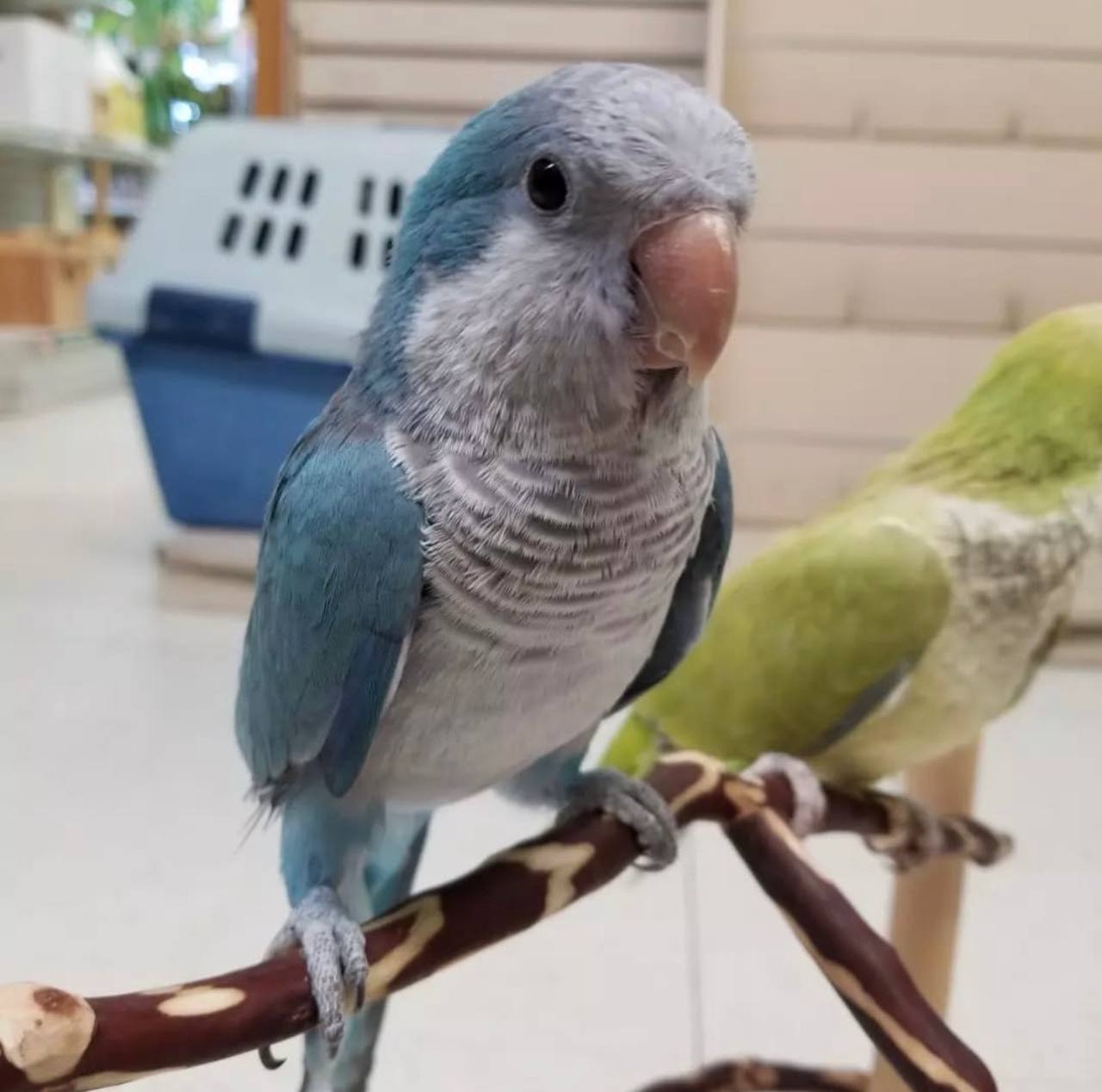
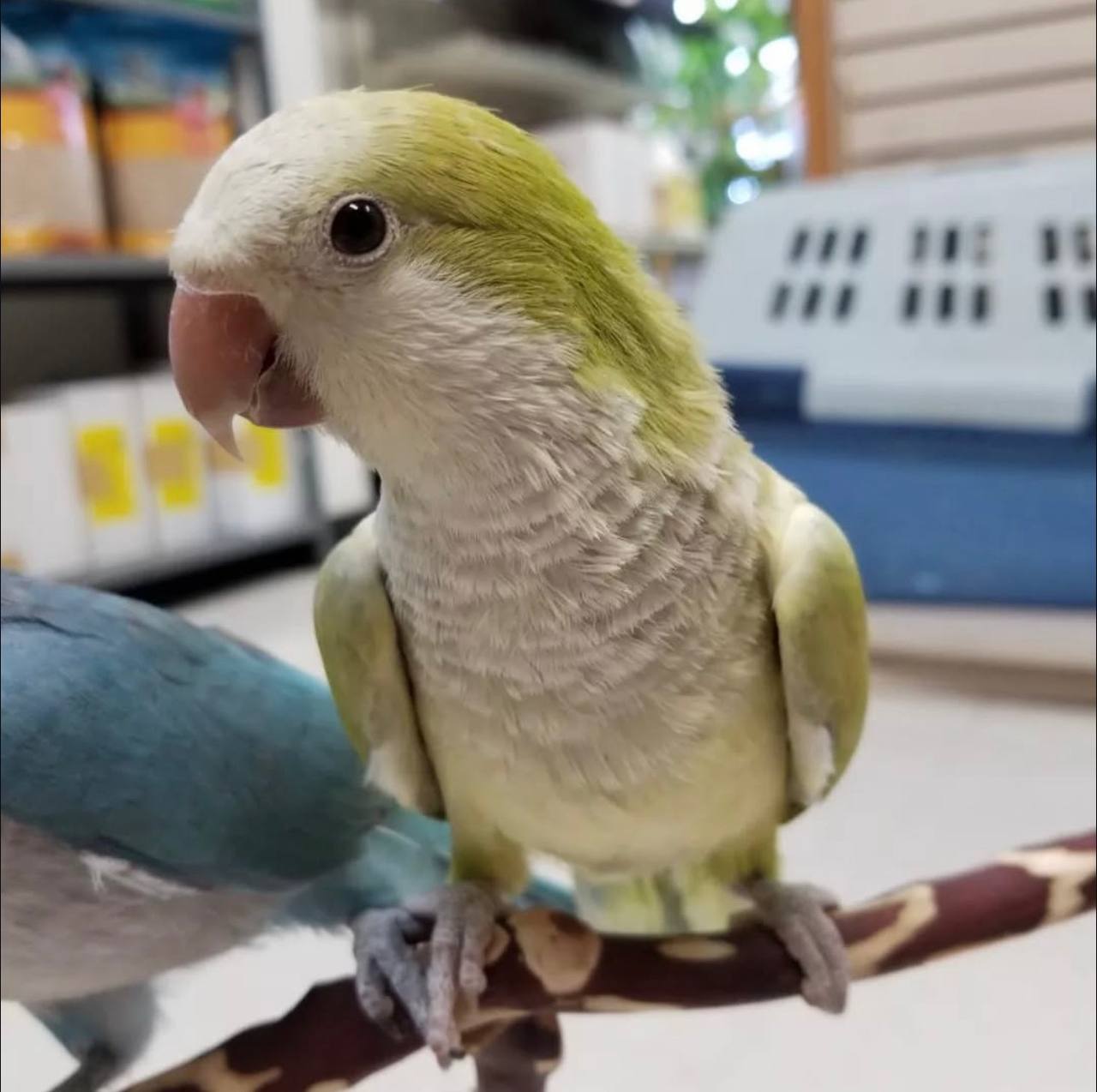
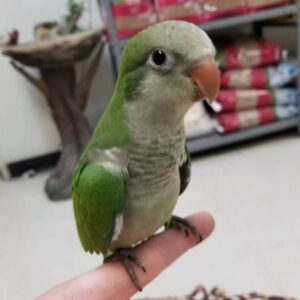
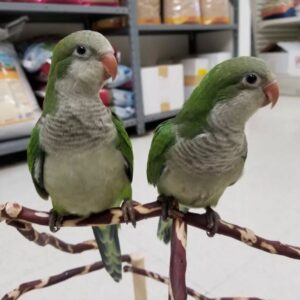
Blue Quaker parrots are a genetic mutation of the wild-type Quaker, which hails from grasslands and urban edges of South America, including Argentina, Bolivia, and Brazil. In the wild, Quakers sport green feathers, but captive breeding has unlocked stunning blue variants.
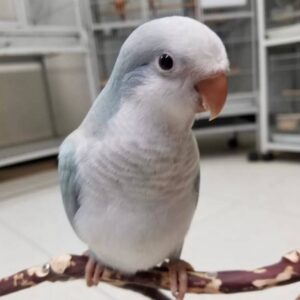
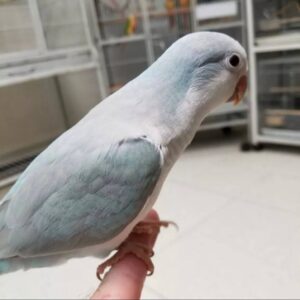
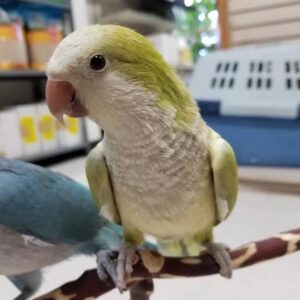
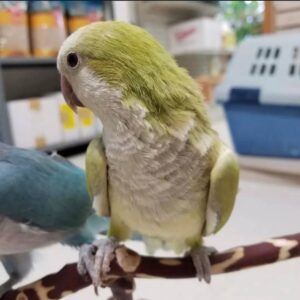
The “blue” mutation eliminates the yellow psittacin pigment, transforming the bird’s green body into shades of sky blue. Blue Quakers retain the species’ compact size—about 11-12 inches long and 120-140 grams—with a chunky build, short tail, and hooded head resembling a monk’s cowl (inspiring their “monk parakeet” moniker).
Visual blue Quakers display:
- Vibrant blue body and wings.
- Lighter blue underparts.
- Grayish-blue flight feathers.
- White eye ring and pale beak.
Unlike dimorphic species, sexes look identical, requiring surgical or DNA sexing. Blue Quakers emerged in the 1980s through selective breeding in the U.S. and Europe, now a staple in the parrot fancy world.
Genetics of Blue Quaker Parrots
The blue coloration in Quaker parrots stems from a recessive sex-linked mutation on the Z chromosome (birds have ZW sex chromosomes, unlike mammalian XY).
- Genotypes:
| Visual Phenotype | Genotype (Simplified) |
|---|---|
| Blue Male | Z^bl Z^bl |
| Blue Female | Z^bl W |
| Green Split Blue (carrier) | Varies by sex |
To breed visual blues:
- Blue x Blue = 100% blue offspring.
- Blue x Split Blue = 50% blue, 50% split.
- Split x Split = 25% blue, 50% split, 25% green.
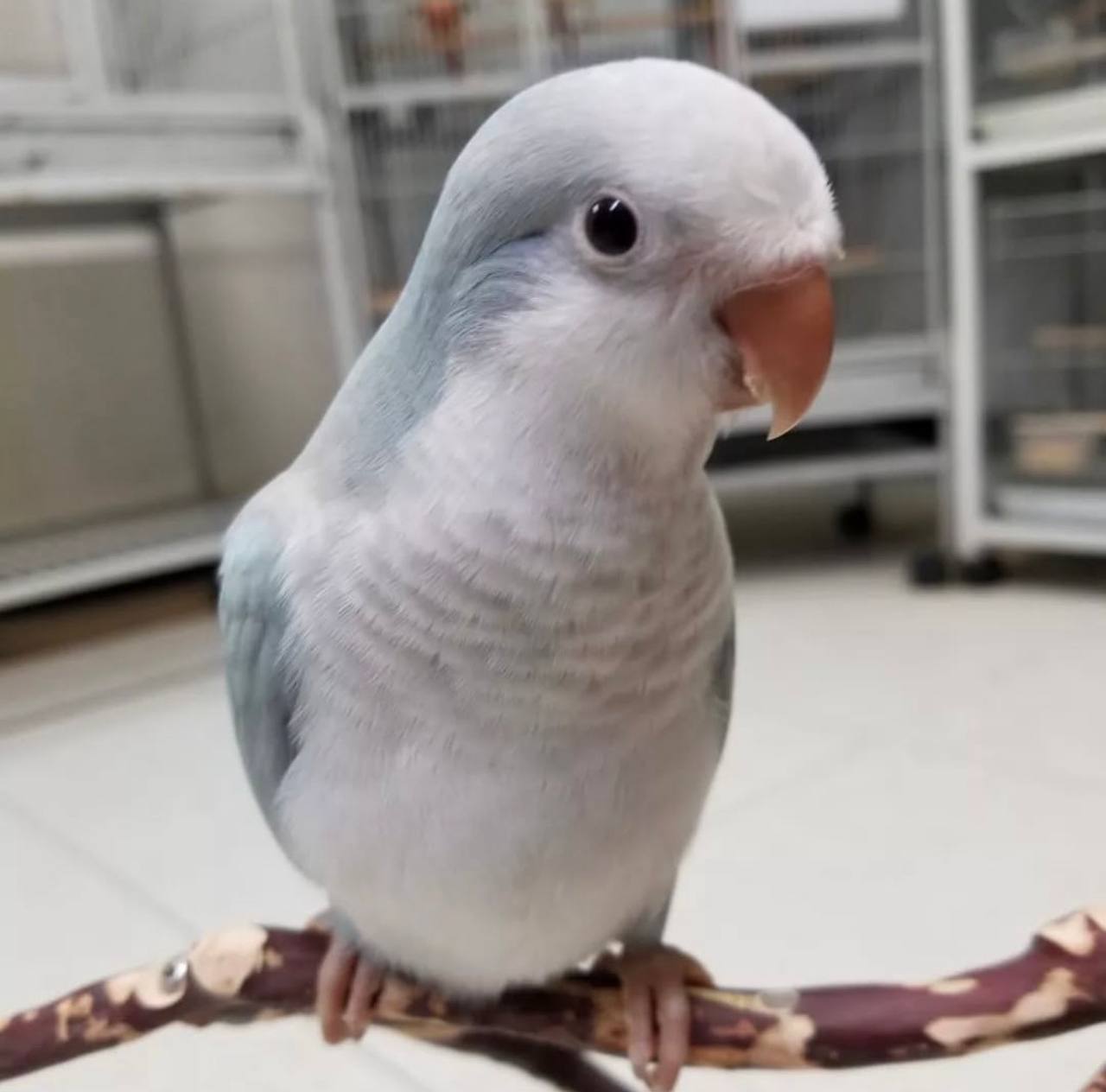
Further mutations like DFO (dark factor opal) or violet enhance blues into turquoise or indigo. Breeders use pedigree tracking software to avoid inbreeding depression, ensuring healthy lines.
Appearance and Variations
Blue Quaker parrots dazzle with their uniform blue wash, brighter than the softer pallid blue mutation. Key traits:
- Primary Color: Medium to cobalt blue.
- Markings: Subtle darker blue edges on wings/tail.
- Eyes/Beak/Feet: Black eyes, flesh-toned beak, gray feet.
- Molt: Juveniles duller; adults peak post-first molt (6-12 months).
Popular sub-variations:
- High Blue: Intense, saturated hue.
- Turquoise Blue: Greenish tint from partial psittacin.
- Blue Pine: Opalescent sheen.
Compared to wild greens, blues appear more vivid under indoor lighting, making them photogenic for social media.
Personality and Temperament
Blue Quaker parrots live up to their “clown parrot” reputation with big personalities in small packages.
- Intelligence: Top-tier; rival African Greys in mimicry (up to 100 words/phrases). Excel at tricks like waving or fetching.
- Affectionate: Velcro birds—cuddle bugs who preen owners and demand playtime.
- Bold and Vocal: Chatterboxes with whistles, laughs, and squawks. Can hit 110 decibels—neighbors beware!
- Social Dynamics: Flock animals; jealous of rivals. Single birds bond intensely; pairs entertain each other.
Training Tip: Positive reinforcement with clickers yields polite talkers. Neglect leads to screaming/plucking.
Lifespan: 20-30+ years with care, outliving wild (10-15 years) peers.
Housing and Environment for Blue Quaker Parrots
Mimic their native nests for thriving Blue Quakers:
- Cage: 30x24x36 inches min.; stainless steel preferred.
- Perches: 4-6 varied (wood, rope, branches) at staggered heights.
- Accessories: Foraging toys, swings, mirrors (sparingly to avoid fixation).
- Aviary Ideal: Outdoor flight cages (10x6x6 ft) with shelter.
Placement: Eye-level in living rooms; 70-80°F, 40-50% humidity. Full-spectrum UVB lights (10-12 hours daily) prevent metabolic bone disease.
Diet and Nutrition Essentials
Fuel their energy with a parrot-perfect menu:
| Food Category | Percentage | Examples |
|---|---|---|
| Pellets | 60-70% | Harrison’s, Zupreem |
| Vegetables | 20% | Spinach, peppers, squash |
| Fruits | 10% | Berries, mango (no pits) |
| Treats/Seeds | <10% | Millet sprays, nuts |
Fresh water + herbs (dandelion) daily. Avoid xylitol, avocado, chocolate. Obesity common—monitor weight monthly.
Health and Wellness for Blue Quaker Parrots
Robust but prone to:
- Respiratory Issues: Chlamydia (psittacosis)—vet fecal tests.
- Liver Disease: Fatty diet culprit.
- Aggression: Spring hormones; behavioral consults.
Vet Protocol:
- Annual exams, wing/nail trims.
- Vaccines rare; quarantine new birds 30-45 days.
Grooming: Bath weekly; dust baths mimic wild dust-bathing.
Training and Enrichment
Blue Quakers shine in:
- Speech: Repetition + rewards.
- Tricks: Target training, roller skating.
- Toys: Shredders, puzzles rotate bi-weekly.
Enrichment combats boredom-induced issues.
Breeding Blue Quaker Parrots
Prolific nesters; pairs build massive twig nests.
- Maturity: 2 years.
- Clutch: 5-7 eggs; 24-day hatch.
- Hand-Rearing: Crop milk formula; wean 6-8 weeks.
Aviary breeding: Nest boxes 12x12x18 inches. Success rate 80%+ in optimal conditions.
Blue Quaker Parrots in the Community
These birds star in YouTube channels, avian expos, and therapy programs. Their blue vibrancy symbolizes joy, drawing families and apartments (check local laws—feral Quakers invasive in some U.S. areas).
Pros:
- Affordable upkeep.
- Apartment-friendly size.
- Endless entertainment.
Cons:
- Noisy.
- Destructive chewers.
- Long commitment.
Final Thoughts on Blue Quaker Parrots
Blue Quaker parrots embody avian excellence—stunning visuals paired with unmatched wit. Ideal for interactive homes, they transform houses into homes filled with laughter and loyalty. Research local regulations, commit to their needs, and a Blue Quaker could be your feathered soulmate for life.
Reviews
There are no reviews yet.
Related products
Quaker parrots
Quaker parrots
Quaker parrots
Be the first to review “Blue Quaker Parrots”