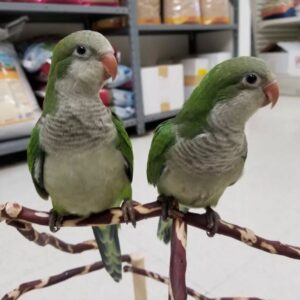
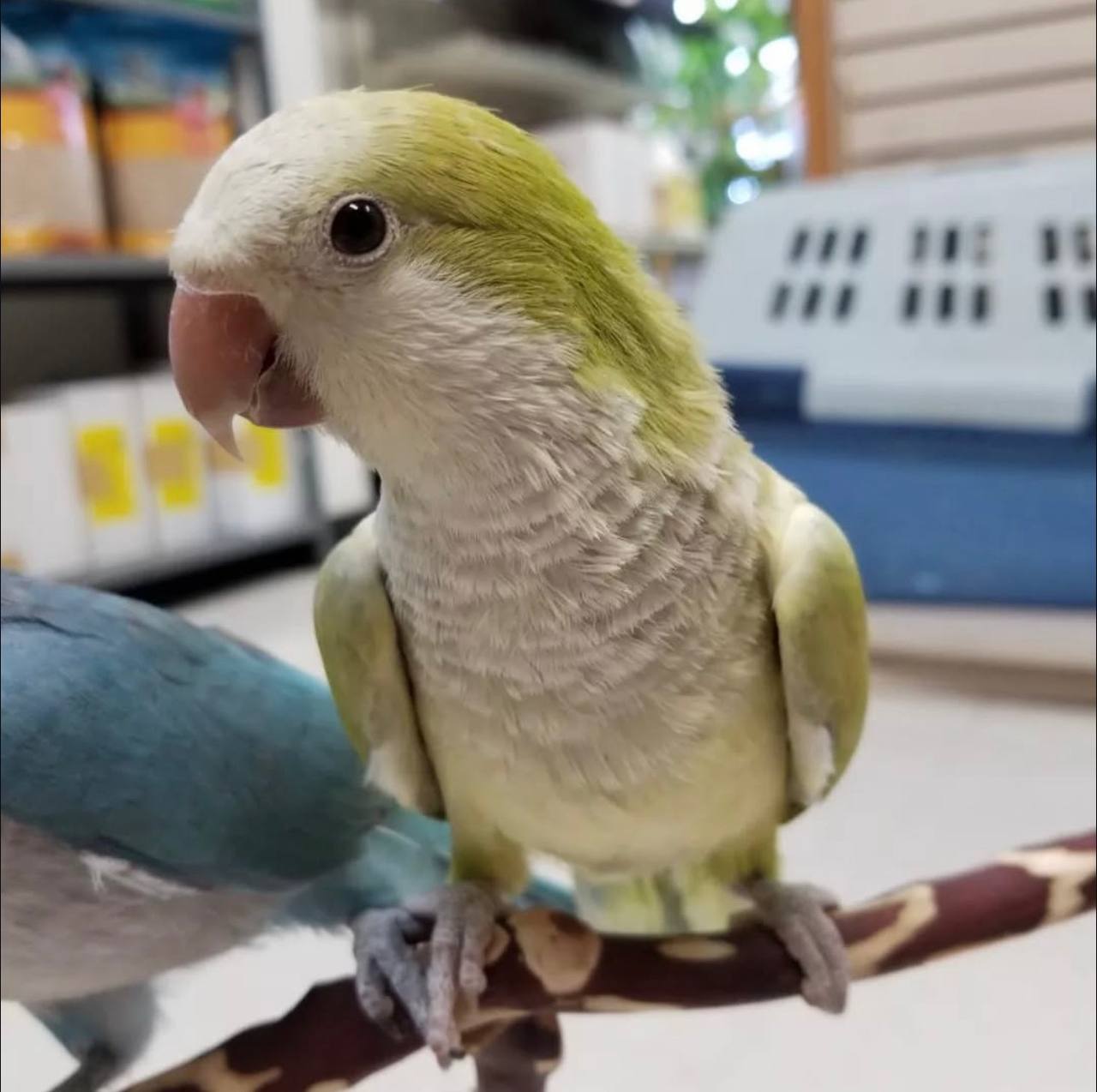
Green Quaker Parrots
Green Quaker parrots originate from the subtropical regions of South America, including Argentina, Uruguay, Paraguay, and Bolivia. Thriving in open grasslands, woodlands, and urban areas, they’ve established feral populations in the U.S. (e.g., Chicago, Florida) due to escaped pets.
These medium parrots measure 11-12 inches beak-to-tail, weigh 115-140 grams, and feature:
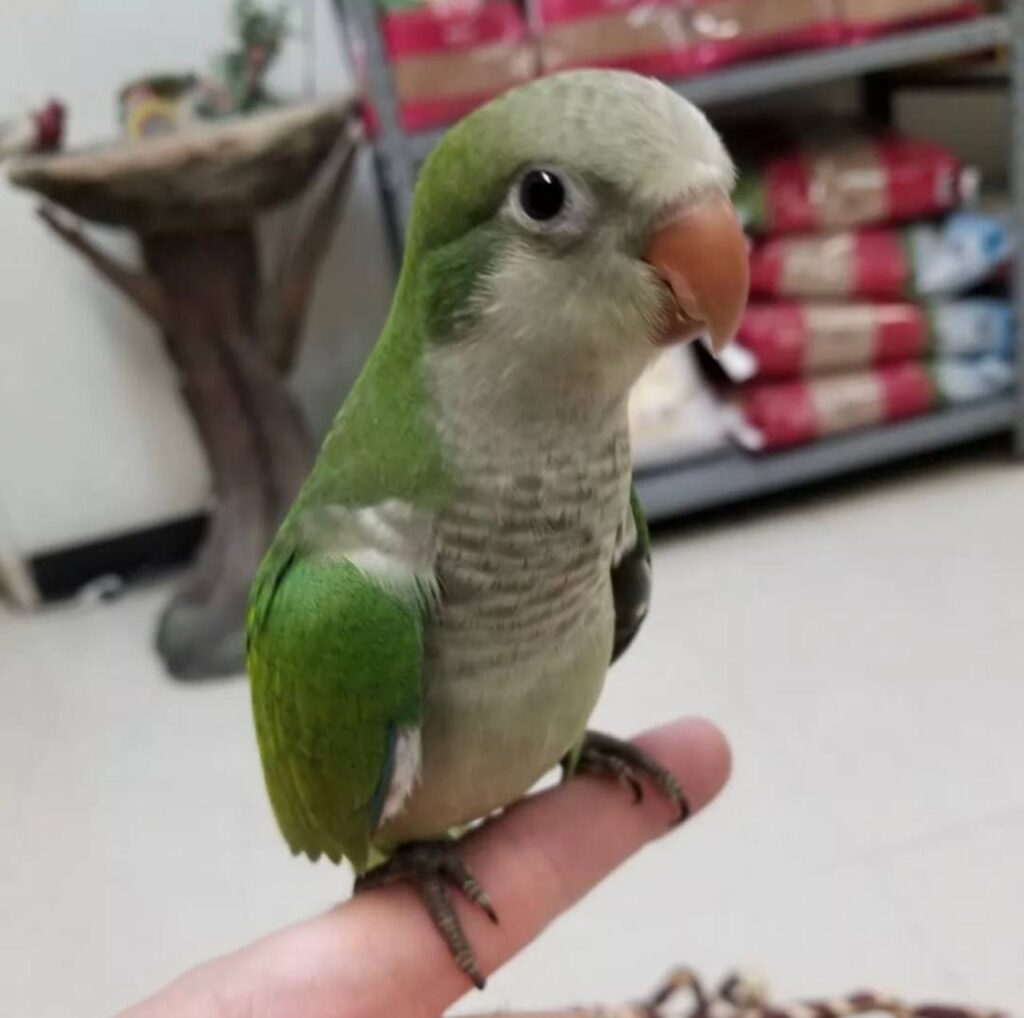
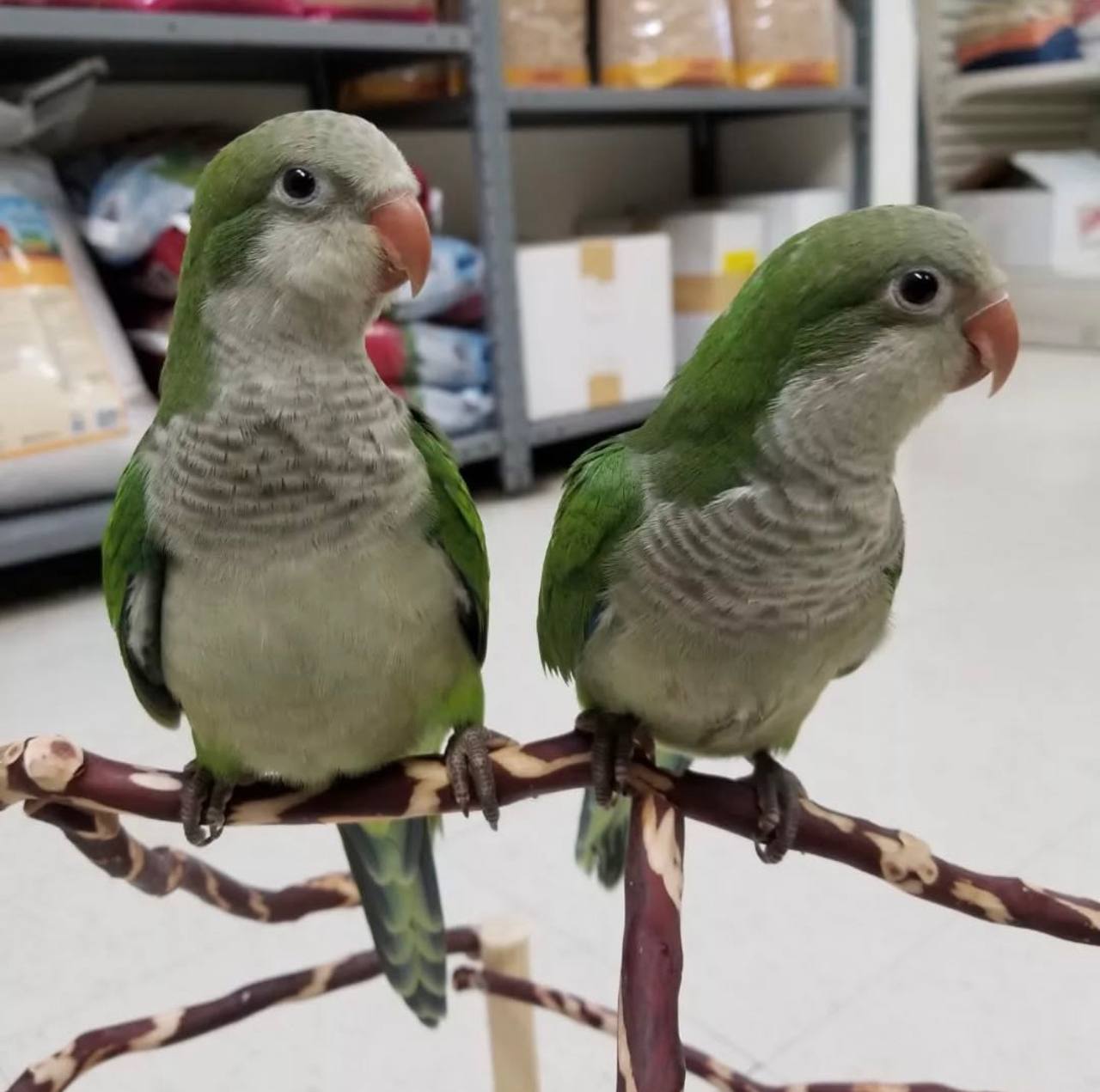
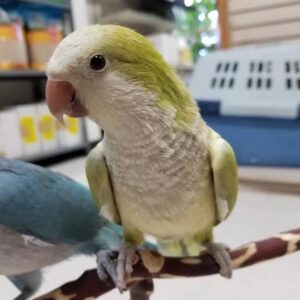
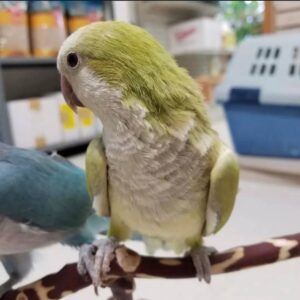
- Classic Plumage: Bright emerald green body, darker green wings/back, lighter green underparts.
- Head: Grayish-green hood, white eye ring, orange beak.
- Build: Stocky, with feathered feet (zygodactyl) and short, squared tail.
As the “nominate” subspecies (M. m. monachus), greens are monomorphic—males and females identical visually. Hardy and adaptable, they’ve been imported since the 1960s, forming the basis for all captive mutations.
Genetics and Variations of Green Quaker Parrots
Wild greens carry the full suite of psittacin (yellow) and melanin (green-black) pigments. No mutations needed—their genotype is “normal” (Z+ Z+ / Z+ W).
Subtle wild subspecies variations:
| Subspecies | Range | Traits |
|---|---|---|
| M. m. monachus | Argentina | Bright green, standard |
| M. m. calita | Northern Argentina | Slightly smaller, yellower |
| M. m. cotorra | Uruguay/Brazil | Larger, deeper green |
Captive greens often hybridize with mutations, but pure wild-types preserve natural vigor.
Physical Appearance and Identification
Iconic features:
- Coloration: Vibrant lime green fading dorsally; yellow-green vents.
- Eyes/Beak: Dark irises, curved pale beak for cracking seeds.
- Juveniles: Duller green; adult vibrancy by 8-12 weeks.
- Molt: Twice yearly; pristine post-molt.
Distinguish from mutations: No blue/cinnamon dilutions; solid green rules.
Personality and Behavior of Green Quaker Parrots
Greens pack outsized personality:
- Intelligence: Exceptional—learn tricks, mimic (50+ phrases), puzzle-solvers.
- Playful: Acrobats flipping, hanging by feet; “dance” to music.
- Social: Bond deeply; chatty flocks with whistles, clucks, screams (100+ dB).
- Bold: Fearless explorers; chew furniture if bored.
Traits suit interactive homes; pairs harmonize beautifully.
Lifespan: 20-40 years captive vs. 5-15 wild.
Housing Requirements for Green Quaker Parrots
Replicate pampas habitat:
- Cage: 24x24x36 inches min.; welded wire, 5/8″ spacing.
- Perches: Multi-texture (wood, concrete) staggered.
- Toys: Foraging, shredders, bells—rotate often.
- Aviary: Ideal 8x4x6 ft for flight.
Conditions: 65-85°F; 40-60% humidity; UVB 12 hours/day.
Complete Nutrition Guide
Wild diet-inspired:
| Food Type | Portion | Examples |
|---|---|---|
| Pellets/Extruded | 70% | Lafeber’s, Tops |
| Vegetables | 15% | Kale, corn, peas |
| Fruits | 10% | Apples, grapes |
| Seeds/Nuts | 5% | Canary seed, walnuts |
Daily fresh foods; cuttlebone for calcium. Toxins: Chocolate, caffeine, salty snacks.
Health and Common Concerns
Resilient but vigilant for:
| Condition | Symptoms | Prevention/Treatment |
|---|---|---|
| Obesity | Overweight, panting | Exercise, low-seed diet |
| Psittacosis | Discharge, lethargy | Vet antibiotics, hygiene |
| Egg Binding (females) | Straining | Calcium, vet intervention |
| Beak Malocclusion | Overgrown beak | Annual trims |
Vet Care: Avian specialist yearly; fecal/gram stains. Quarantine newcomers 45 days.
Training Green Quaker Parrots
Harness genius:
- Commands: Step-up, potty training.
- Speech: Model clear words daily.
- Tools: Clicker, bridging treats (nut pieces).
Socialize early for gentle pets.
Breeding Green Quaker Parrots
Master nest-builders:
- Maturity: 1-2 years.
- Nest: Massive twig domes (2-4 ft).
- Clutch: 4-8 eggs; 23-26 days incubation; fledge 5-7 weeks.
- Pairs: Monogamous; stimulate with 14-hour days.
High fertility; hand-raise for tamers.
Appeal of Green Quaker Parrots Today
As the “original” Quaker, greens offer:
- Authentic wild beauty.
- Proven hardiness.
- Budget-friendly entry to parrot ownership.
Thriving in rescues/clubs; feral stories add lore. Pros: Engaging, sturdy. Cons: Noisy, messy.
Green Quaker parrots prove nature’s palette perfect—vibrant, vital, vivacious companions for life.
Reviews
There are no reviews yet.
Related products
Quaker parrots
Quaker parrots
Quaker parrots
Be the first to review “Green Quaker Parrots”